About this artwork
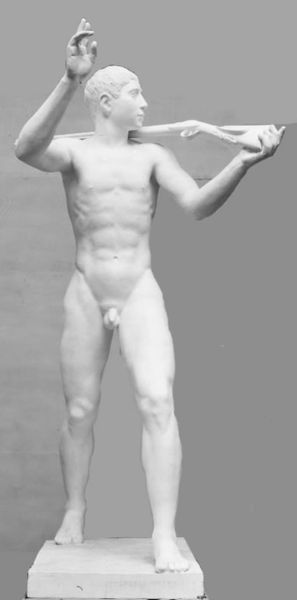
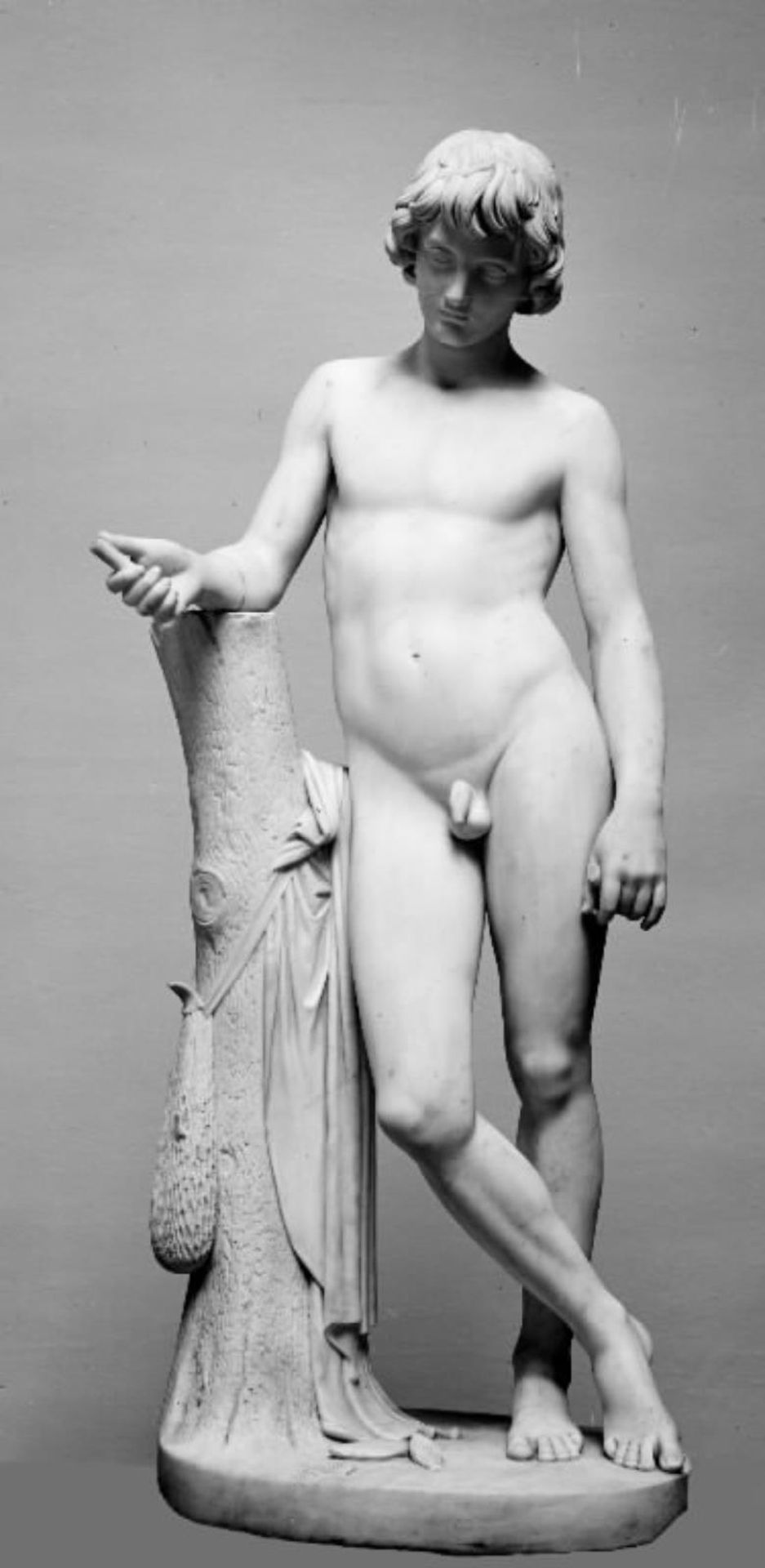
H.W. Bissen carved "En fiskerdreng" – or "A Fishing Boy" – from marble in the mid-19th century. Marble, of course, is a classical material, with connotations of permanence and purity. But it is also deeply connected to labor. Consider the processes involved: quarrying the raw stone, transporting it, and then the skilled work of carving and polishing. Bissen's artistry transforms a rough block into this idealized form of youthful leisure. Yet, the very smoothness and apparent ease of the sculpture disguise the effort required to bring it into being. That contrast between appearance and reality is interesting. The fishing boy is himself at leisure, seemingly detached from the world of work. But by considering the marble and the making, we are reminded of the social conditions that allowed this artwork to be created in the first place. So, by attending to material and making, we can uncover new layers of meaning in this sculpture.
En fiskerdreng. Stående nøgen dreng med en fiskestang 1842


Artwork details
- Medium
- sculpture, marble
- Dimensions
- 142.3 cm (height) x 56.5 cm (width) x 46.3 cm (depth) (Netto)
- Location
- SMK - Statens Museum for Kunst
Tags
sculpture
figuration
sculpture
romanticism
black and white
history-painting
marble
nude
Comments
No comments
About this artwork
H.W. Bissen carved "En fiskerdreng" – or "A Fishing Boy" – from marble in the mid-19th century. Marble, of course, is a classical material, with connotations of permanence and purity. But it is also deeply connected to labor. Consider the processes involved: quarrying the raw stone, transporting it, and then the skilled work of carving and polishing. Bissen's artistry transforms a rough block into this idealized form of youthful leisure. Yet, the very smoothness and apparent ease of the sculpture disguise the effort required to bring it into being. That contrast between appearance and reality is interesting. The fishing boy is himself at leisure, seemingly detached from the world of work. But by considering the marble and the making, we are reminded of the social conditions that allowed this artwork to be created in the first place. So, by attending to material and making, we can uncover new layers of meaning in this sculpture.
Comments
No comments