About this artwork
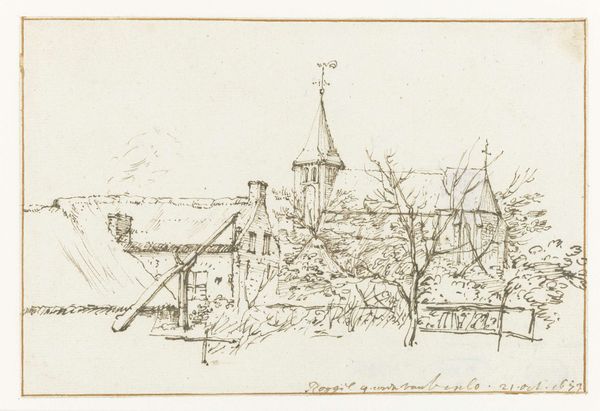
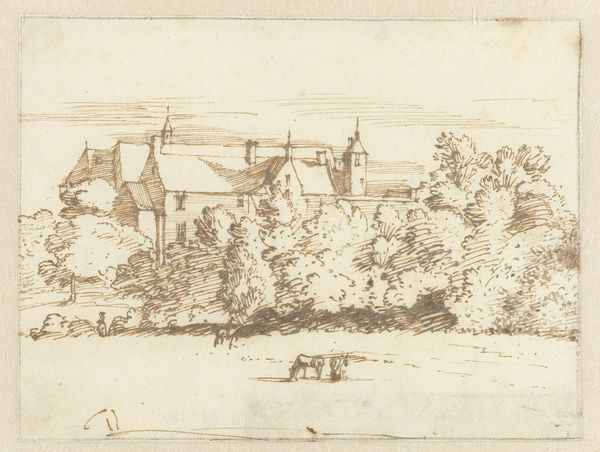
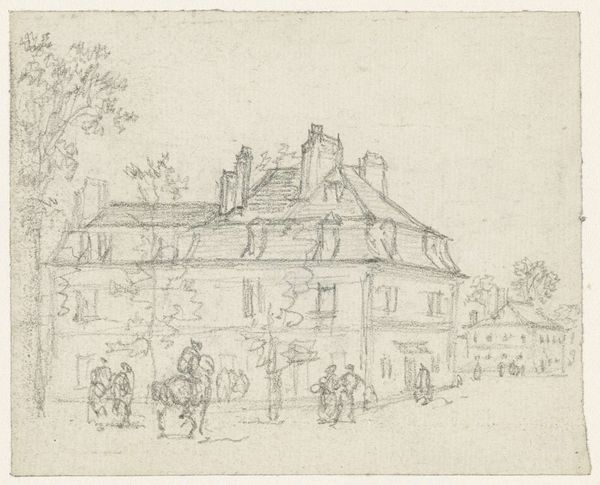
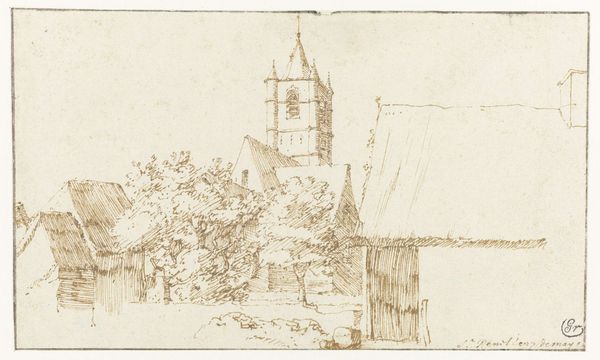
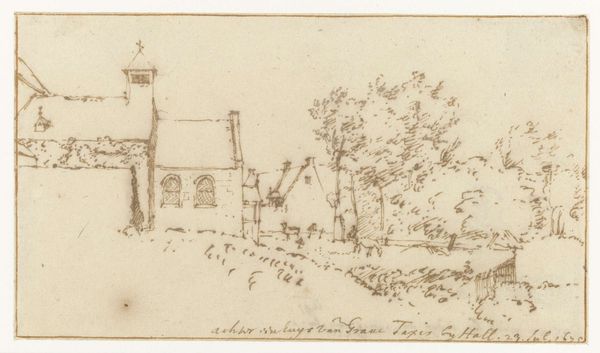
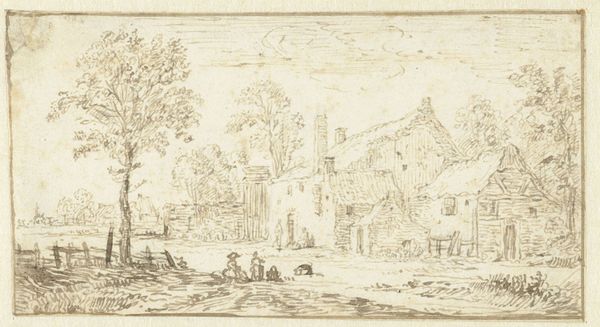
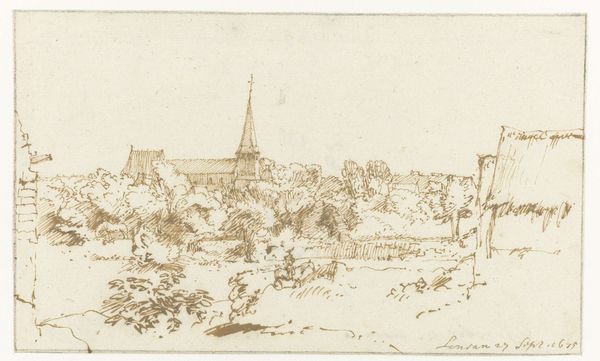
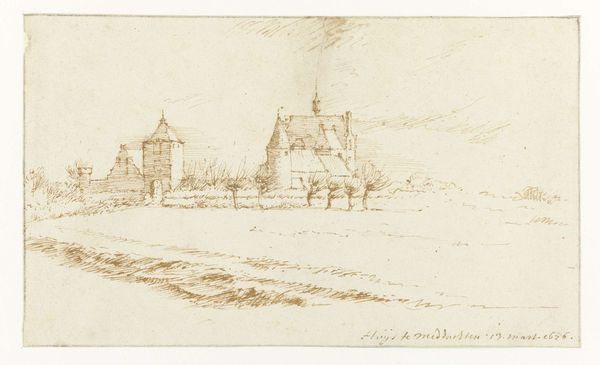
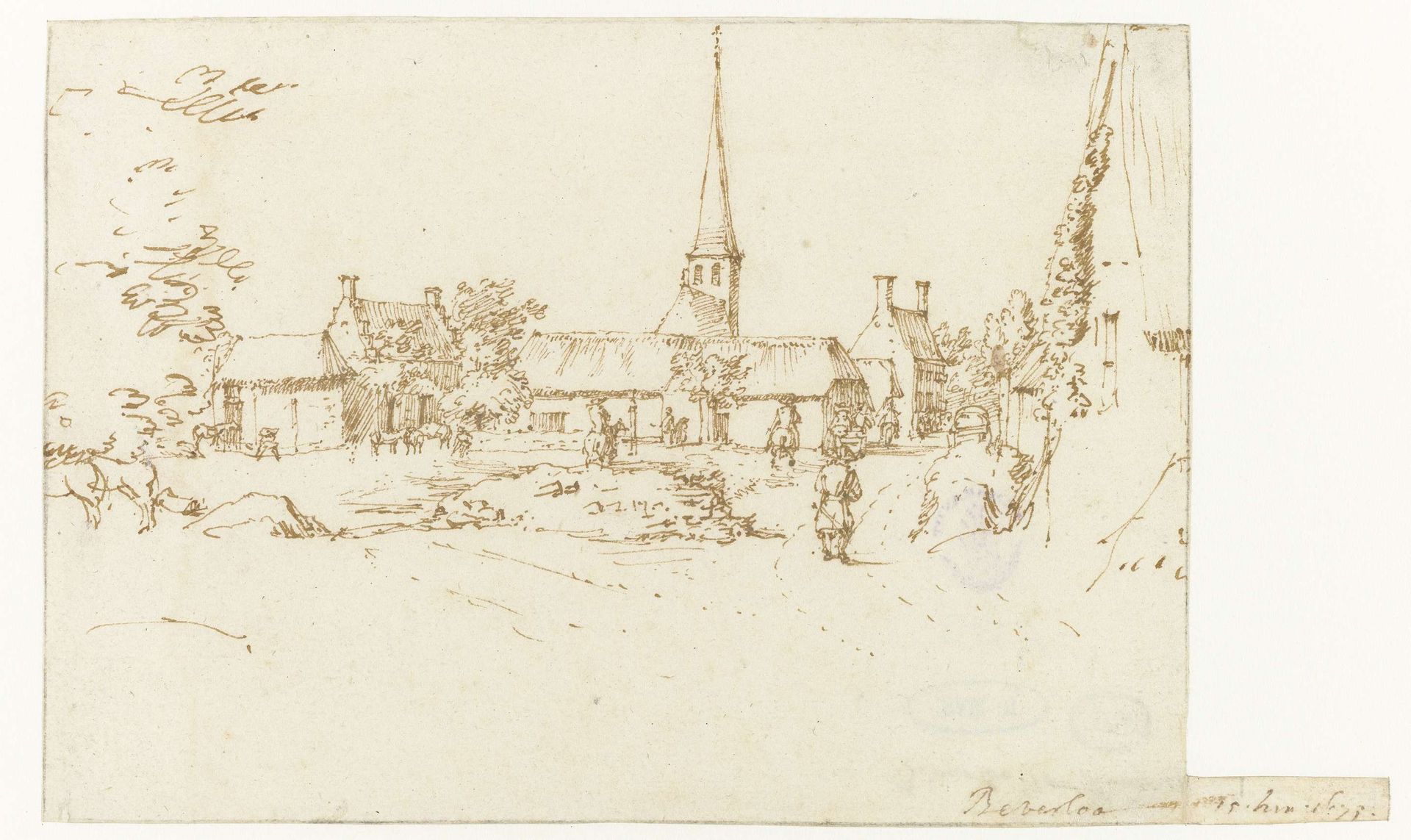
Constantijn Huygens created this drawing of Beverloo with pen and brown ink on paper, sometime in the 17th century. The relative ease of pen-and-ink drawing lent itself to Huygens's work, which often depicted architecture and landscapes. It allowed for the rapid recording of observations, and fostered a sense of immediacy between artist and subject. The drawing's network of lines captures the essence of Beverloo's buildings and people. There is a texture that emerges from the cross-hatched shading, which gives depth to the scene. This way of drawing creates an impression of the place, while also being highly reproducible: drawings were often translated into prints at this time. Consider the social context in which this work was made. Huygens was a wealthy and well-regarded man; he was in a position to depict Beverloo, perhaps, because he was passing through. The act of drawing, in this instance, speaks to a social relationship just as much as a relationship with the landscape itself.

Artwork details
- Medium
- drawing, etching, ink
- Dimensions
- height 110 mm, width 156 mm
- Copyright
- Rijks Museum: Open Domain
Tags
drawing
dutch-golden-age
etching
landscape
etching
ink
Comments
No comments
About this artwork
Constantijn Huygens created this drawing of Beverloo with pen and brown ink on paper, sometime in the 17th century. The relative ease of pen-and-ink drawing lent itself to Huygens's work, which often depicted architecture and landscapes. It allowed for the rapid recording of observations, and fostered a sense of immediacy between artist and subject. The drawing's network of lines captures the essence of Beverloo's buildings and people. There is a texture that emerges from the cross-hatched shading, which gives depth to the scene. This way of drawing creates an impression of the place, while also being highly reproducible: drawings were often translated into prints at this time. Consider the social context in which this work was made. Huygens was a wealthy and well-regarded man; he was in a position to depict Beverloo, perhaps, because he was passing through. The act of drawing, in this instance, speaks to a social relationship just as much as a relationship with the landscape itself.
Comments
No comments