About this artwork
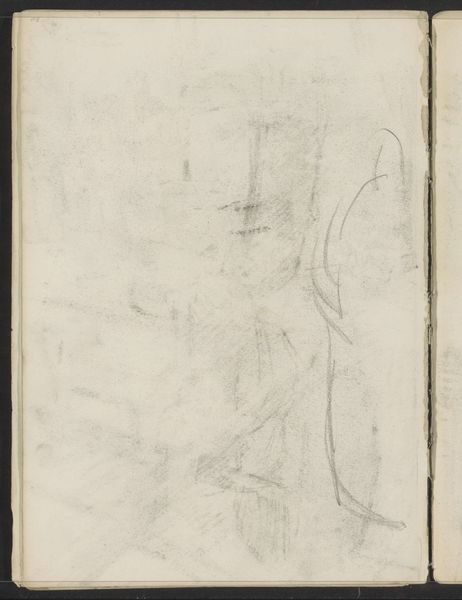
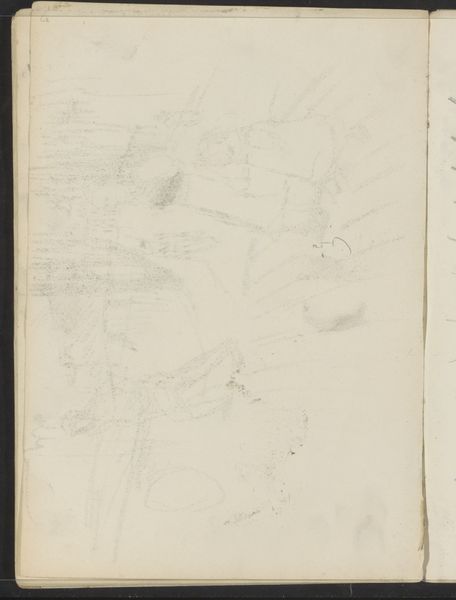
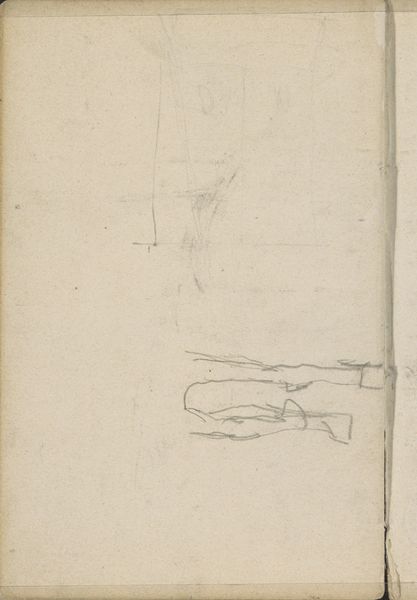
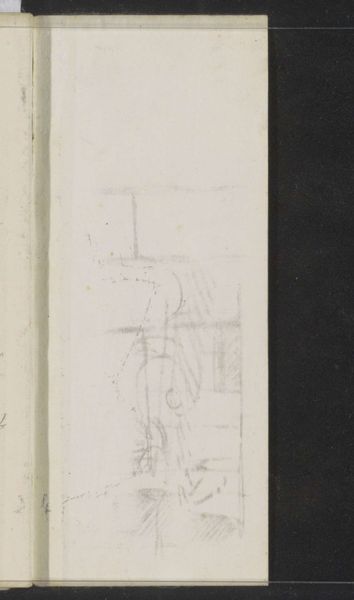
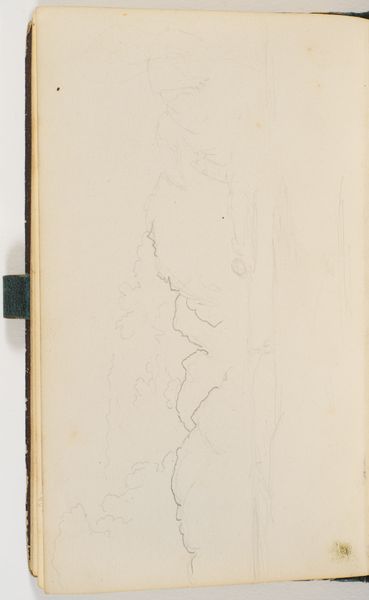
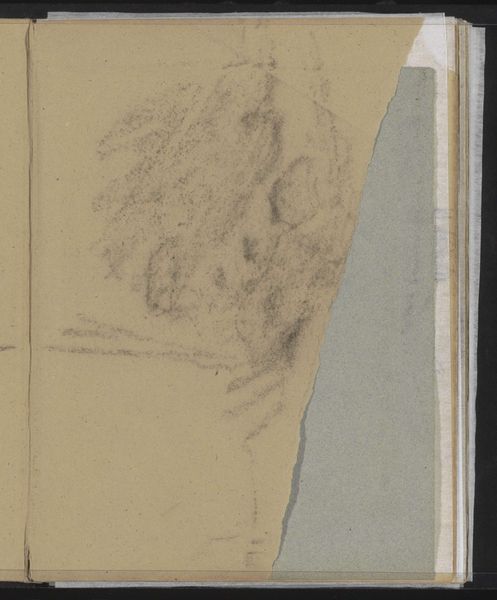
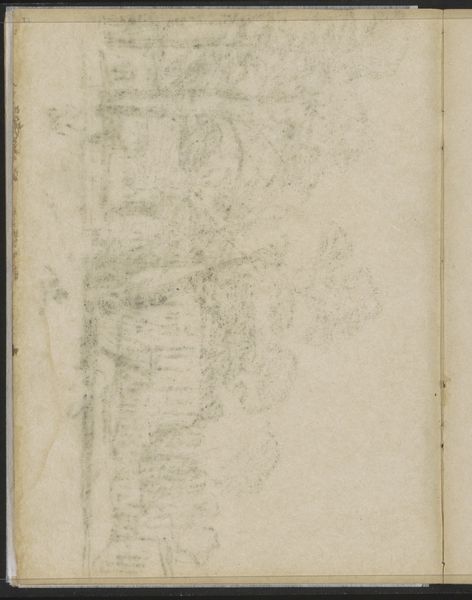
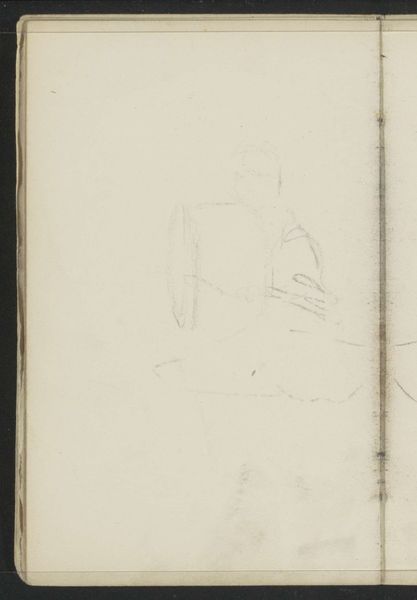
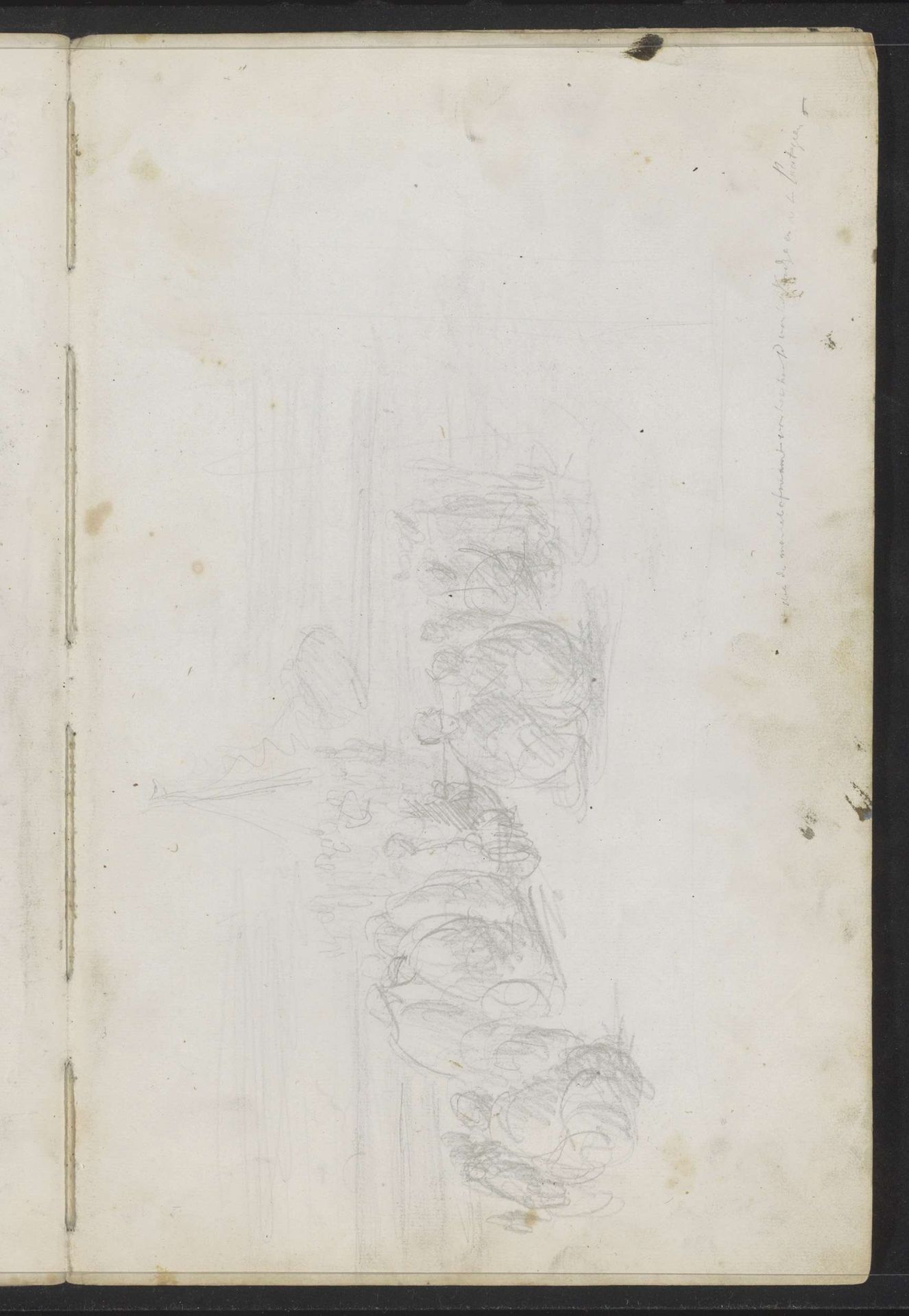
Jozef Israëls sketched "Figures on the beach at Zandvoort" to capture a scene of everyday life. Israëls lived during a time when many artists turned to depicting the lives of the working class and rural communities. Israëls was Jewish, and his cultural identity influenced his artistic vision. He often focused on themes of family, community, and the struggles of ordinary people, reflecting his empathy and connection to those on the margins of society. In this quick sketch, we see huddled figures on a beach, seemingly trying to shelter from the wind. As a Jew in Europe, he understood what it was like to be an outsider, someone who had to try to survive in harsh conditions. Israëls once said, "Art must have its roots in the human soul." This work reflects his interest in humanity. The sketch might be simple, but it captures the universal human need for warmth, safety, and community.
Figuren op het strand van Zandvoort c. 1855 - 1859

Jozef Israëls
1824 - 1911Location
RijksmuseumArtwork details
- Medium
- drawing, paper, pencil
- Location
- Rijksmuseum
- Copyright
- Rijks Museum: Open Domain
Tags
drawing
pencil sketch
landscape
figuration
paper
pencil
realism
Comments
No comments
About this artwork
Jozef Israëls sketched "Figures on the beach at Zandvoort" to capture a scene of everyday life. Israëls lived during a time when many artists turned to depicting the lives of the working class and rural communities. Israëls was Jewish, and his cultural identity influenced his artistic vision. He often focused on themes of family, community, and the struggles of ordinary people, reflecting his empathy and connection to those on the margins of society. In this quick sketch, we see huddled figures on a beach, seemingly trying to shelter from the wind. As a Jew in Europe, he understood what it was like to be an outsider, someone who had to try to survive in harsh conditions. Israëls once said, "Art must have its roots in the human soul." This work reflects his interest in humanity. The sketch might be simple, but it captures the universal human need for warmth, safety, and community.
Comments
No comments