1918
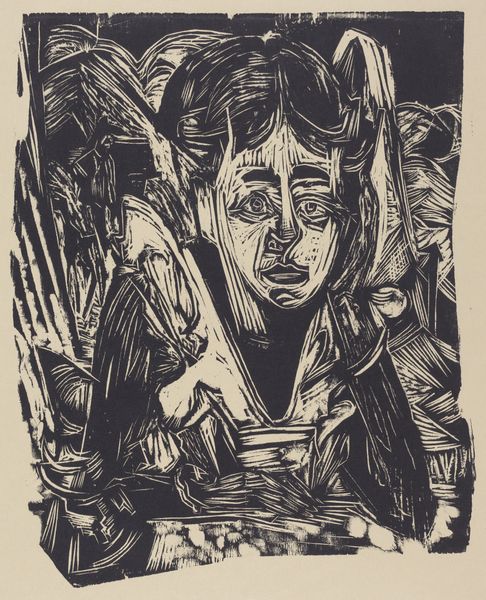
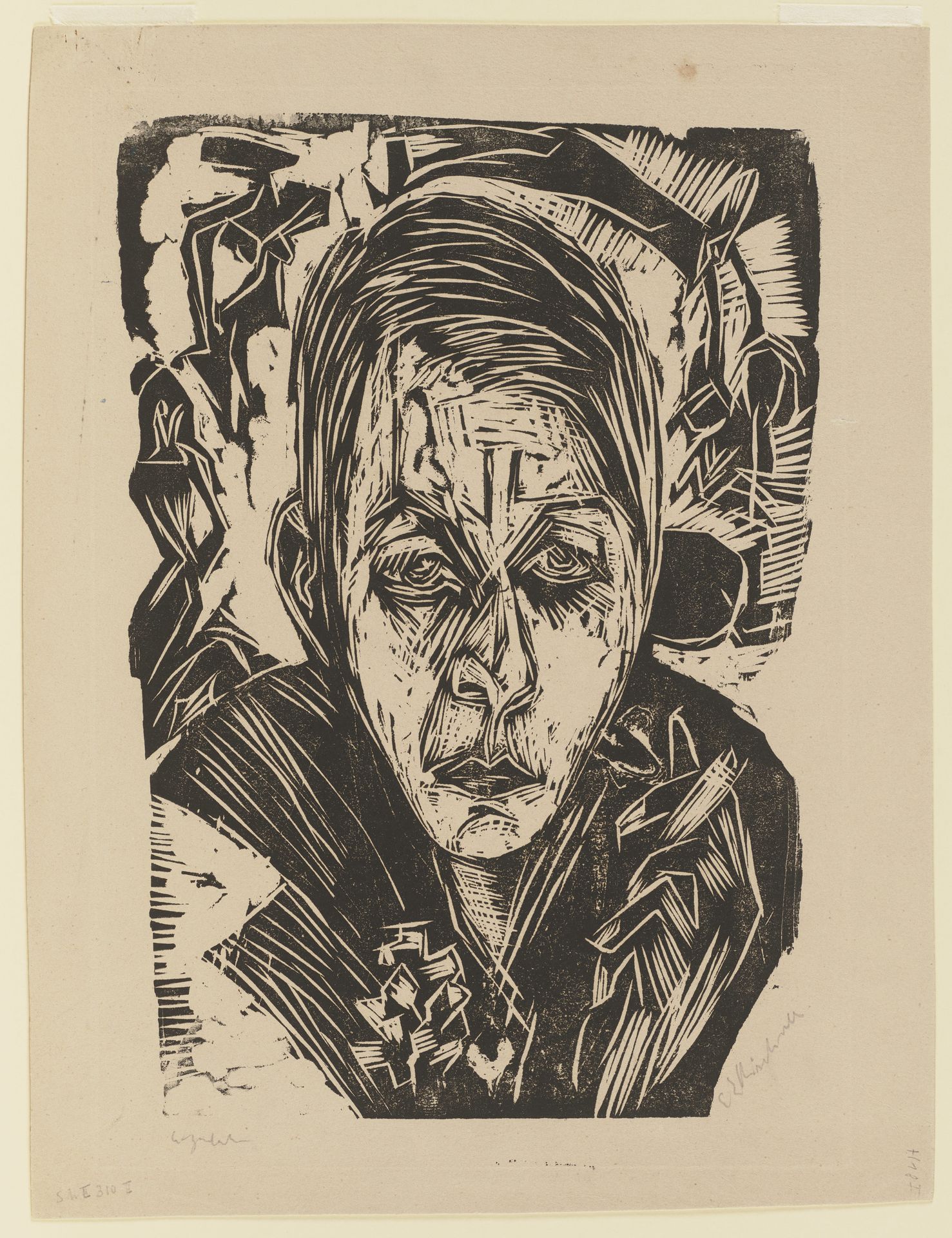
Young Girl with a Cigarette (Nele van de Velde)


Listen to curator's interpretation
Curatorial notes
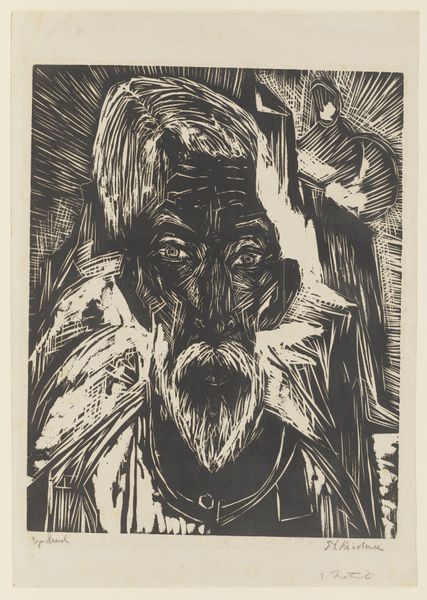
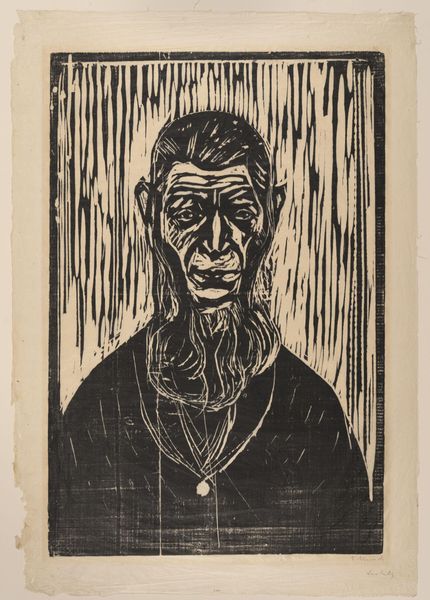
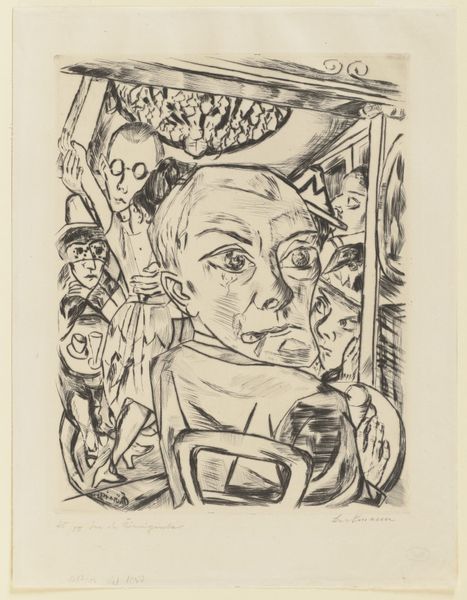
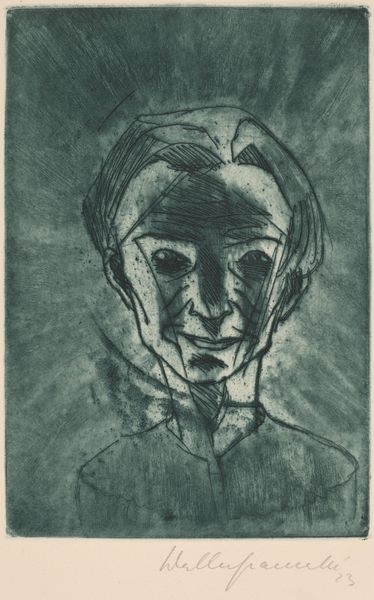
Curator: Standing here, we’re observing Ernst Ludwig Kirchner’s 1918 woodcut, "Young Girl with a Cigarette (Nele van de Velde)," currently held in the Städel Museum. The piece captures, in stark black and white, a striking portrait of a young woman. Editor: It’s immediately confrontational. Her gaze, those sharply defined features – there’s a sense of world-weariness, almost a challenge, that belies the “young girl” of the title. The harsh lines convey a rawness. Curator: Indeed. Kirchner was deeply affected by World War I. Although deemed unfit for active service, the war impacted his mental health and arguably influenced his artistic style during this period. There’s a heightened emotionality in the fractured forms, mirroring societal upheaval and individual distress. Editor: That contextualization makes me see her cigarette in a new light—less about youthful rebellion, more about coping. The angular cuts of the woodcut—almost violent—could suggest a fragmented psyche or a society in decay. Do you agree with this decay of that period reflected on Nele? Curator: Absolutely. And we should acknowledge that Kirchner, part of the “Die Brücke” movement, frequently depicted street scenes and portraits, exploring themes of urban alienation and psychological depth. Consider how the abstract forms surrounding the subject intensify this reading, hinting at a claustrophobic or isolating environment. It is interesting as a historical reference to evaluate it within this urban, fractured view that the artist was so involved. Editor: And it’s worth noting how such portrayals—especially of women—in early 20th-century art, disrupted conventional ideals. Was Kirchner’s work actively confronting these notions, or simply reflecting the changing realities and subjectivities of women? The work challenges us even today to explore broader narratives. Curator: I would argue it’s a complex interplay of both. Kirchner undoubtedly offered a lens onto the shifting roles and experiences, even in how it depicts Nele as powerful with its lines and contrasts. The portrait also engages with avant-garde debates about beauty and representation that were at play. He both documented, and challenged the status quo by including and dignifying youth. Editor: Examining it today, this work prompts reflection. Not just on Kirchner, or German Expressionism, but on how socio-political tensions manifest in portraiture and representation even a hundred years later. The impact remains. Curator: Agreed. There's an intensity in it that continues to challenge the viewer.