1836
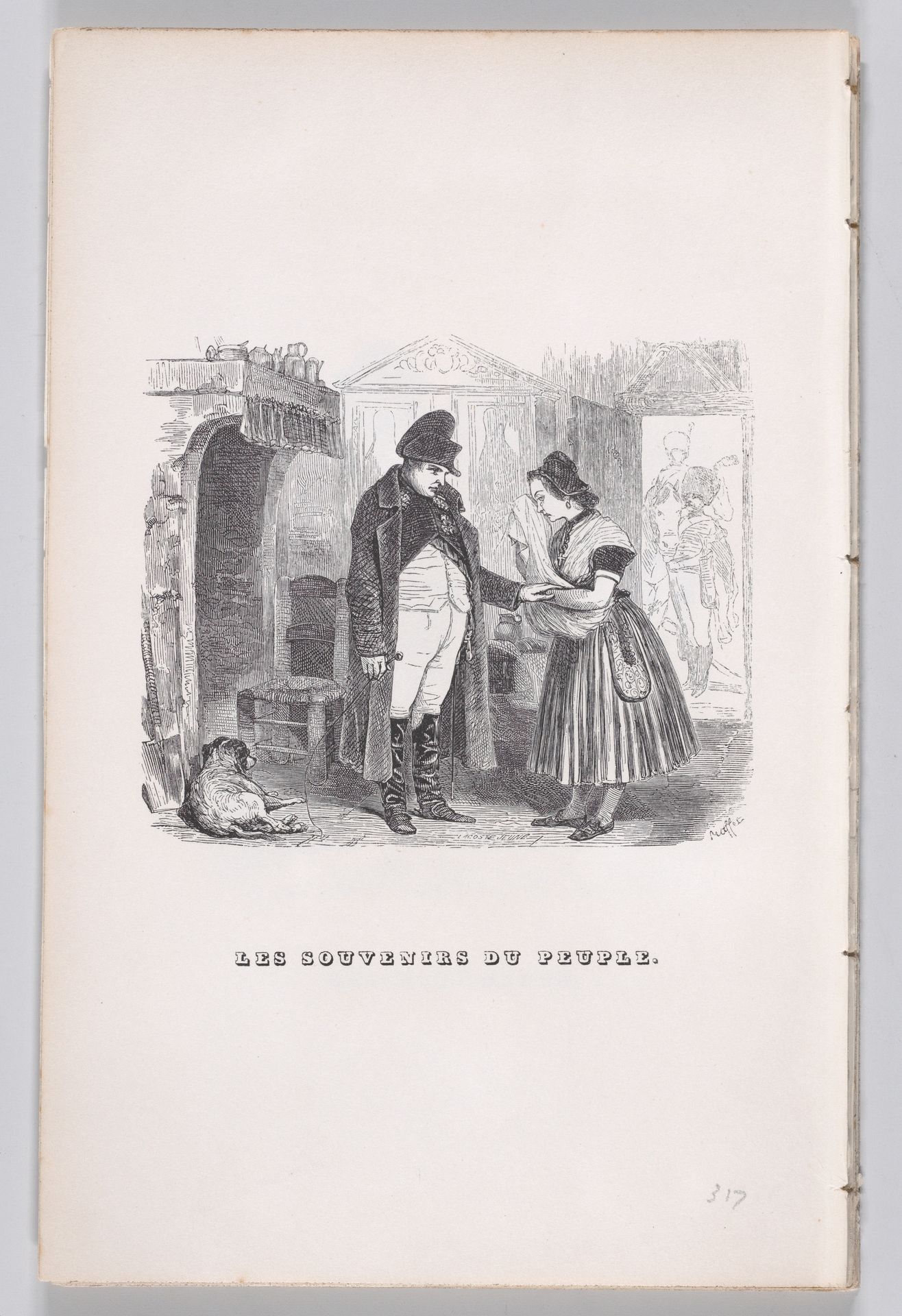
"Memories of the People" from The Complete Works of Béranger


Listen to curator's interpretation
Curatorial notes
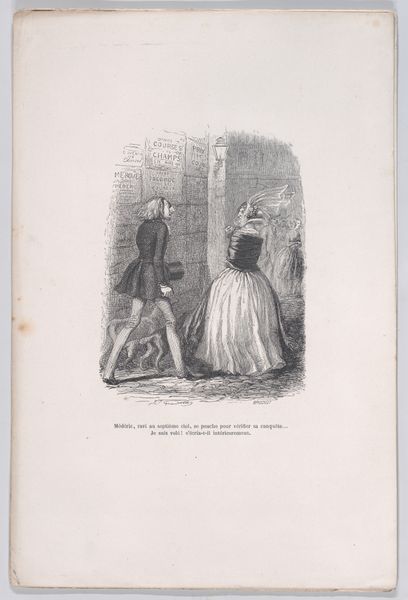
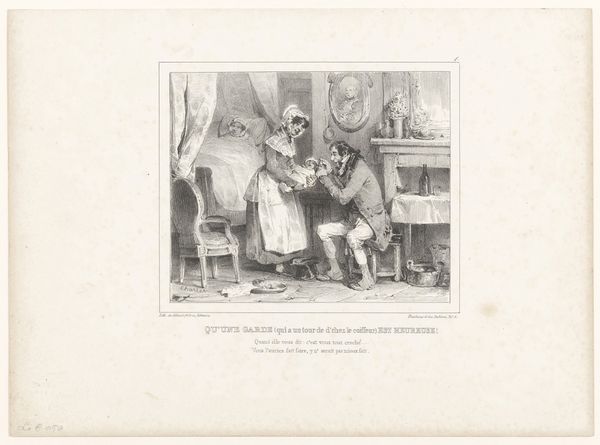
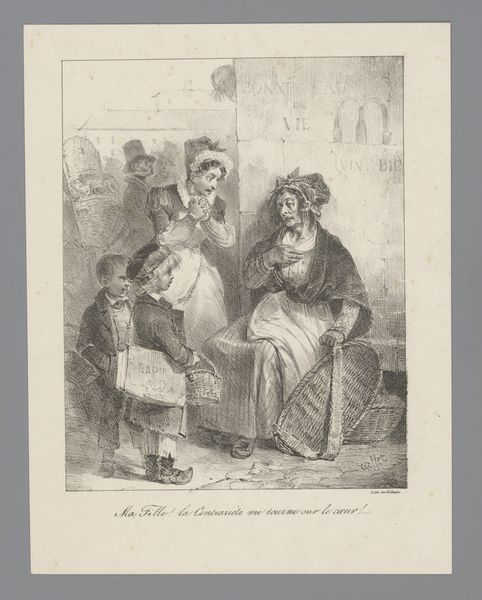
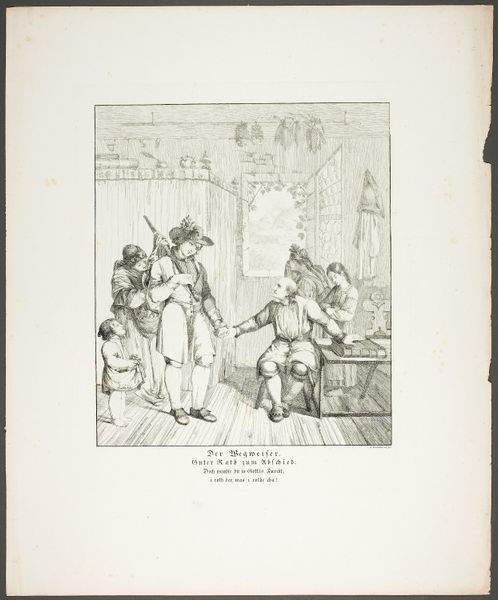
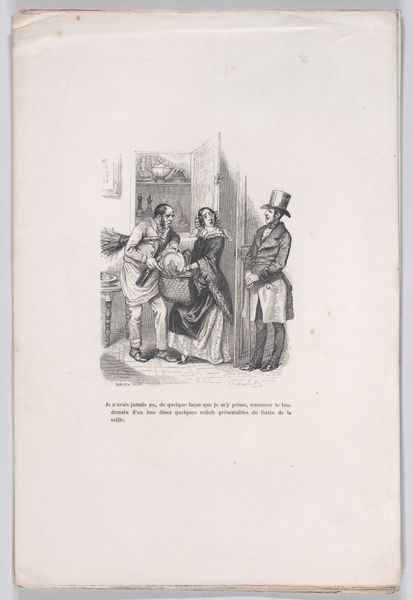
Editor: This is "Memories of the People," a lithograph drawing from 1836 by J. J. Grandville. I find the image very intriguing, there is a romantic quality to the way Napoleon is depicted but with a focus on how regular people viewed him. What do you see in this piece? Curator: Beyond the charming illustrative style, this image is a powerful statement about collective memory and how narratives are constructed. Notice how Grandville depicts Napoleon not in a grand battle scene, but within a humble domestic space. The woman seems to be selling trinkets connected to Napoleon. Consider the socio-political context: this was published after Napoleon’s death, during a period of political upheaval. Why do you think Grandville chose this intimate, almost genre-painting style to represent such a towering figure? Editor: I guess, rather than highlighting military prowess, he's highlighting the personal connection between Napoleon and the common people? Curator: Precisely! The woman's sale of trinkets underlines how Napoleon became a symbol, a brand, if you will, co-opted and circulated among the masses. It makes one question who owns history and how is fame used, bought, and sold? We need to reflect critically: Whose memories are valued, and who profits from them? Editor: It's amazing how much political and social commentary is packed into one seemingly simple image. I will never see this drawing the same way again. Curator: It speaks to the enduring power of art to unpack and challenge the dominant narratives. The dialogue between the past and the present makes our experience of art truly alive.