About this artwork
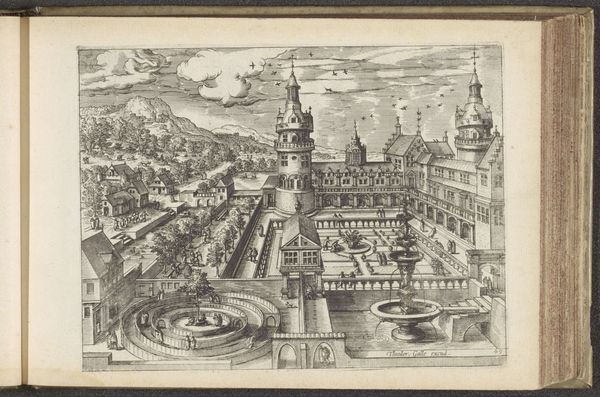
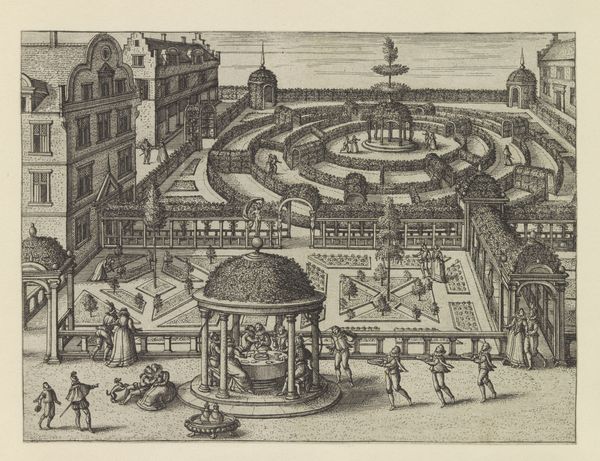
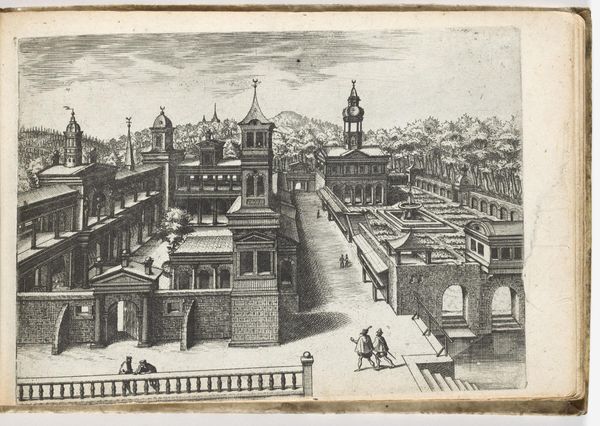
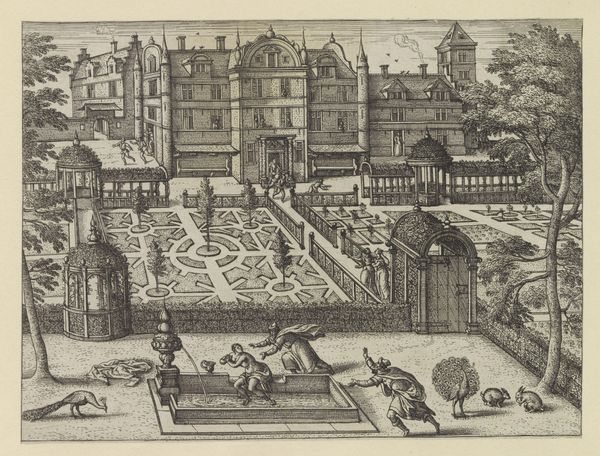
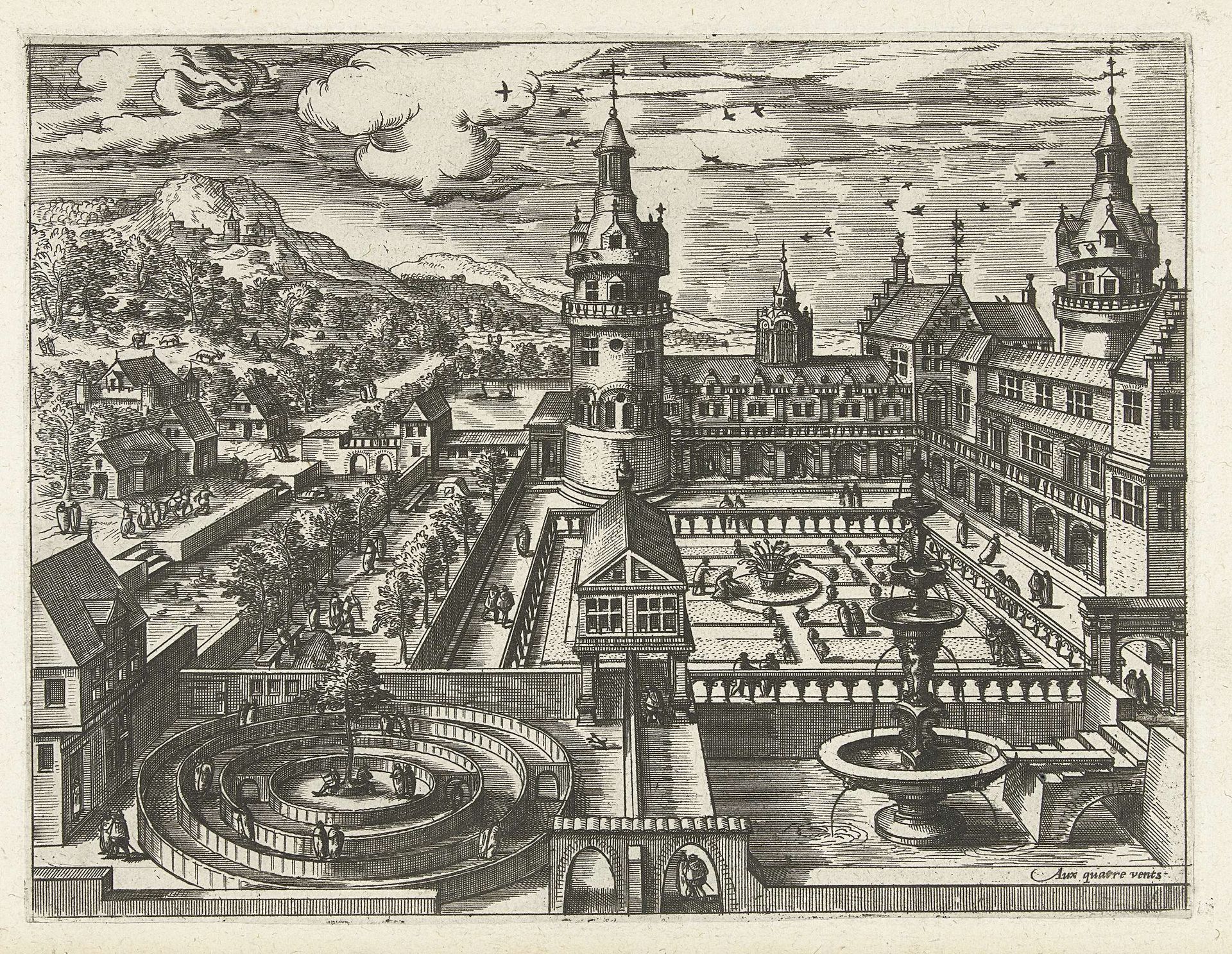
Curator: This print, "Castle with Maze and Fountain," dating from after 1570, presents an elaborate estate rendered with striking detail in etching and engraving. Editor: It’s captivating. I’m immediately drawn to the intricate maze in the foreground and the dominating structure of the castle, how it plays with geometric shapes and linear perspective. It has this dream-like, almost theatrical feel. Curator: Precisely. Attributed to Joannes van Doetechum, this piece invites us to consider the role of elite spaces during a period of considerable social and political upheaval. Castles like these weren’t simply domestic spaces. Editor: They were displays of power and control, and what fascinates me here is how that control is articulated visually through this masterful play of lines and architectural forms. The perspective directs our gaze, controlling what we see and how we see it. Curator: Absolutely. The presence of the maze speaks volumes about control, power dynamics and perhaps the futility of navigating rigid social structures. The high walls create enclosures within enclosures. Who is imprisoned here, and why? Is this a celebration or a warning? Editor: Yes, and the details like the tiny figures within the maze emphasize scale, highlighting the dominance of architecture, really drawing the viewer into a microcosm of constructed space and power. It invites contemplation on how the elements within the space are intentionally structured. Curator: Looking through the lens of class and status, the garden suggests notions of privilege. Consider the labor required to maintain this artificial, structured nature. Who benefited and who was burdened by this design? The opulence feels laden with historical complexities. Editor: Agreed. Though I am also admiring the density of linework, and how Doetechum achieved that tone solely through lines, creating areas of shadow that truly emphasize the volume and depth. Curator: Ultimately, "Castle with Maze and Fountain" compels us to reflect on the intersection of landscape, power, and social identity during the late 16th century. It’s a layered composition rich with implications for social history. Editor: And visually, it remains a testament to the skill of engraving and the power of composition in creating a captivating and enduring image, it has so many points of entry.
Kasteel met doolhof en fontein
after 1570

Joannes van (I) Doetechum
1532 - 1605Location
RijksmuseumArtwork details
- Medium
- print, etching, engraving, architecture
- Dimensions
- height 155 mm, width 205 mm
- Location
- Rijksmuseum
- Copyright
- Rijks Museum: Open Domain
Tags
Comments
Share your thoughts
About this artwork
Curator: This print, "Castle with Maze and Fountain," dating from after 1570, presents an elaborate estate rendered with striking detail in etching and engraving. Editor: It’s captivating. I’m immediately drawn to the intricate maze in the foreground and the dominating structure of the castle, how it plays with geometric shapes and linear perspective. It has this dream-like, almost theatrical feel. Curator: Precisely. Attributed to Joannes van Doetechum, this piece invites us to consider the role of elite spaces during a period of considerable social and political upheaval. Castles like these weren’t simply domestic spaces. Editor: They were displays of power and control, and what fascinates me here is how that control is articulated visually through this masterful play of lines and architectural forms. The perspective directs our gaze, controlling what we see and how we see it. Curator: Absolutely. The presence of the maze speaks volumes about control, power dynamics and perhaps the futility of navigating rigid social structures. The high walls create enclosures within enclosures. Who is imprisoned here, and why? Is this a celebration or a warning? Editor: Yes, and the details like the tiny figures within the maze emphasize scale, highlighting the dominance of architecture, really drawing the viewer into a microcosm of constructed space and power. It invites contemplation on how the elements within the space are intentionally structured. Curator: Looking through the lens of class and status, the garden suggests notions of privilege. Consider the labor required to maintain this artificial, structured nature. Who benefited and who was burdened by this design? The opulence feels laden with historical complexities. Editor: Agreed. Though I am also admiring the density of linework, and how Doetechum achieved that tone solely through lines, creating areas of shadow that truly emphasize the volume and depth. Curator: Ultimately, "Castle with Maze and Fountain" compels us to reflect on the intersection of landscape, power, and social identity during the late 16th century. It’s a layered composition rich with implications for social history. Editor: And visually, it remains a testament to the skill of engraving and the power of composition in creating a captivating and enduring image, it has so many points of entry.
Comments
Share your thoughts