About this artwork
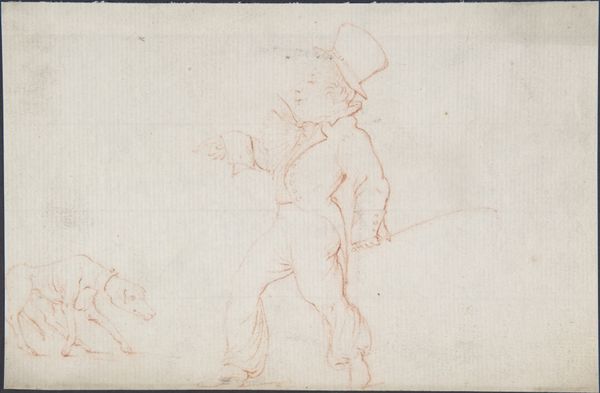
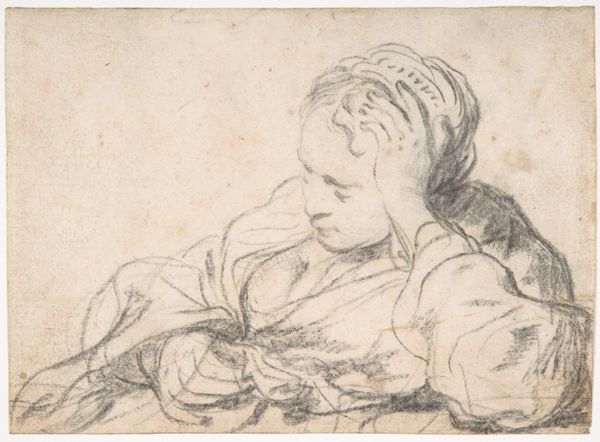
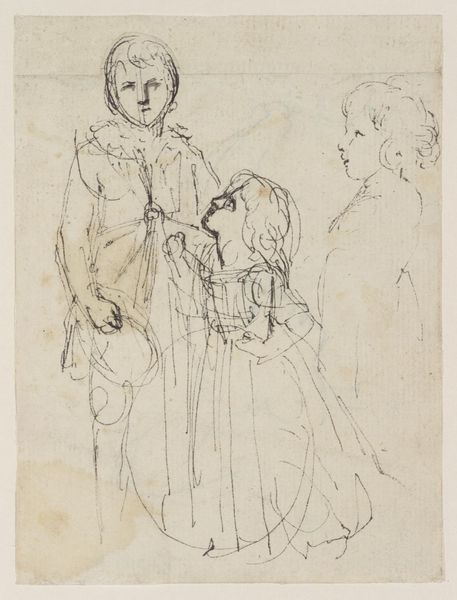
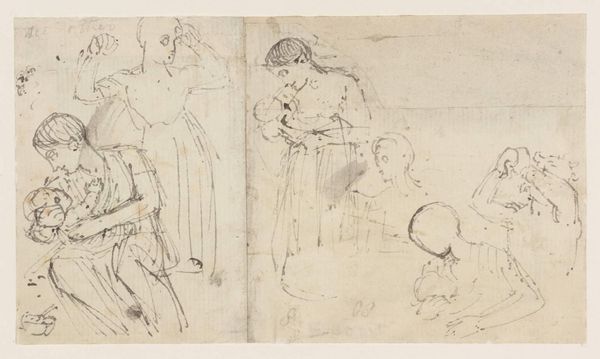
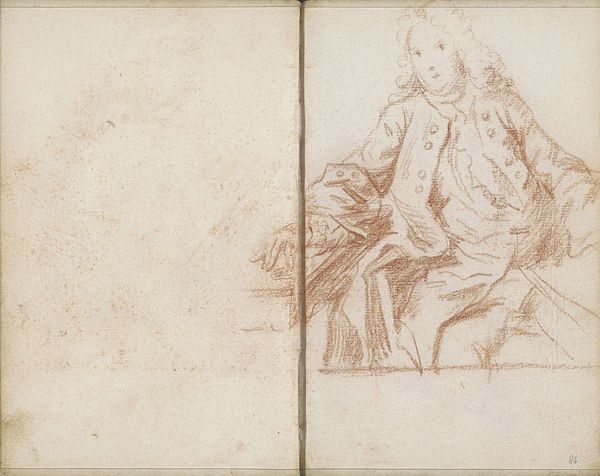
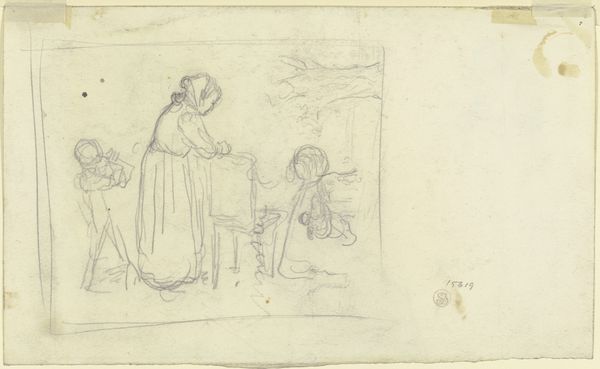
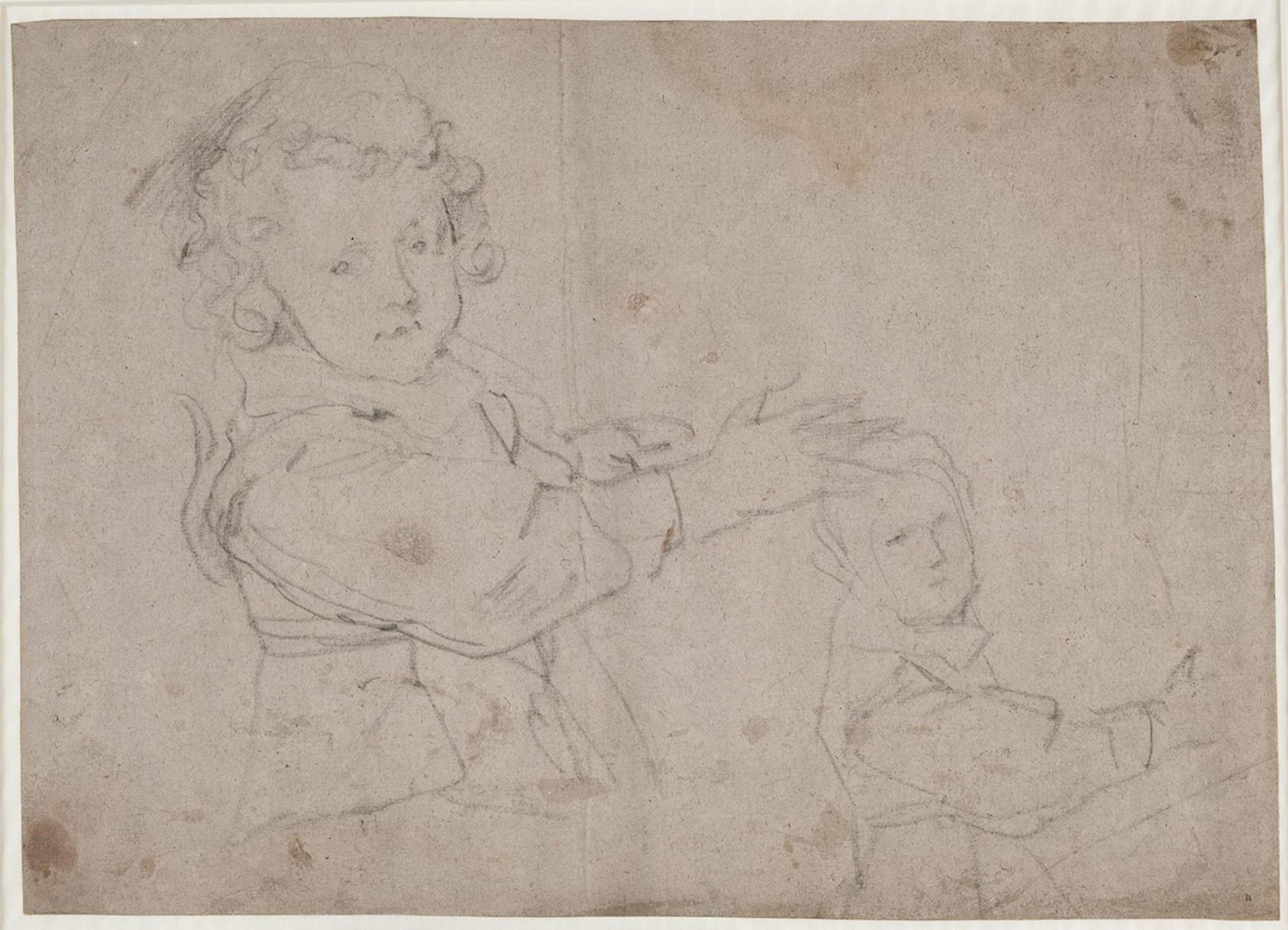
Anthony van Dyck created this drawing, Philip Porter, with pencil. The composition is immediately striking for its asymmetry, with the larger figure of Philip dominating the left side of the frame and the other figure towards the right, creating an imbalance that draws the eye across the surface. Van Dyck’s use of line is particularly noteworthy. The lines are loose and gestural, capturing the essence of the figures with an economy of means. The sketch invites us to consider the semiotic function of drawing itself. As a preparatory sketch, it hovers in a liminal space between conception and execution. The lines act as signifiers, pointing not just to the figures, but to the very process of artistic creation. The incompleteness of the sketch encourages an active engagement from the viewer, who must fill in the gaps, completing the image in their own mind. This act of completion mirrors the broader cultural interpretation of art, where meaning is never fixed but is constantly renegotiated.
Philip Porter 1630 - 1633


Artwork details
- Medium
- drawing
- Dimensions
- 256 mm (height) x 357 mm (width) (bladmaal)
- Location
- SMK - Statens Museum for Kunst
Tags
portrait
drawing
baroque
figuration
academic-art
Comments
No comments
About this artwork
Anthony van Dyck created this drawing, Philip Porter, with pencil. The composition is immediately striking for its asymmetry, with the larger figure of Philip dominating the left side of the frame and the other figure towards the right, creating an imbalance that draws the eye across the surface. Van Dyck’s use of line is particularly noteworthy. The lines are loose and gestural, capturing the essence of the figures with an economy of means. The sketch invites us to consider the semiotic function of drawing itself. As a preparatory sketch, it hovers in a liminal space between conception and execution. The lines act as signifiers, pointing not just to the figures, but to the very process of artistic creation. The incompleteness of the sketch encourages an active engagement from the viewer, who must fill in the gaps, completing the image in their own mind. This act of completion mirrors the broader cultural interpretation of art, where meaning is never fixed but is constantly renegotiated.
Comments
No comments