About this artwork
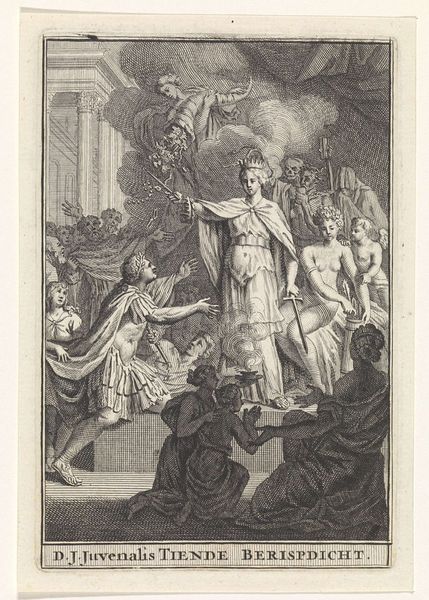
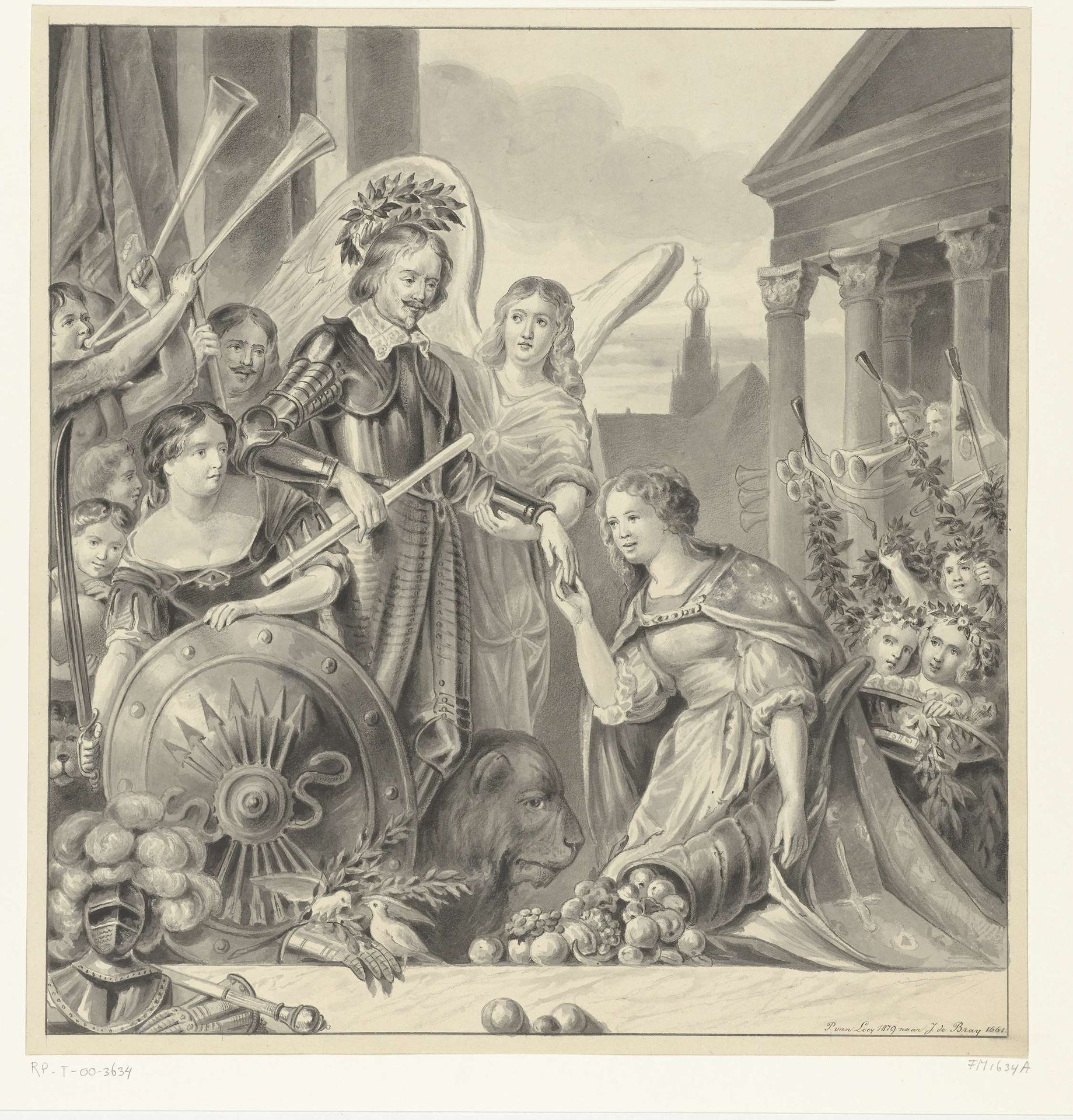
Pieter van Looy created this artwork, "De stadsmaagd van Haarlem knielend voor Frederik Hendrik," using pen and brush in gray during the 19th century. The composition is a formal arrangement, almost theatrical, presenting a scene of submission or offering. The limited grayscale palette emphasizes the forms and their relationships rather than coloristic effects, thus the viewer is prompted to engage with the lines, contours, and the interplay of light and shadow. Consider the visual structure of the artwork through the lens of semiotics. Here, Frederik Hendrik, adorned with a laurel wreath, assumes a Christ-like pose, acting as the principal signifier, and through a system of cultural codes and visual cues such as the armour and lion, it projects power and authority. In contrast, the kneeling virgin of Haarlem is a signifier of submission and civic virtue. This structured opposition not only represents historical and political dynamics but also reinforces prevailing social hierarchies. The lack of vibrant color invites us to contemplate the work’s structural underpinnings. This formal choice underscores a concern with the semiotic implications of representation itself, suggesting that meaning is constructed through carefully orchestrated visual elements.
De stadsmaagd van Haarlem knielend voor Frederik Hendrik
1879

Pieter van Looy
1823 - 1885Location
RijksmuseumArtwork details
- Medium
- drawing, engraving
- Dimensions
- height 428 mm, width 410 mm
- Location
- Rijksmuseum
- Copyright
- Rijks Museum: Open Domain
Tags
Comments
Share your thoughts
About this artwork
Pieter van Looy created this artwork, "De stadsmaagd van Haarlem knielend voor Frederik Hendrik," using pen and brush in gray during the 19th century. The composition is a formal arrangement, almost theatrical, presenting a scene of submission or offering. The limited grayscale palette emphasizes the forms and their relationships rather than coloristic effects, thus the viewer is prompted to engage with the lines, contours, and the interplay of light and shadow. Consider the visual structure of the artwork through the lens of semiotics. Here, Frederik Hendrik, adorned with a laurel wreath, assumes a Christ-like pose, acting as the principal signifier, and through a system of cultural codes and visual cues such as the armour and lion, it projects power and authority. In contrast, the kneeling virgin of Haarlem is a signifier of submission and civic virtue. This structured opposition not only represents historical and political dynamics but also reinforces prevailing social hierarchies. The lack of vibrant color invites us to contemplate the work’s structural underpinnings. This formal choice underscores a concern with the semiotic implications of representation itself, suggesting that meaning is constructed through carefully orchestrated visual elements.
Comments
Share your thoughts