About this artwork
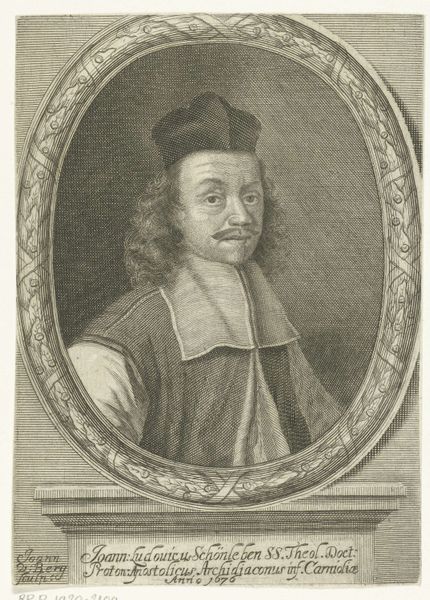
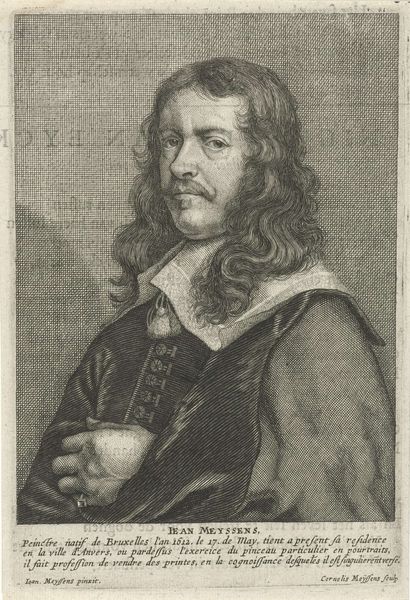
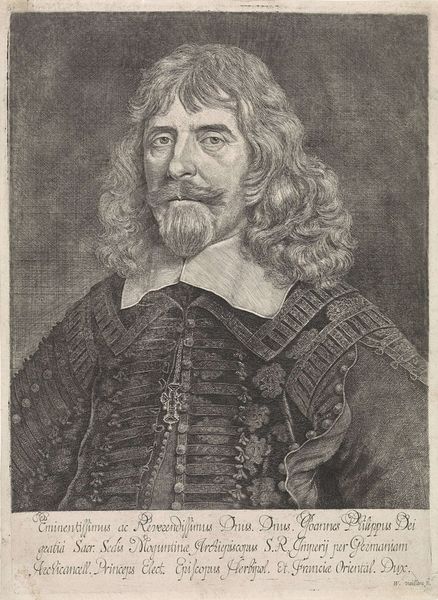
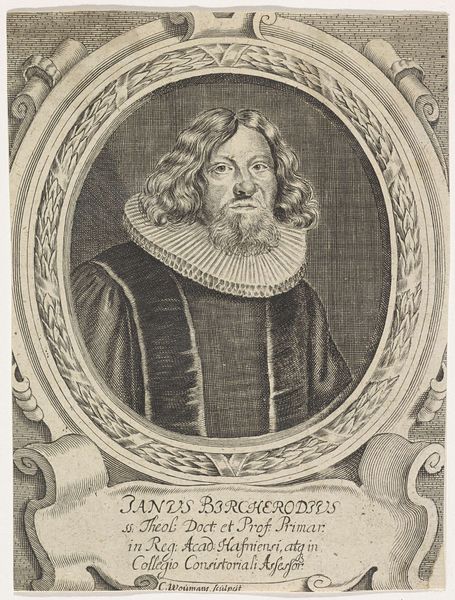
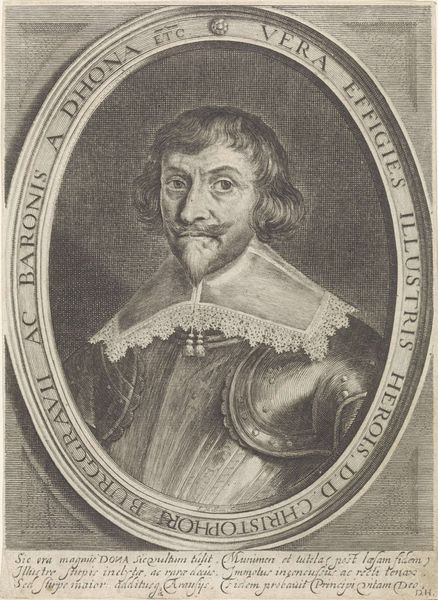
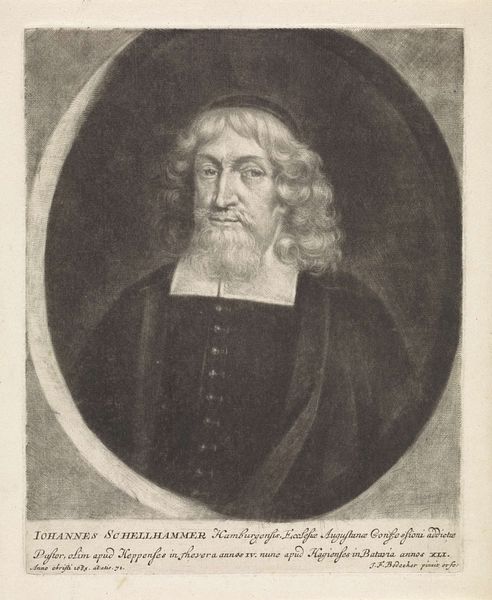
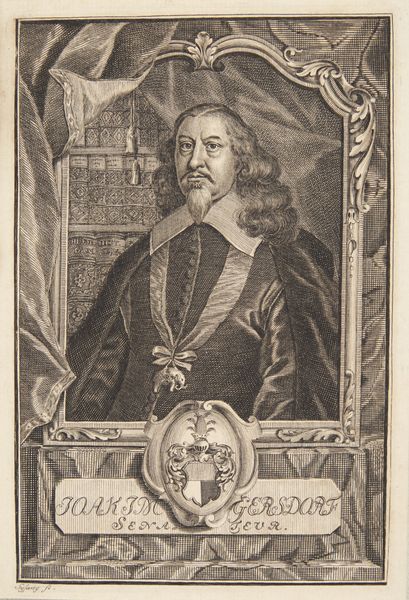
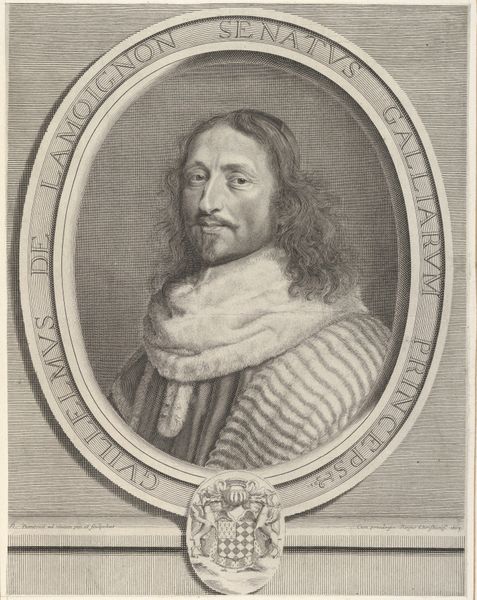
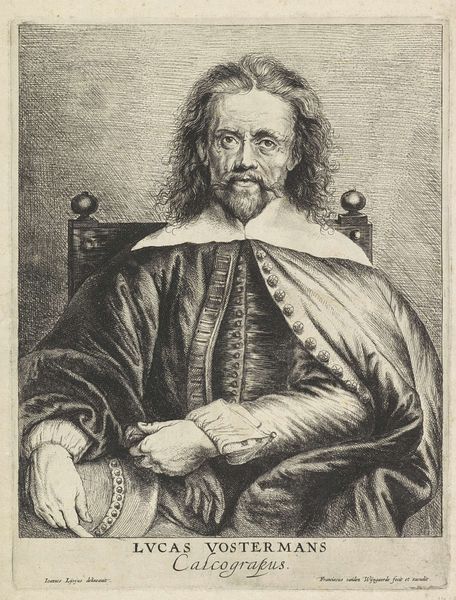
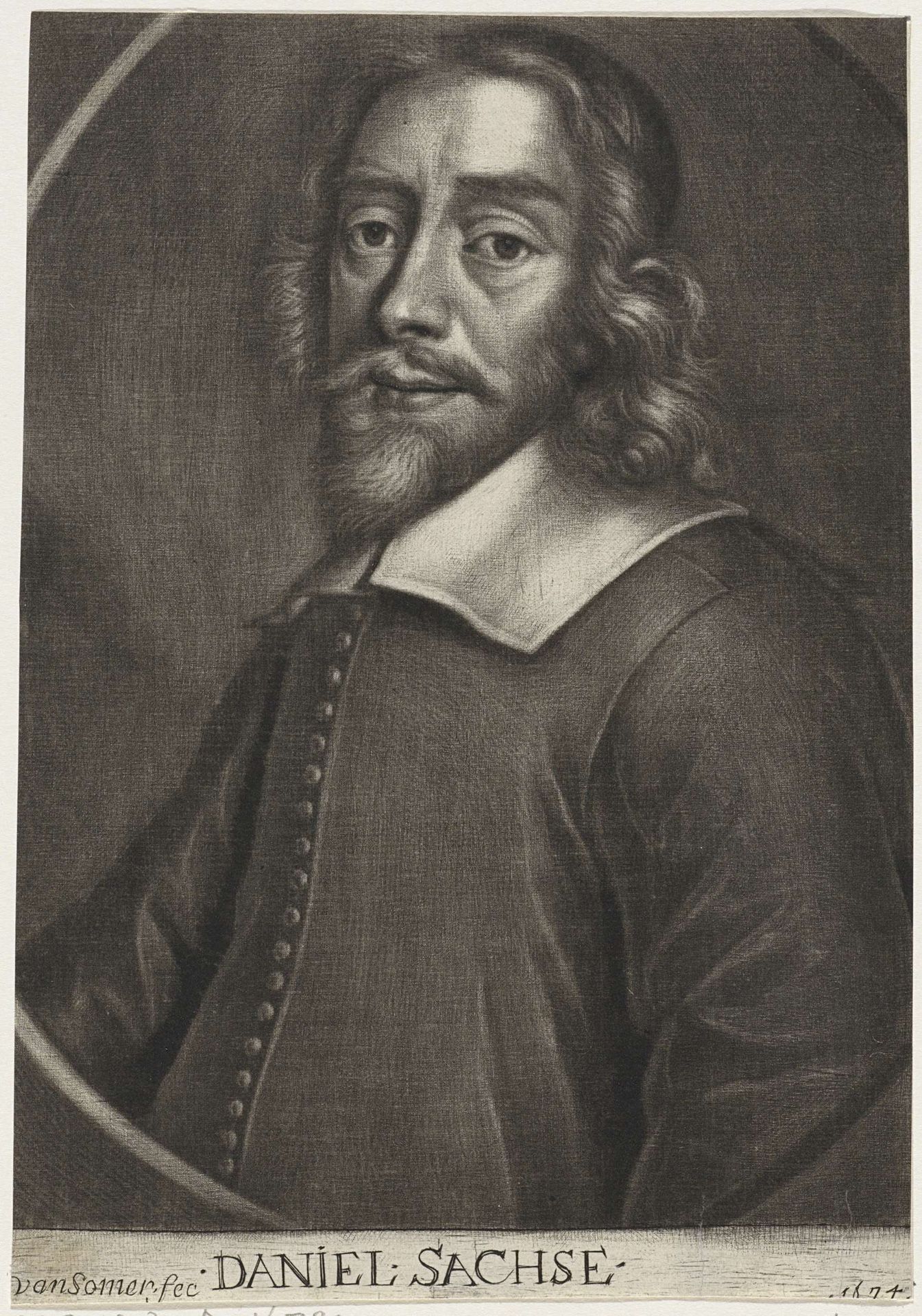
Editor: So, here we have Jan van Somer's "Portret van Daniel Sachse" from 1674, an engraving. It has such a somber, almost stoic feel. How do you read this portrait through a historical lens? Curator: Well, consider the Dutch Golden Age in which this was made. Portraiture served as a powerful tool for constructing and reinforcing social hierarchies. Who do you think Sachse was, and what kind of message was the artist trying to convey? Editor: Considering the formality of the portrait, the buttoned jacket and high collar, maybe he was a member of the merchant class or a scholar, someone of some social standing? Curator: Precisely. Engravings like this facilitated the dissemination of images. They helped to shape public perception of individuals and reinforced the authority of certain classes. It’s not just about capturing a likeness; it's about projecting an image into the public sphere. Notice the way the line work creates depth and seriousness. Does that fit into any art movements that come to mind? Editor: The attention to detail makes me think of realism, even with that very subtle line work. I hadn’t thought about engravings as playing a public role in image creation, but that makes a lot of sense! Curator: The realism connects to a broader societal trend: a growing emphasis on individual achievement and recognition within a burgeoning mercantile society. Editor: I see! So the very act of creating and distributing this portrait via engraving becomes a social and perhaps even a political act. It really enriches my appreciation of this seemingly simple image. Curator: Absolutely. Art in this period wasn't simply decoration, but active agent in social negotiations. Considering the function enriches our interpretation.

Artwork details
- Medium
- engraving
- Dimensions
- height 207 mm, width 145 mm
- Copyright
- Rijks Museum: Open Domain
Tags
portrait
baroque
dutch-golden-age
portrait
line
history-painting
engraving
realism
Comments
No comments
About this artwork
Editor: So, here we have Jan van Somer's "Portret van Daniel Sachse" from 1674, an engraving. It has such a somber, almost stoic feel. How do you read this portrait through a historical lens? Curator: Well, consider the Dutch Golden Age in which this was made. Portraiture served as a powerful tool for constructing and reinforcing social hierarchies. Who do you think Sachse was, and what kind of message was the artist trying to convey? Editor: Considering the formality of the portrait, the buttoned jacket and high collar, maybe he was a member of the merchant class or a scholar, someone of some social standing? Curator: Precisely. Engravings like this facilitated the dissemination of images. They helped to shape public perception of individuals and reinforced the authority of certain classes. It’s not just about capturing a likeness; it's about projecting an image into the public sphere. Notice the way the line work creates depth and seriousness. Does that fit into any art movements that come to mind? Editor: The attention to detail makes me think of realism, even with that very subtle line work. I hadn’t thought about engravings as playing a public role in image creation, but that makes a lot of sense! Curator: The realism connects to a broader societal trend: a growing emphasis on individual achievement and recognition within a burgeoning mercantile society. Editor: I see! So the very act of creating and distributing this portrait via engraving becomes a social and perhaps even a political act. It really enriches my appreciation of this seemingly simple image. Curator: Absolutely. Art in this period wasn't simply decoration, but active agent in social negotiations. Considering the function enriches our interpretation.
Comments
No comments