About this artwork
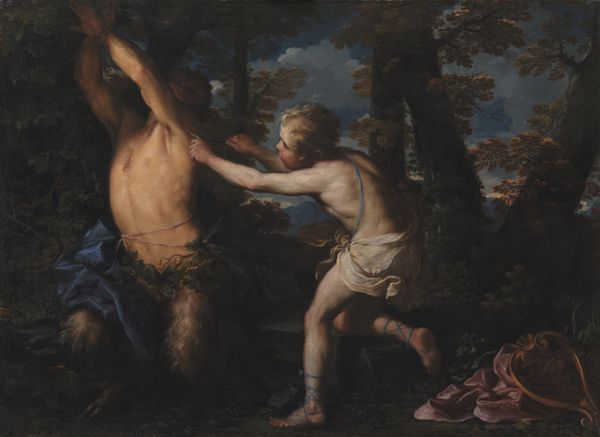
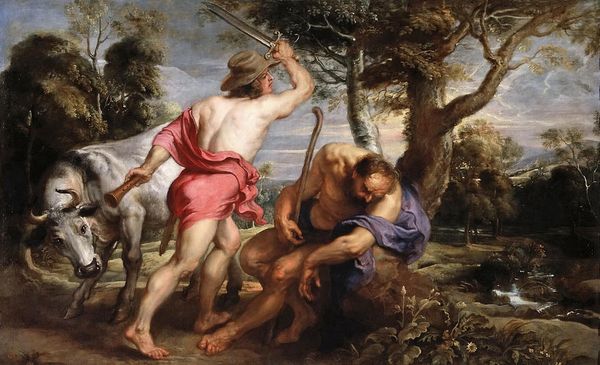
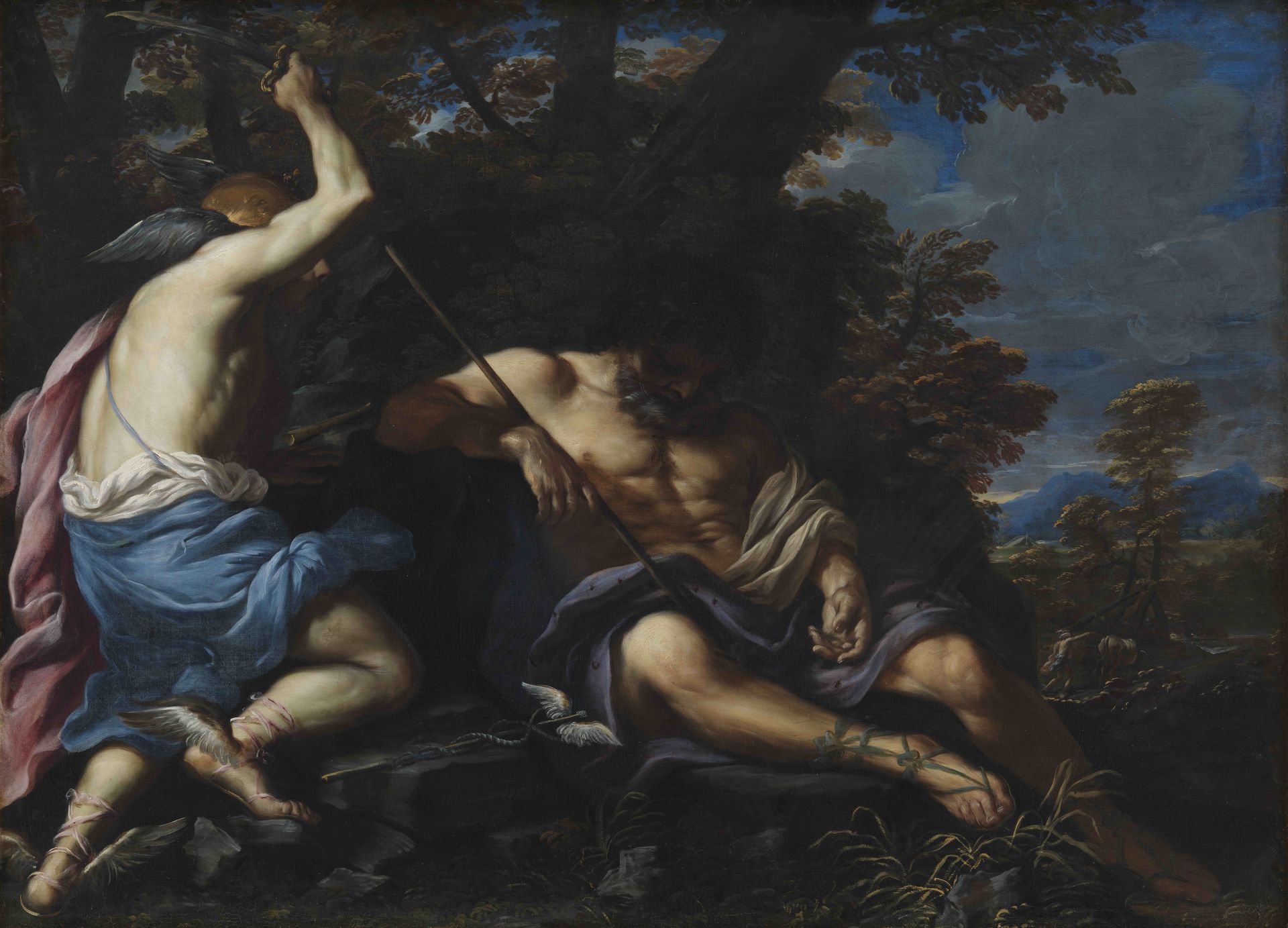
Girolamo Troppa created this painting, Mercury Killing Argus, in the 17th century. The piece depicts a story from Ovid's *Metamorphoses*, a narrative that was often painted during the Baroque era. It's a story of power and deception. Jupiter, disguised as a bull, seduced the nymph Io, resulting in her transformation into a heifer. The hundred-eyed giant, Argus, was then tasked by Juno to watch over Io. Here we see Mercury, sent by Jupiter, who is about to slay Argus, in order to free Io. Troppa masterfully captures the moment just before the kill, heightening the tension. Mercury, a figure of divine authority, stands poised over the mortal Argus. Note the contrast: Mercury is youthful and almost feminine, while Argus is mature and masculine. This is less a heroic act and more an act of cold, calculated power. Troppa invites us to consider the emotional weight of this moment, the vulnerability of Argus, and the ruthless will of the gods.
Mercury Killing Argus 1651 - 1706


Artwork details
- Medium
- oil-paint
- Dimensions
- 96 cm (height) x 132 cm (width) (Netto)
- Location
- SMK - Statens Museum for Kunst
Tags
allegory
baroque
oil-paint
landscape
figuration
oil painting
history-painting
Comments
No comments
About this artwork
Girolamo Troppa created this painting, Mercury Killing Argus, in the 17th century. The piece depicts a story from Ovid's *Metamorphoses*, a narrative that was often painted during the Baroque era. It's a story of power and deception. Jupiter, disguised as a bull, seduced the nymph Io, resulting in her transformation into a heifer. The hundred-eyed giant, Argus, was then tasked by Juno to watch over Io. Here we see Mercury, sent by Jupiter, who is about to slay Argus, in order to free Io. Troppa masterfully captures the moment just before the kill, heightening the tension. Mercury, a figure of divine authority, stands poised over the mortal Argus. Note the contrast: Mercury is youthful and almost feminine, while Argus is mature and masculine. This is less a heroic act and more an act of cold, calculated power. Troppa invites us to consider the emotional weight of this moment, the vulnerability of Argus, and the ruthless will of the gods.
Comments
No comments