515 BC
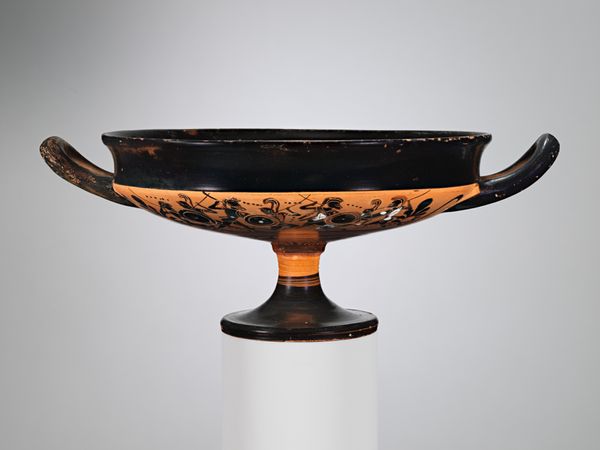
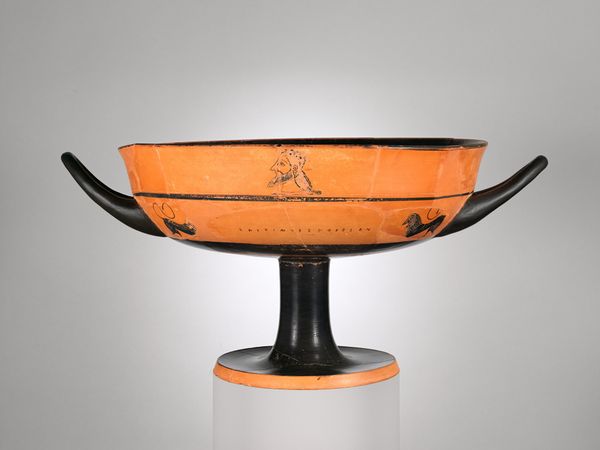
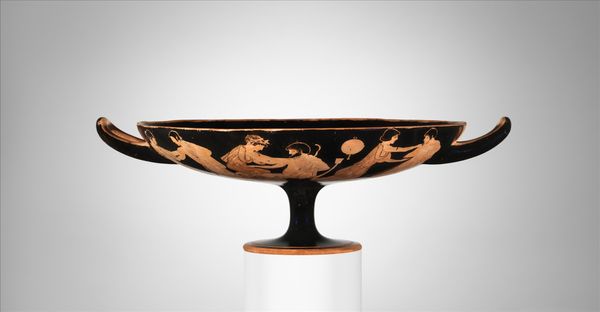
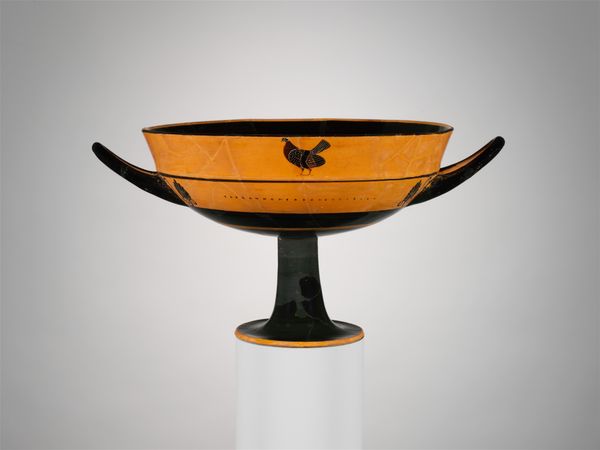
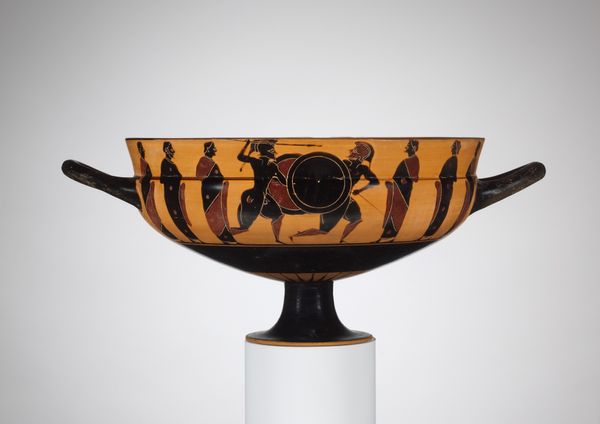
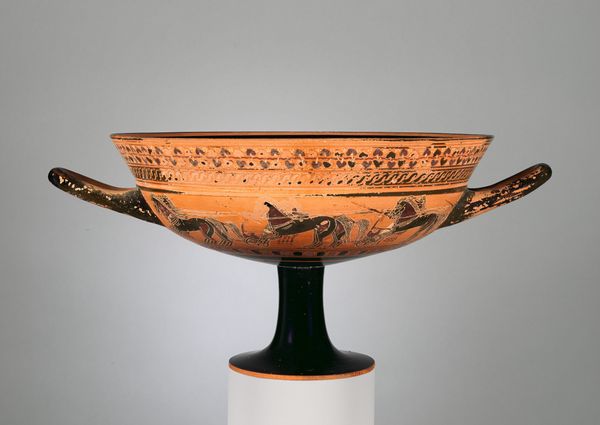
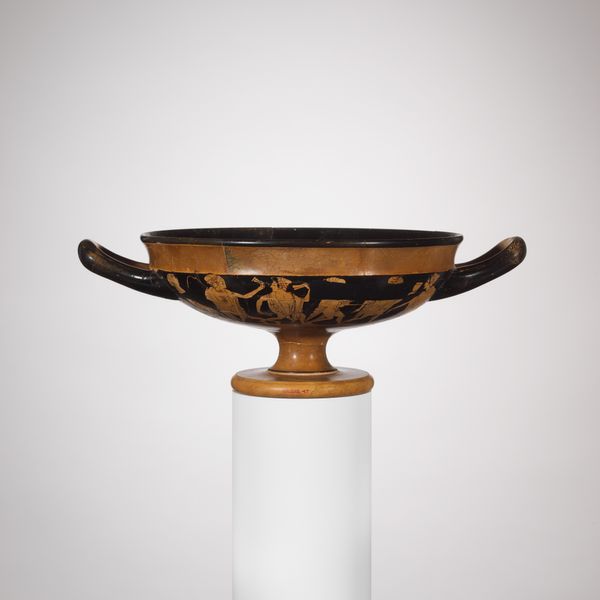
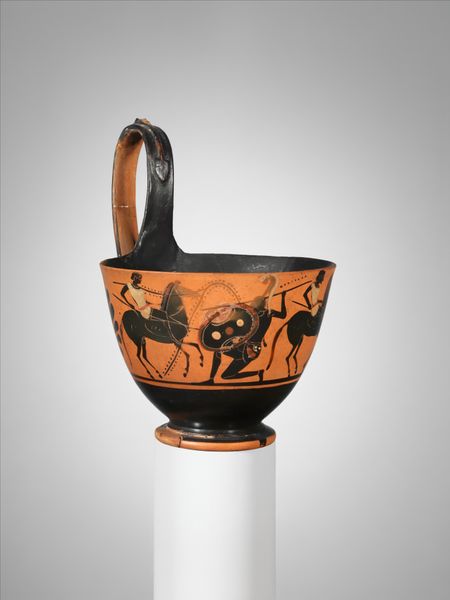
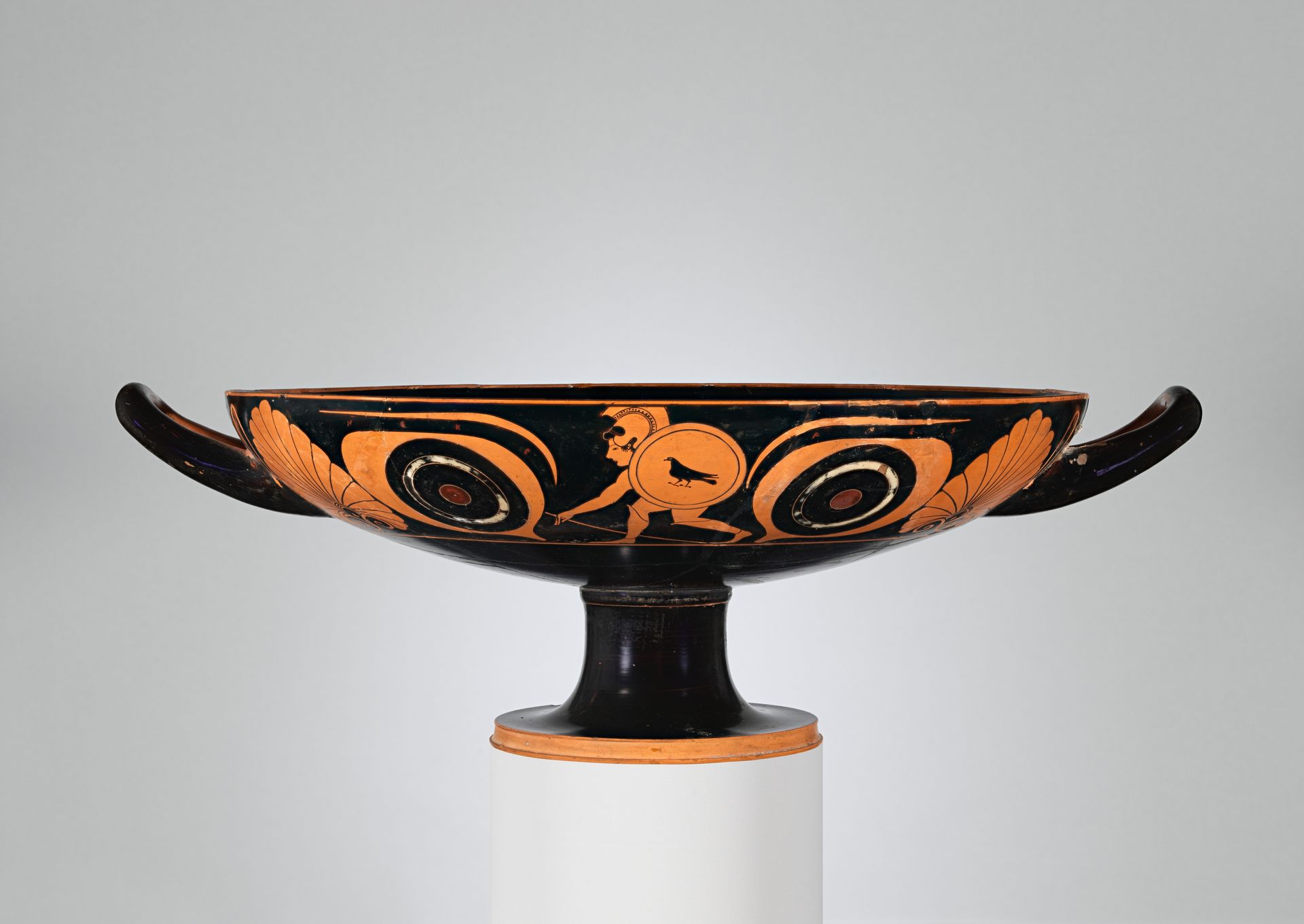
Terracotta kylix: eye-cup (drinking cup)


Listen to curator's interpretation
Curatorial notes
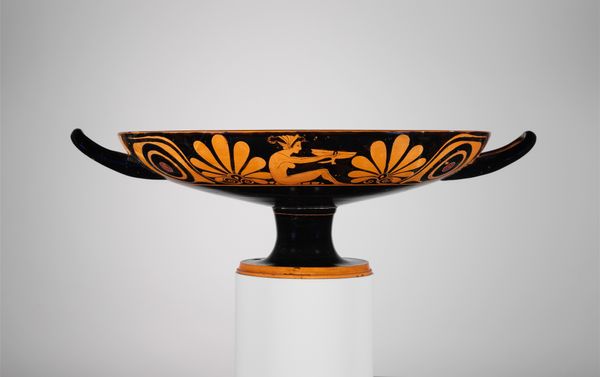
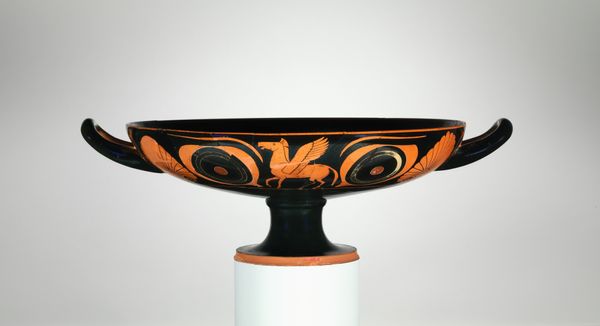
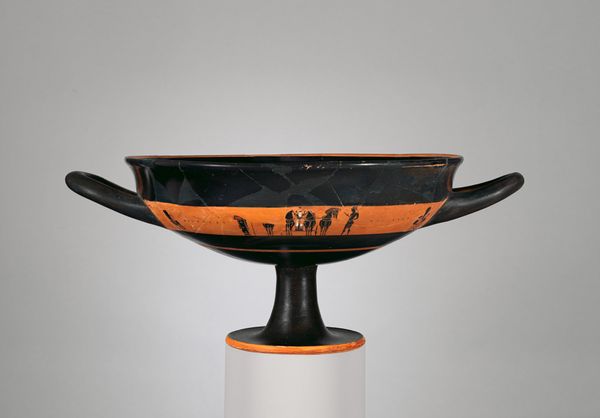
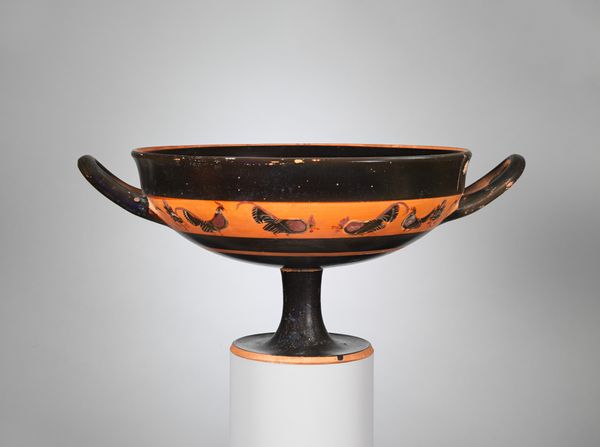
Editor: This is a terracotta kylix, an eye-cup, dated around 515 BC. It’s currently held at the Metropolitan Museum of Art. I find the stark contrast between the red and black figures very striking, it's almost theatrical. What do you see in this piece, considering its function as a drinking cup? Curator: Beyond its functionality, this cup is a fascinating vessel for understanding ancient Greek culture. The eyes, of course, are immediately noticeable – apotropaic symbols believed to ward off evil, but what sort of evil? Perhaps the evils of drunken revelry. But note also the warrior: do you notice anything unusual about his shield? Editor: Yes, there's a bird depicted on the shield. Most shields have intimidating symbols; that's not intimidating. Curator: Exactly. That bird could signify many things – freedom, perhaps, or a messenger of the gods. But consider also the overall scene in the context of a symposium. This isn’t just a drinking vessel, but a conversation piece. This imagery acts as a trigger for discussion, stories, shared myths. The images invite reflection on war and peace, courage and vulnerability. What stories might these symbols have triggered when the cup was drained? Editor: That's fascinating. I hadn’t considered how the image selection promotes group reflection as drinking takes place. The artist really created more than just a vessel; it’s an interactive storytelling device. Curator: Precisely. The Greeks believed in the power of shared experience and collective memory. This kylix is not just a cup; it is a carrier of cultural narratives and shared humanity across generations. Editor: Thank you. Now I’m thinking about all the narratives contained in this artwork and others of its era.