About this artwork
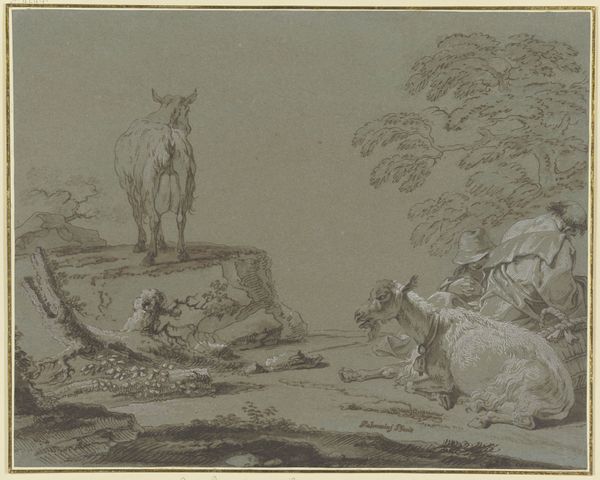
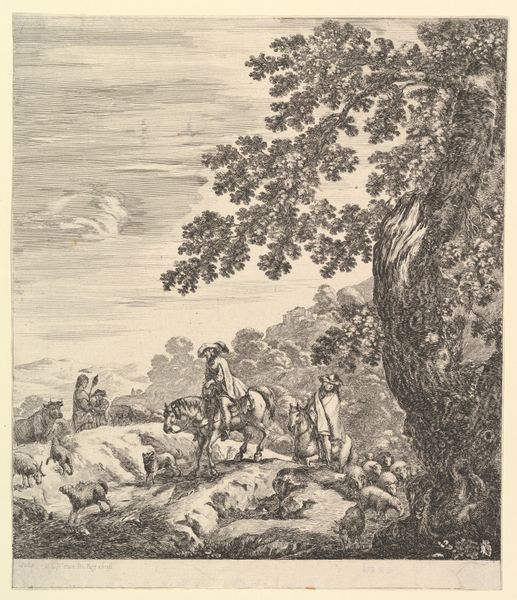
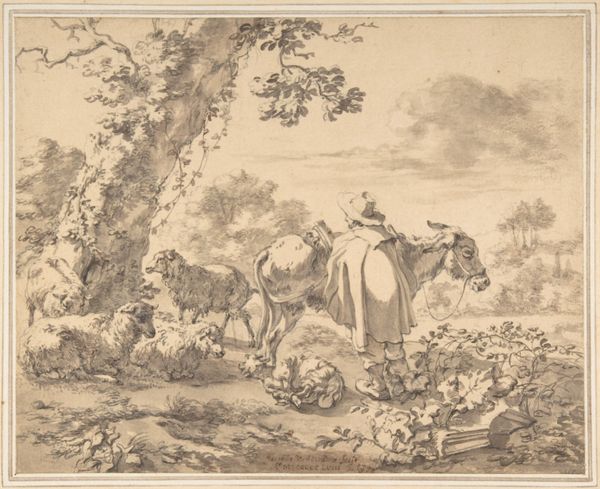
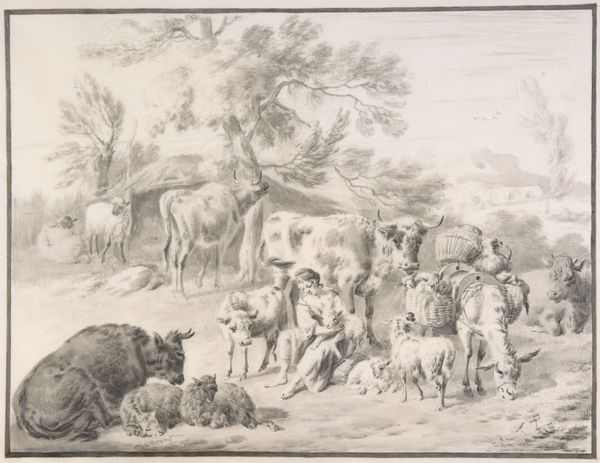
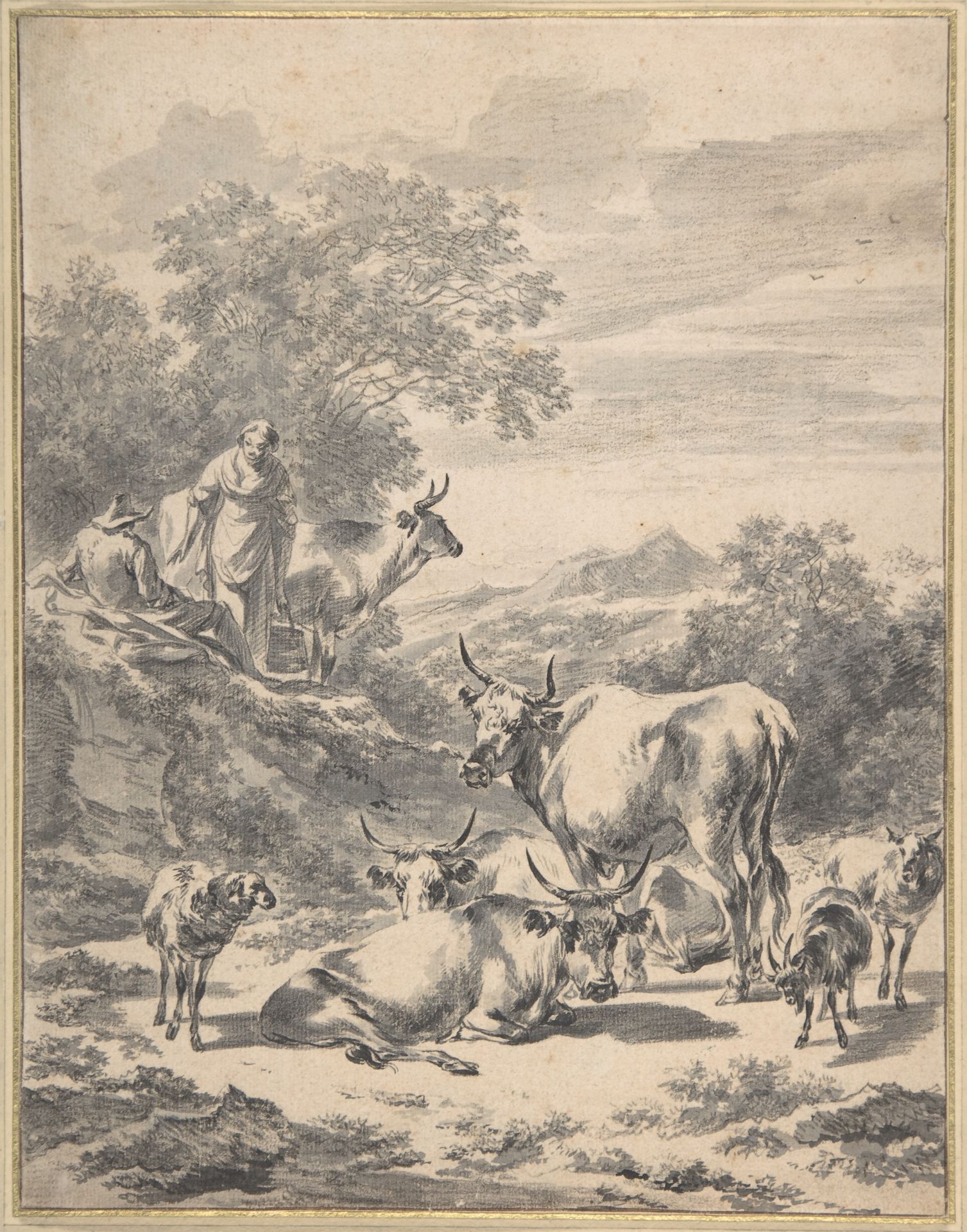
Nicolaes Berchem created this drawing of herdsmen and livestock on paper with graphite and grey wash. Washes like this one involve diluting pigment to create a translucent layer of color that is applied with a brush. Berchem's skilled application of the wash is evident in the subtle gradations of tone, which give the drawing depth and volume. Through his mastery of this technique, Berchem elevates what might have been a simple pastoral scene into a sophisticated artistic statement. Beyond its technical aspects, this drawing is also interesting from a social perspective. Berchem made numerous paintings of rural life in Italy, yet he never actually travelled there. Instead, he drew on the work of other Dutch Golden Age artists who had made the journey south. His landscapes were popular amongst the wealthy merchant class in Amsterdam, suggesting that this drawing, which appears to celebrate the peasant way of life, was intended for a very different audience.
Herdsmen with Cattle and Sheep in Italianate Landscape
1635 - 1683


Artwork details
- Medium
- drawing, pencil
- Dimensions
- 10 3/8 x 8 in. (26.6 x 20.7 cm)
- Location
- Metropolitan Museum of Art, New York, NY
- Copyright
- Public Domain
Tags
Comments
Share your thoughts
About this artwork
Nicolaes Berchem created this drawing of herdsmen and livestock on paper with graphite and grey wash. Washes like this one involve diluting pigment to create a translucent layer of color that is applied with a brush. Berchem's skilled application of the wash is evident in the subtle gradations of tone, which give the drawing depth and volume. Through his mastery of this technique, Berchem elevates what might have been a simple pastoral scene into a sophisticated artistic statement. Beyond its technical aspects, this drawing is also interesting from a social perspective. Berchem made numerous paintings of rural life in Italy, yet he never actually travelled there. Instead, he drew on the work of other Dutch Golden Age artists who had made the journey south. His landscapes were popular amongst the wealthy merchant class in Amsterdam, suggesting that this drawing, which appears to celebrate the peasant way of life, was intended for a very different audience.
Comments
Share your thoughts