About this artwork
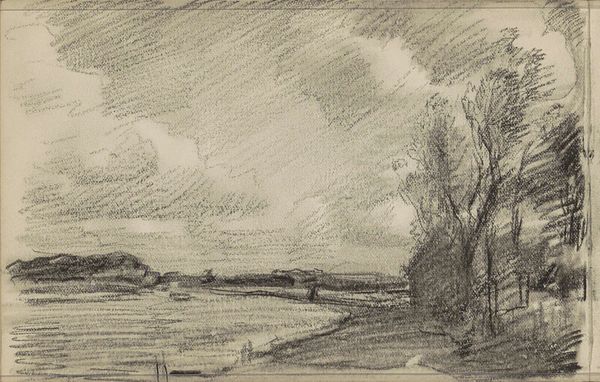
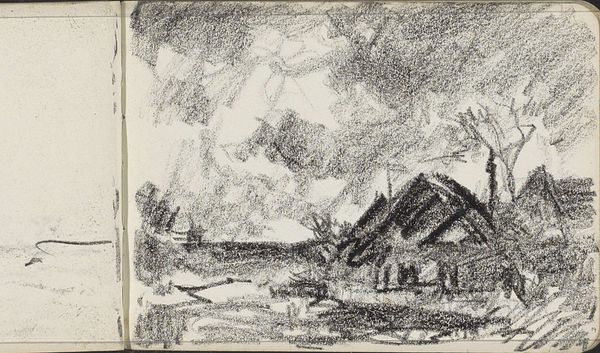
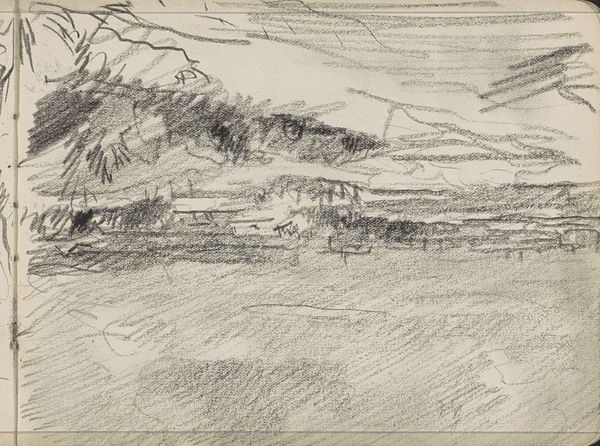
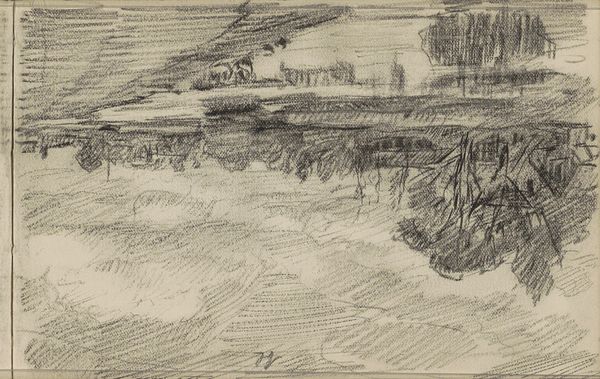
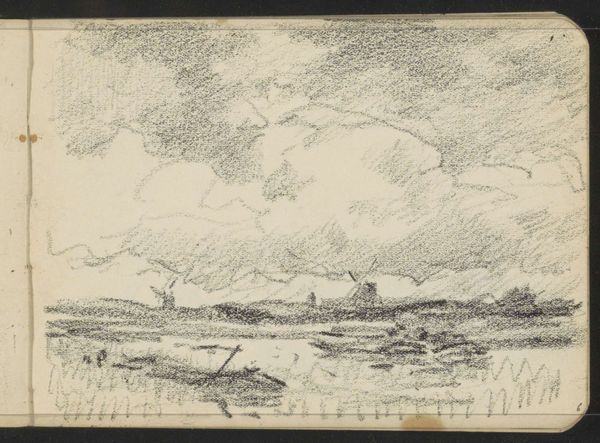
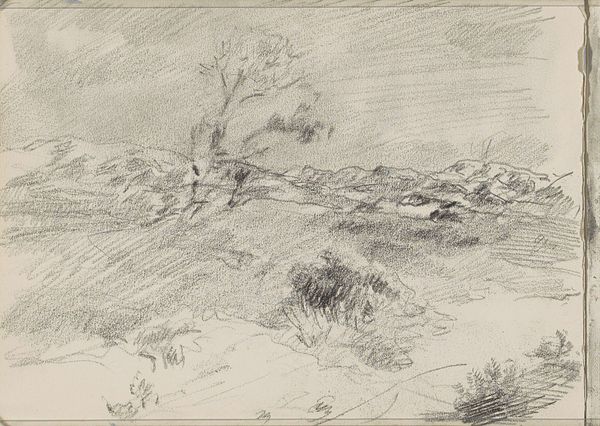
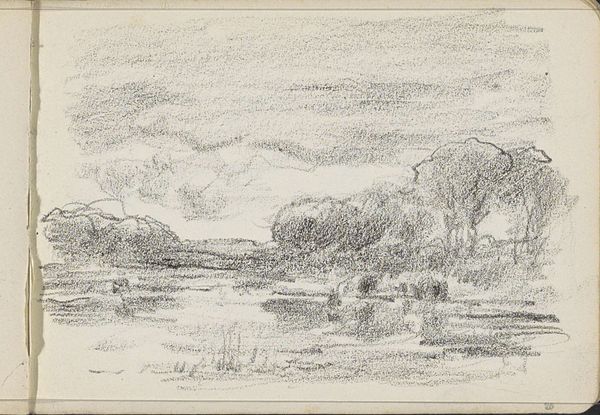
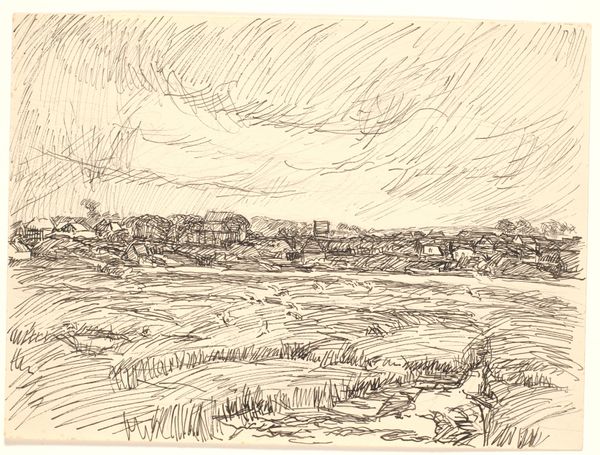
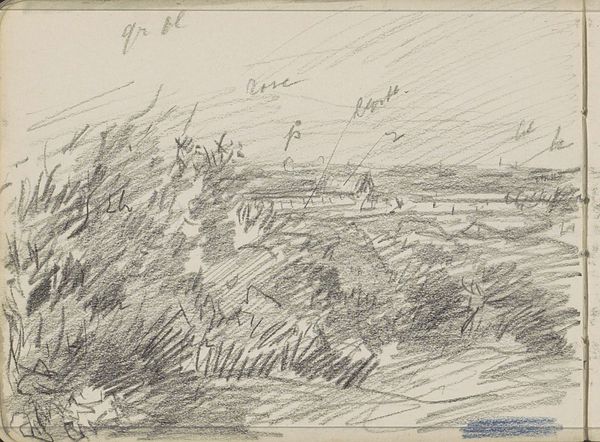
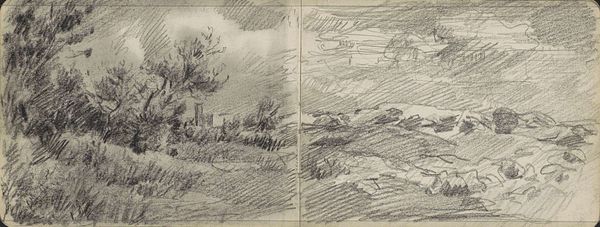
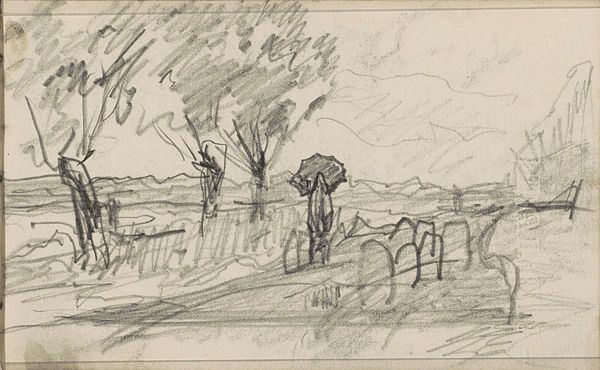
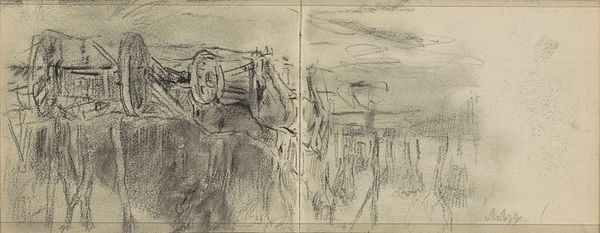
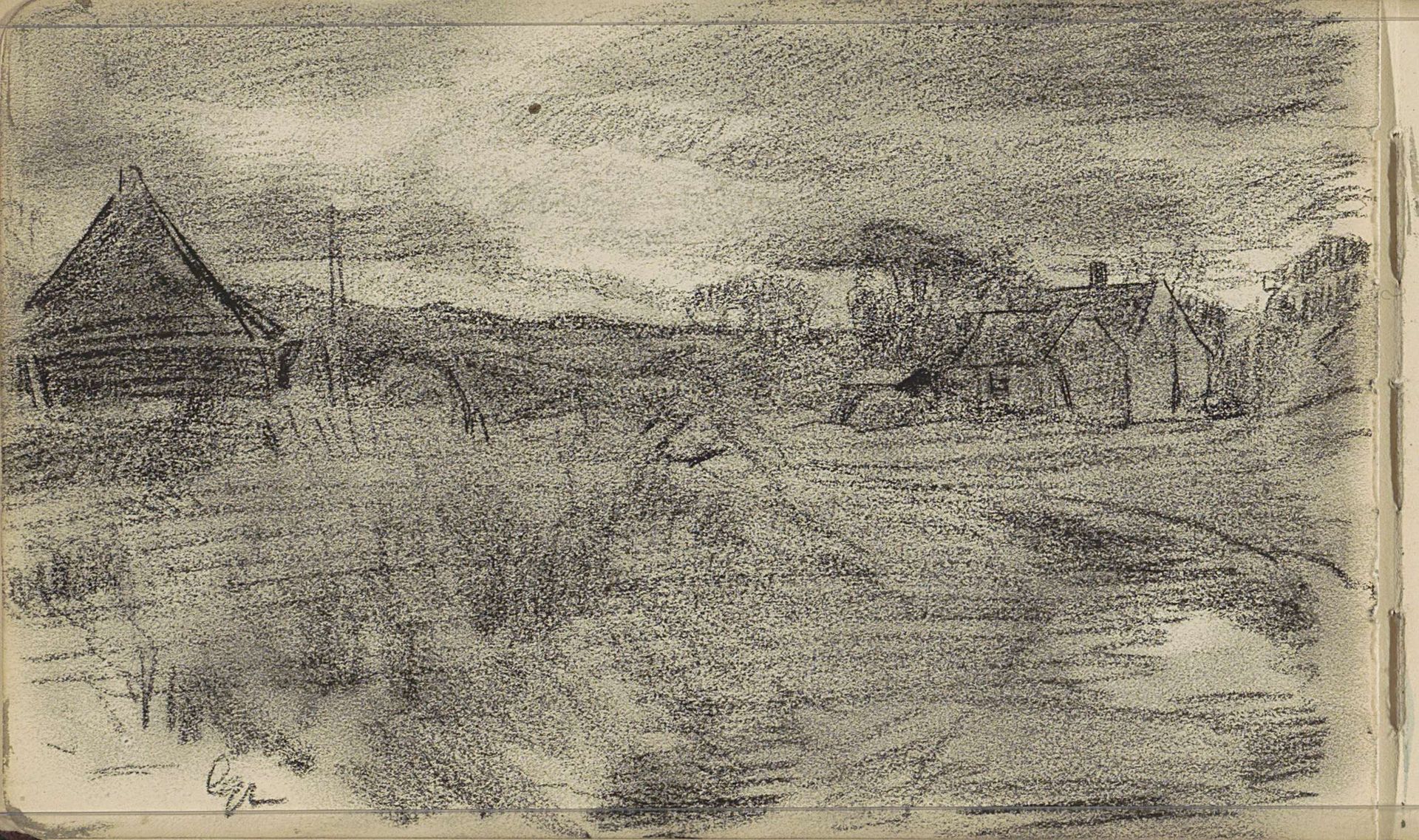
Johan Antonie de Jonge created this landscape with buildings using graphite or charcoal, achieving a striking tonal range. The composition is divided into three horizontal sections: foreground, middle ground, and sky, each densely marked with textural strokes. Notice how the darker foreground leads the eye towards the lighter buildings in the midground, creating a sense of depth, while the sky is treated with soft gradations, suggesting atmospheric perspective. The buildings are rendered with sharp, angular lines, contrasting with the more organic forms of the landscape. This interplay between geometric and organic shapes is essential. This drawing flattens pictorial space, challenging conventional landscape aesthetics and pointing towards a modernist sensibility, where the flatness of the picture plane is acknowledged rather than concealed. The stark contrast between light and shadow, coupled with the artist's active mark-making, suggests a dynamic engagement with the subject. Ultimately, it reflects a tension between representation and abstraction.

Artwork details
- Medium
- drawing, pencil
- Copyright
- Rijks Museum: Open Domain
Tags
drawing
amateur sketch
toned paper
pen sketch
pencil sketch
sketch book
incomplete sketchy
landscape
personal sketchbook
pen-ink sketch
pencil
sketchbook drawing
sketchbook art
realism
Comments
No comments
About this artwork
Johan Antonie de Jonge created this landscape with buildings using graphite or charcoal, achieving a striking tonal range. The composition is divided into three horizontal sections: foreground, middle ground, and sky, each densely marked with textural strokes. Notice how the darker foreground leads the eye towards the lighter buildings in the midground, creating a sense of depth, while the sky is treated with soft gradations, suggesting atmospheric perspective. The buildings are rendered with sharp, angular lines, contrasting with the more organic forms of the landscape. This interplay between geometric and organic shapes is essential. This drawing flattens pictorial space, challenging conventional landscape aesthetics and pointing towards a modernist sensibility, where the flatness of the picture plane is acknowledged rather than concealed. The stark contrast between light and shadow, coupled with the artist's active mark-making, suggests a dynamic engagement with the subject. Ultimately, it reflects a tension between representation and abstraction.
Comments
No comments