About this artwork
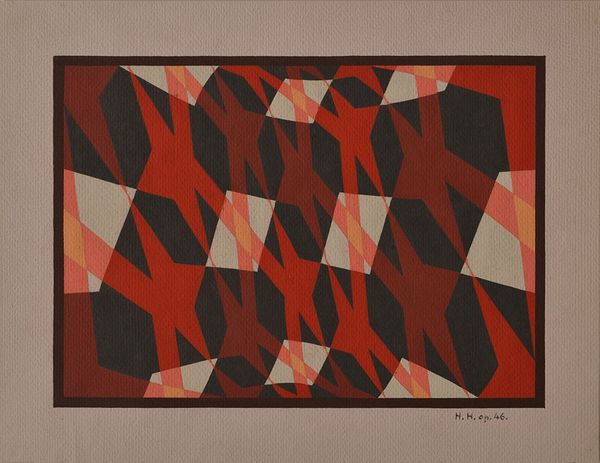
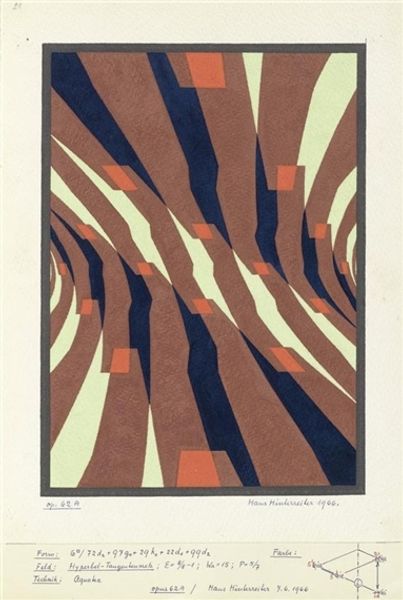
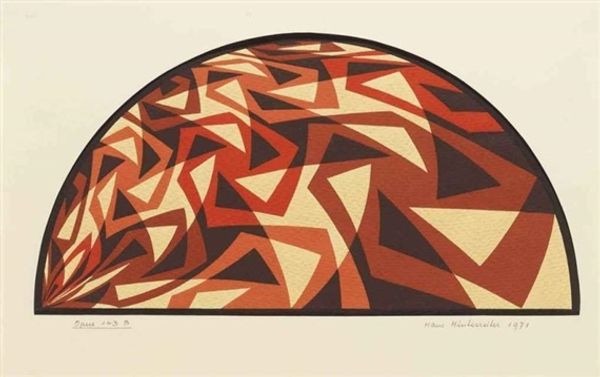
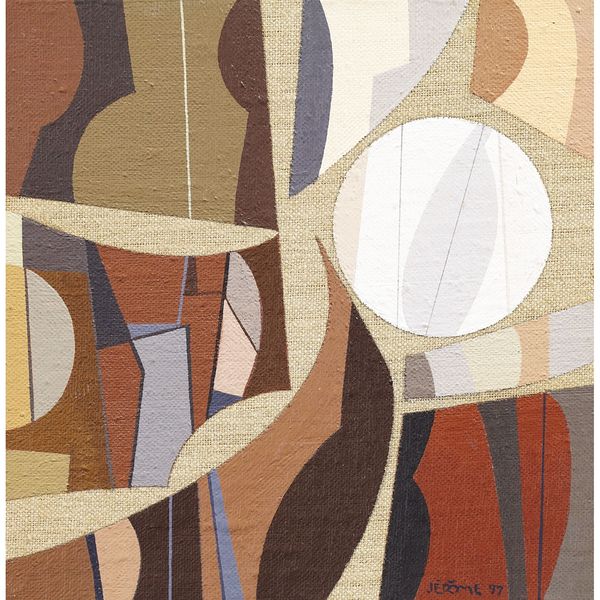
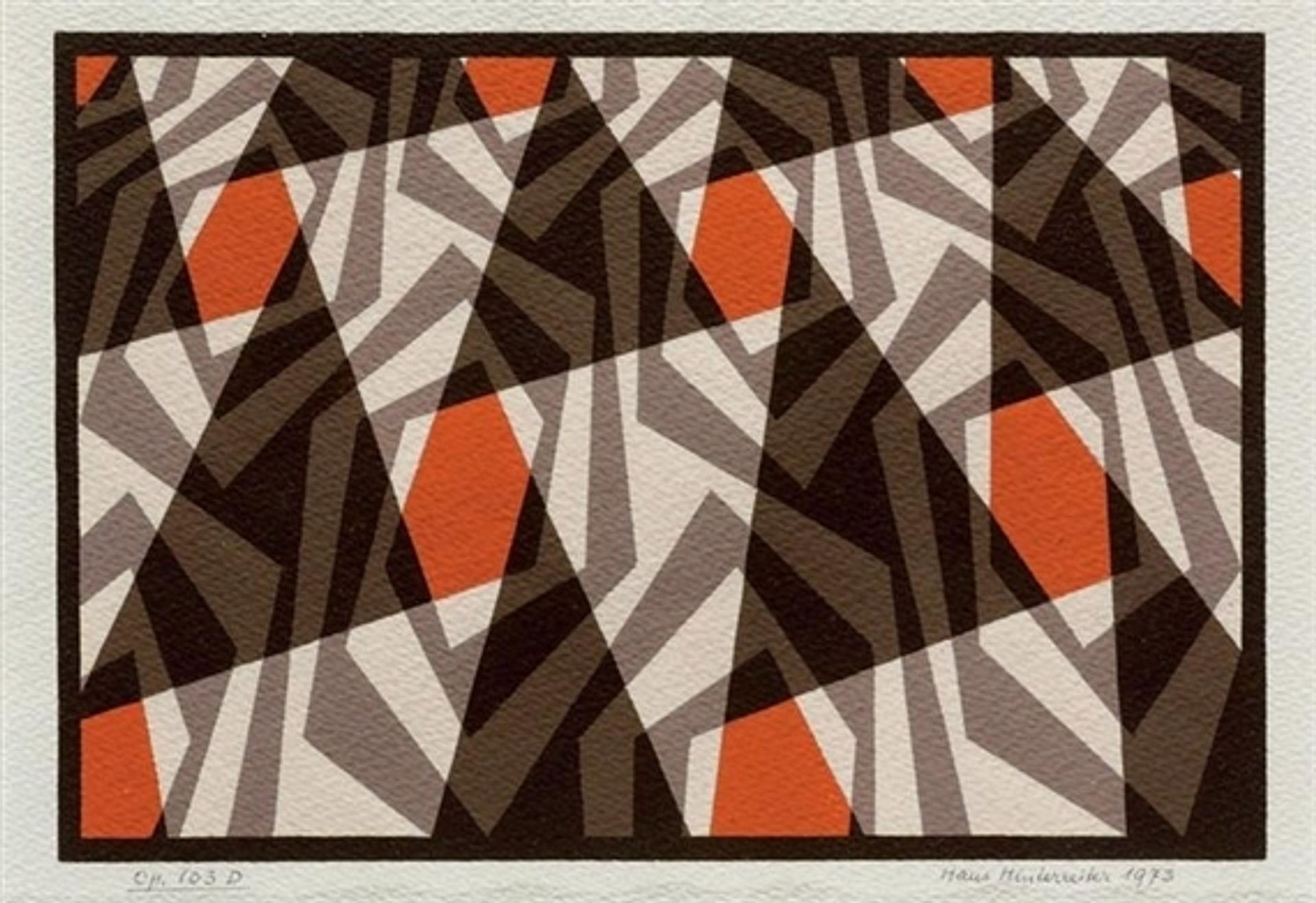
Hans Hinterreiter created this print, titled Opus 103 D, using screen printing, a process that democratized image-making during the 20th century. Screen printing involves pushing ink through a mesh onto paper. The areas you don't want to print are blocked out, creating a stencil. Hinterreiter's print uses layers of geometric shapes in orange, brown, and gray to create a dynamic composition. The overlapping colors create new shades and visual depth, with varying transparency. Screen printing enabled artists to produce multiples quickly and inexpensively. The process allowed artists to engage with a wider audience, making art more accessible beyond traditional painting and sculpture. The crisp lines and flat colors are characteristic of the medium, lending a graphic quality to the work, while the subtle texture of the paper reminds us of the hand involved in its production. Considering the materials, process, and social context is crucial to fully appreciate the work of art. It challenges traditional notions of fine art and craft, highlighting the artist's engagement with design and industry.

Artwork details
- Medium
- mixed-media, textile
- Copyright
- Hans Hinterreiter,Fair Use
Tags
mixed-media
concrete-art
pattern
textile
geometric
abstraction
modernism
hard-edge-painting
Comments
No comments
About this artwork
Hans Hinterreiter created this print, titled Opus 103 D, using screen printing, a process that democratized image-making during the 20th century. Screen printing involves pushing ink through a mesh onto paper. The areas you don't want to print are blocked out, creating a stencil. Hinterreiter's print uses layers of geometric shapes in orange, brown, and gray to create a dynamic composition. The overlapping colors create new shades and visual depth, with varying transparency. Screen printing enabled artists to produce multiples quickly and inexpensively. The process allowed artists to engage with a wider audience, making art more accessible beyond traditional painting and sculpture. The crisp lines and flat colors are characteristic of the medium, lending a graphic quality to the work, while the subtle texture of the paper reminds us of the hand involved in its production. Considering the materials, process, and social context is crucial to fully appreciate the work of art. It challenges traditional notions of fine art and craft, highlighting the artist's engagement with design and industry.
Comments
No comments