About this artwork
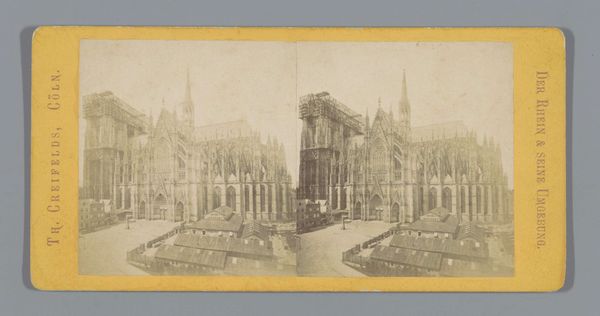
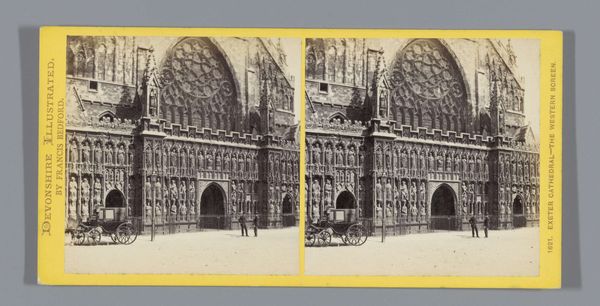
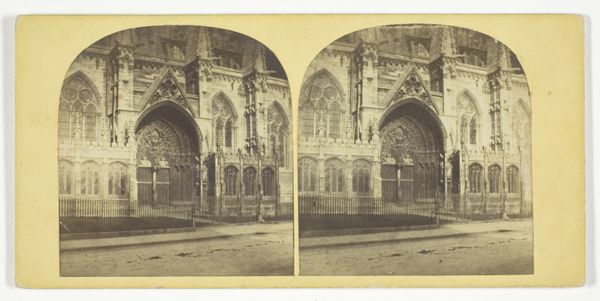
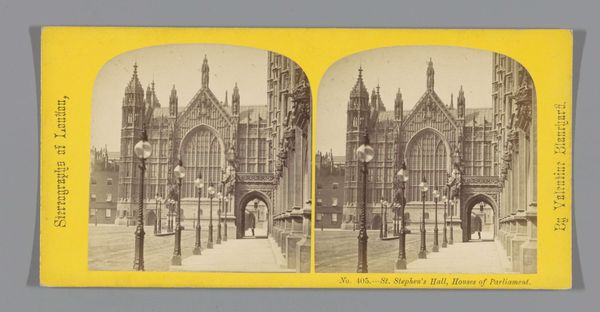
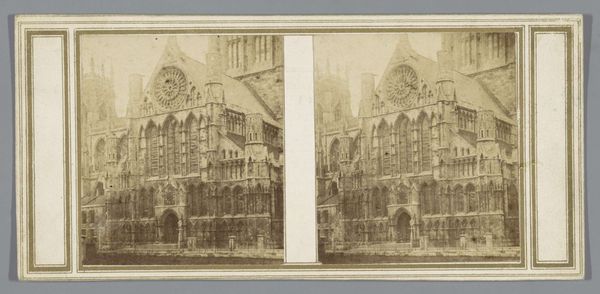
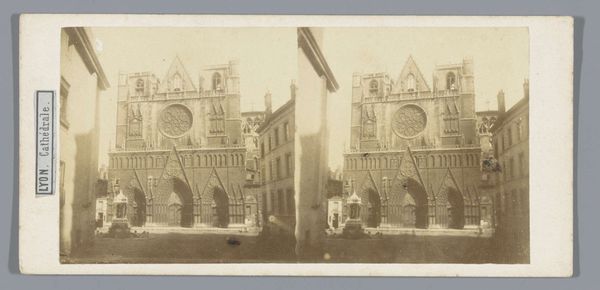
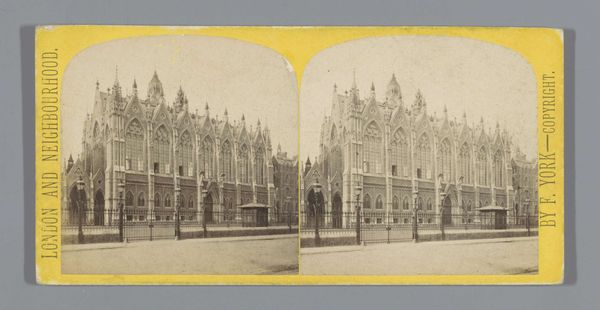
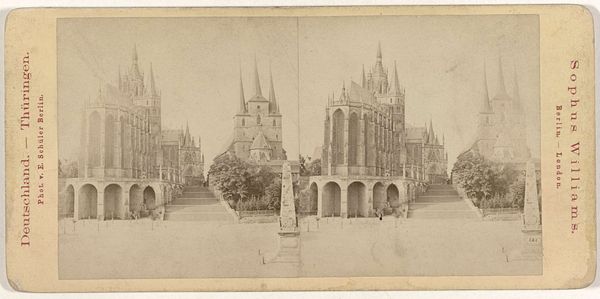
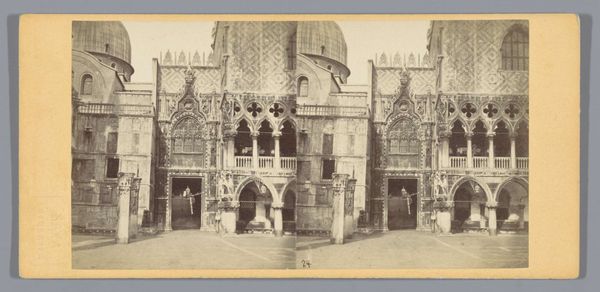
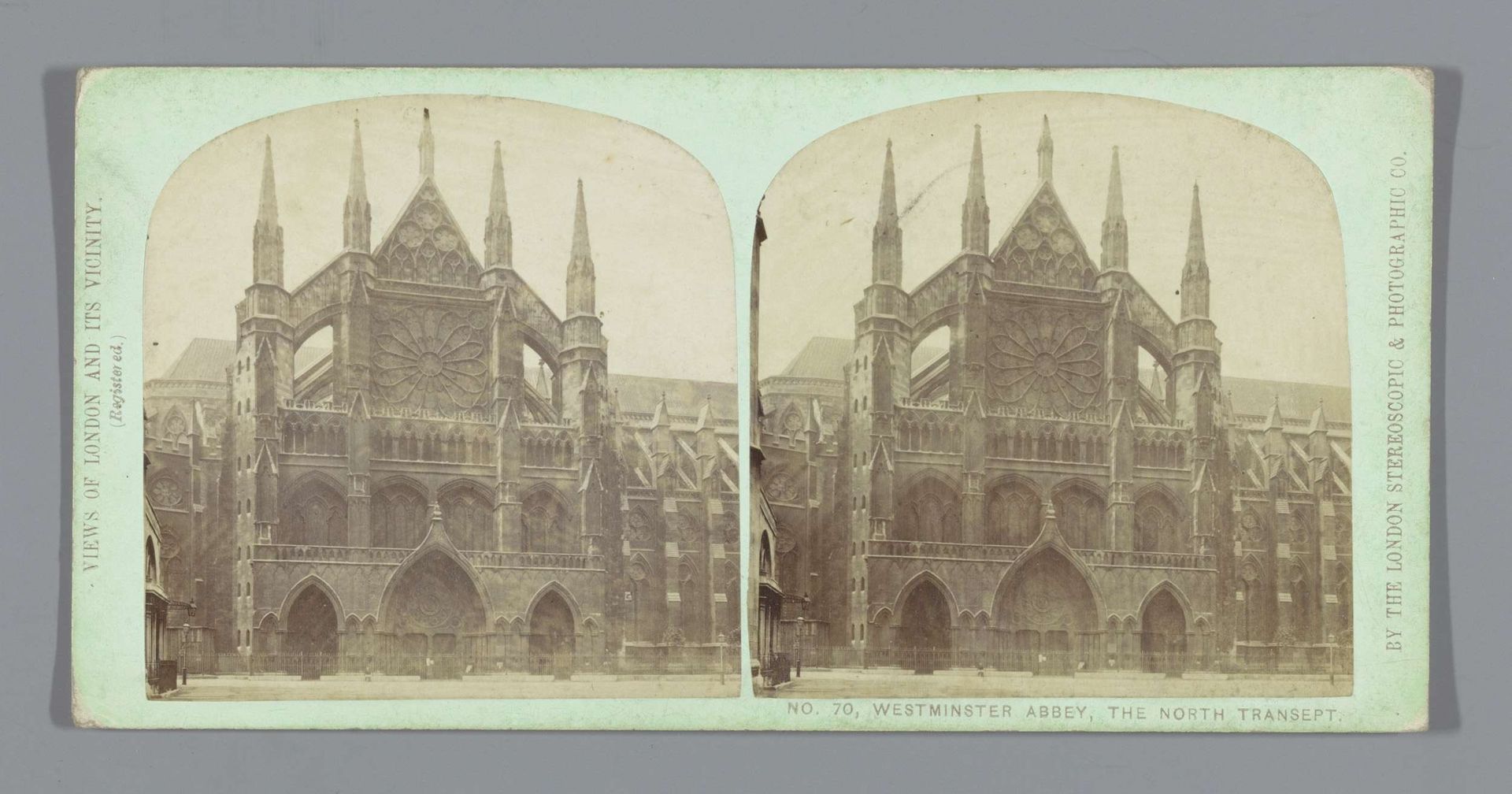
This stereoscopic image of the north transept of Westminster Abbey, was produced by the London Stereoscopic Company. The sepia tones and the photographic texture evoke a sense of historical distance, emphasizing the grandeur of the architectural subject. The composition is dominated by the imposing facade of the Abbey, where vertical lines of the spires contrast with the rounded arches and the circular rose window. This interplay between verticality and curvature structures the visual field, creating a balanced yet dynamic tension. The symmetry is almost perfect, with the slight variations that give a hint of human presence. The photographic process captures not only the physical structure of the Abbey, but also invites reflection on how architecture can embody cultural and historical values. The formal qualities of this image invite us to consider how we perceive and construct meaning through visual representation.
Gezicht op het noordtransept van Westminster Abbey c. 1854 - 1880

Artwork details
- Dimensions
- height 85 mm, width 170 mm
- Copyright
- Rijks Museum: Open Domain
Comments
No comments
About this artwork
This stereoscopic image of the north transept of Westminster Abbey, was produced by the London Stereoscopic Company. The sepia tones and the photographic texture evoke a sense of historical distance, emphasizing the grandeur of the architectural subject. The composition is dominated by the imposing facade of the Abbey, where vertical lines of the spires contrast with the rounded arches and the circular rose window. This interplay between verticality and curvature structures the visual field, creating a balanced yet dynamic tension. The symmetry is almost perfect, with the slight variations that give a hint of human presence. The photographic process captures not only the physical structure of the Abbey, but also invites reflection on how architecture can embody cultural and historical values. The formal qualities of this image invite us to consider how we perceive and construct meaning through visual representation.
Comments
No comments