1619 - 1649
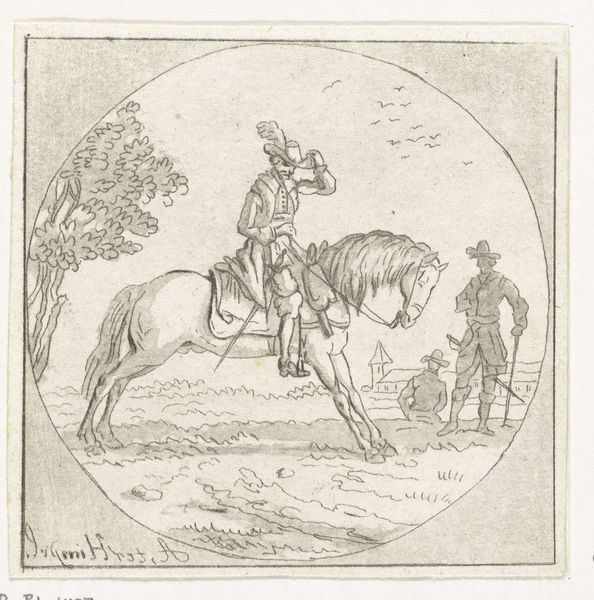
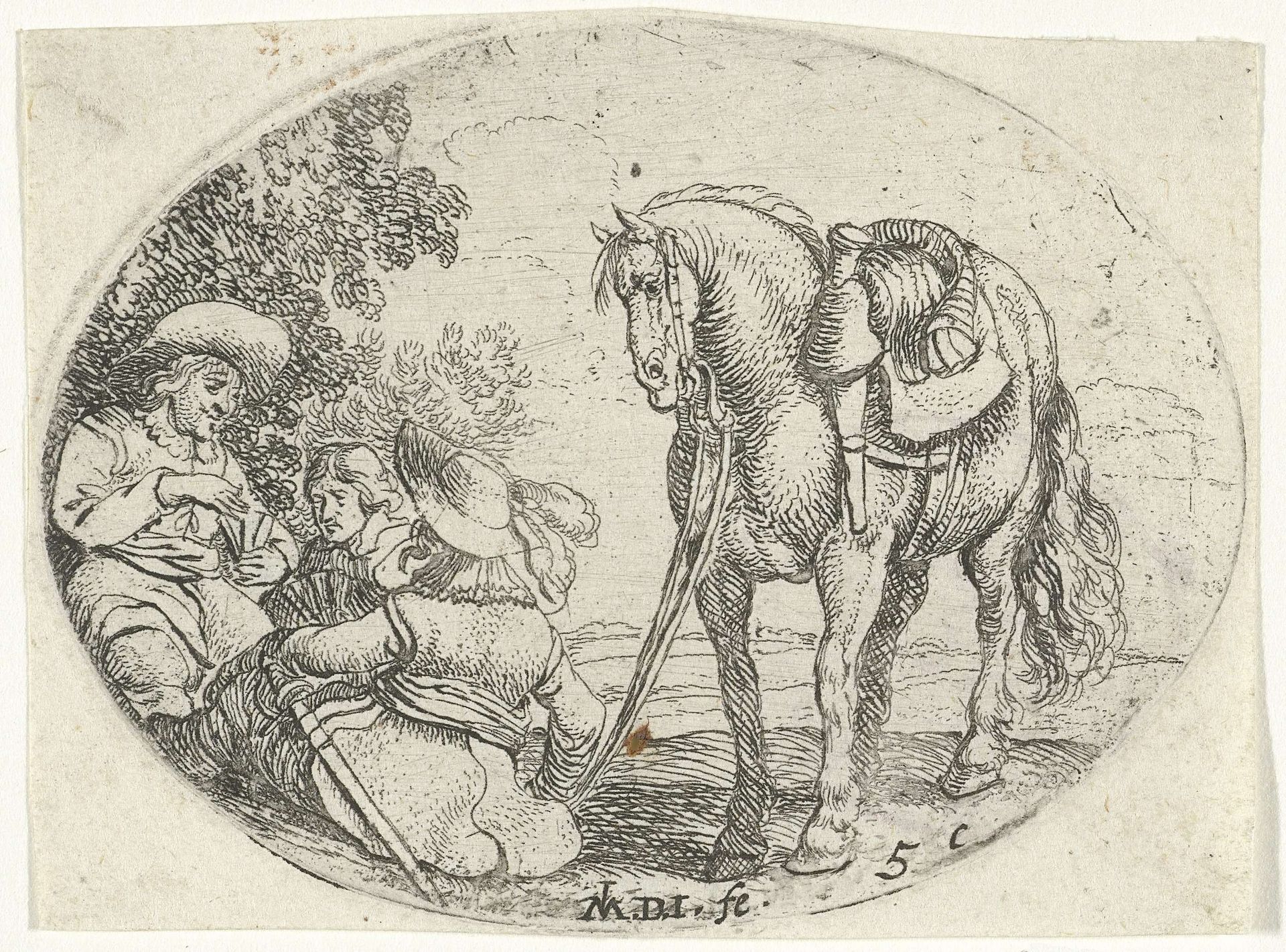
Drie kaartende soldaten naast een paard

Jan Martszen de Jonge
1609 - 1647Location
RijksmuseumListen to curator's interpretation
Curatorial notes
Jan Martszen de Jonge created this etching, "Three Soldiers Playing Cards Beside a Horse," sometime in the first half of the 17th century. This work gives us insight into the social history of the Dutch Golden Age. The image creates meaning through its depiction of soldiers at leisure, a common theme in Dutch art of the period. The presence of playing cards suggests the soldiers are gambling. Note the proximity of the horse, a crucial tool of war. The etching implies a critique of military life. The soldiers' diversion in a card game contrasts with the serious business of war and hints at the moral ambiguities inherent in military service. To truly understand this image, we might consult military records, gambling laws, and other documents that reveal the everyday life and values of 17th-century Holland. The meaning of this etching, like all art, is contingent on its social and institutional context.