About this artwork
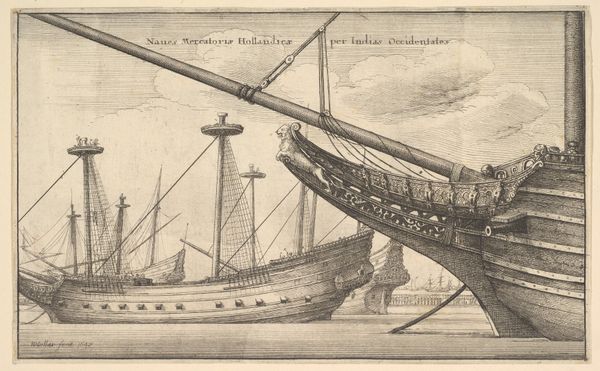
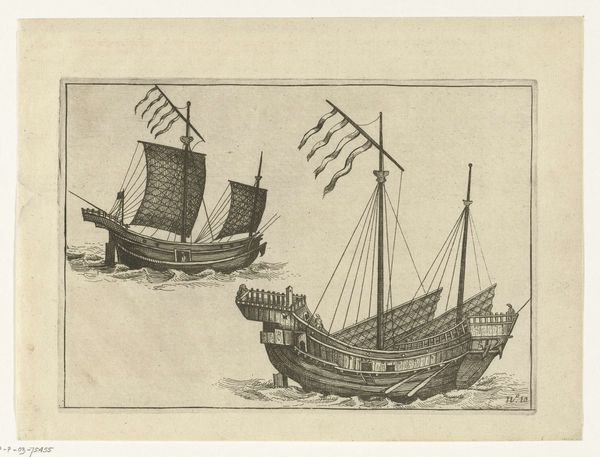
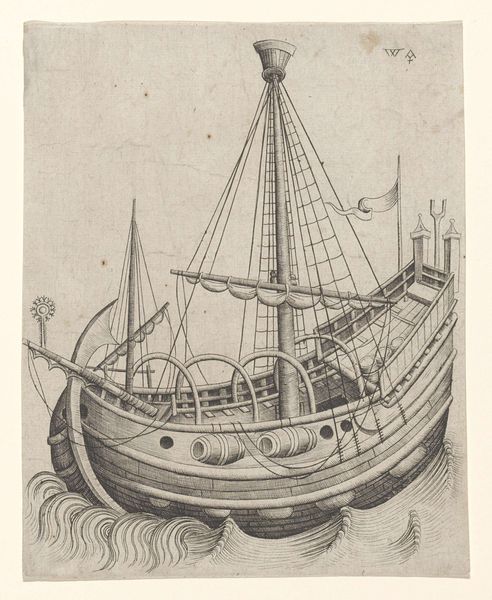
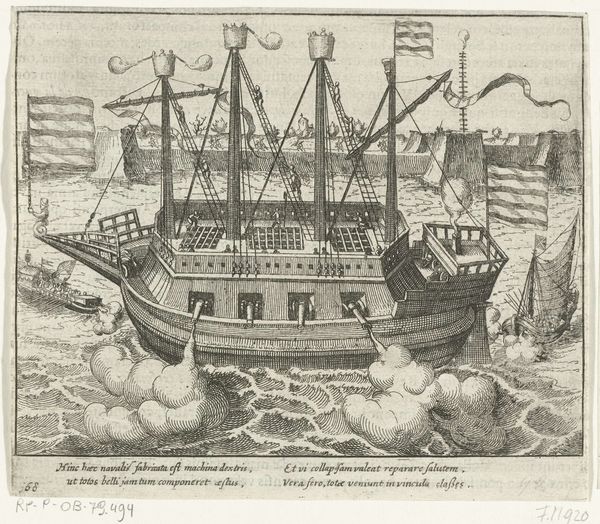
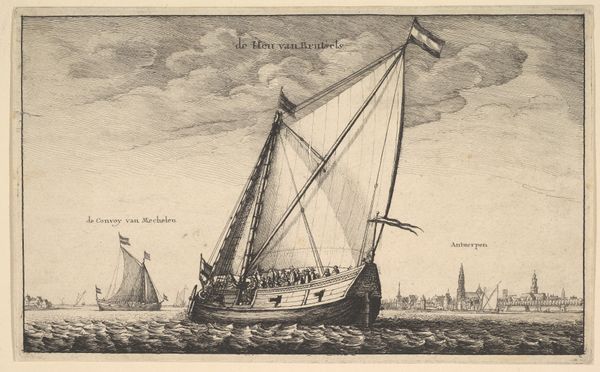
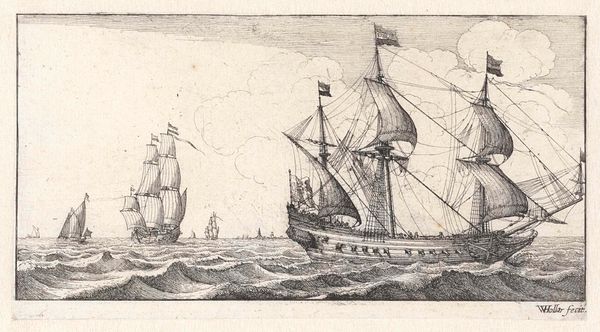
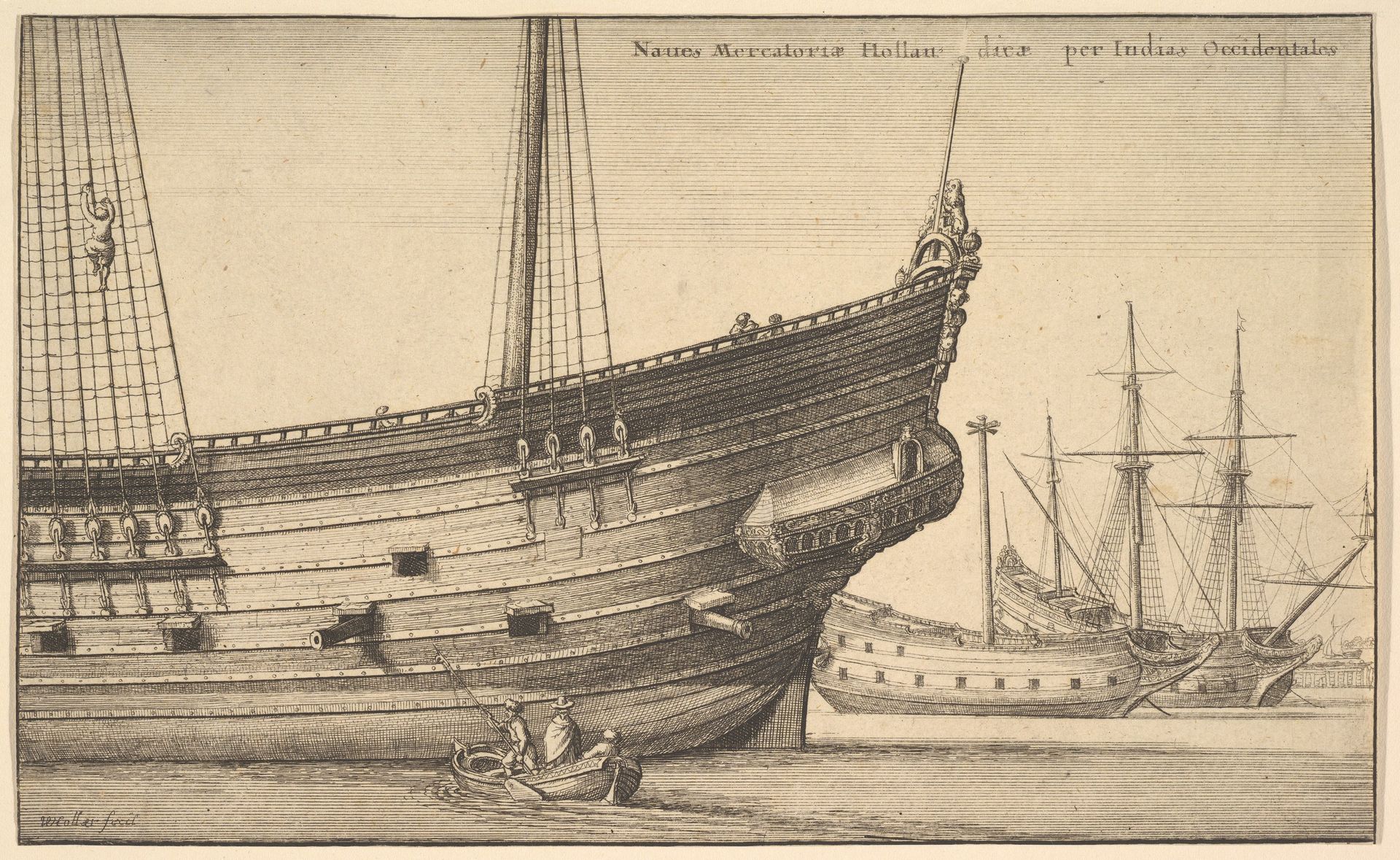
Wenceslaus Hollar etched these Dutch West Indiamen, vessels laden with the weight of global trade and ambition. The ship, a symbol of power and exploration, carries a rich cargo of meanings. Consider the figurehead, often a classical or mythical being, adorning the prow. It recalls ancient Roman ships dedicated to gods, ensuring safe passage and triumph. The presence of cannons transforms the ship into a floating fortress, a stark contrast to the pursuit of mercantile exchange. We see this duality echoed in the Minoan frescoes of Knossos, where maritime scenes mix with images of bull-leaping—a dance between civilization and primal force. It resurfaces later in the Nordic Viking ships, vessels of conquest. Here, it speaks to the psychological tension between the desire for discovery and the impulse for domination, emotions deeply rooted in the collective psyche. The image of the ship connects us across time to humanity's complex relationship with the sea.
Naues Mercatoriæ Hollandicæ per Indias Occidentales (Dutch West Indiaman)
1647


Artwork details
- Medium
- drawing, print, engraving
- Dimensions
- Sheet: 5 9/16 × 9 1/8 in. (14.1 × 23.2 cm)
- Location
- Metropolitan Museum of Art, New York, NY
- Copyright
- Public Domain
Tags
Comments
Share your thoughts
About this artwork
Wenceslaus Hollar etched these Dutch West Indiamen, vessels laden with the weight of global trade and ambition. The ship, a symbol of power and exploration, carries a rich cargo of meanings. Consider the figurehead, often a classical or mythical being, adorning the prow. It recalls ancient Roman ships dedicated to gods, ensuring safe passage and triumph. The presence of cannons transforms the ship into a floating fortress, a stark contrast to the pursuit of mercantile exchange. We see this duality echoed in the Minoan frescoes of Knossos, where maritime scenes mix with images of bull-leaping—a dance between civilization and primal force. It resurfaces later in the Nordic Viking ships, vessels of conquest. Here, it speaks to the psychological tension between the desire for discovery and the impulse for domination, emotions deeply rooted in the collective psyche. The image of the ship connects us across time to humanity's complex relationship with the sea.
Comments
Share your thoughts