About this artwork
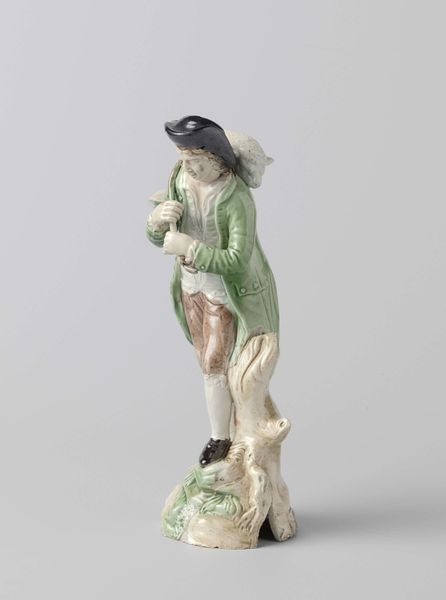
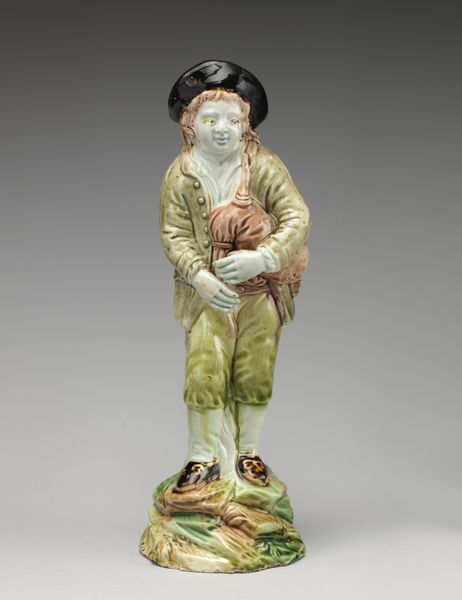
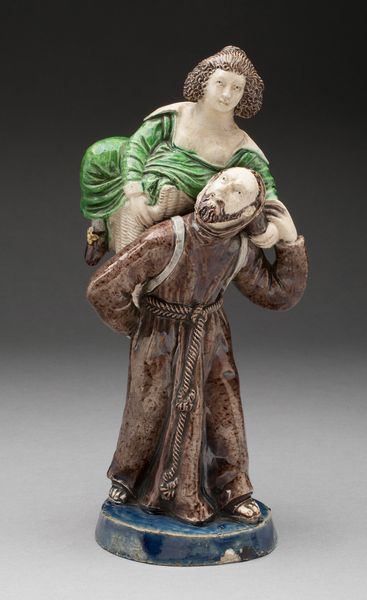
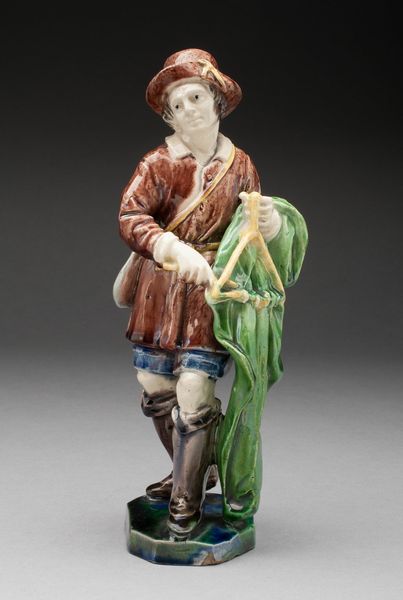
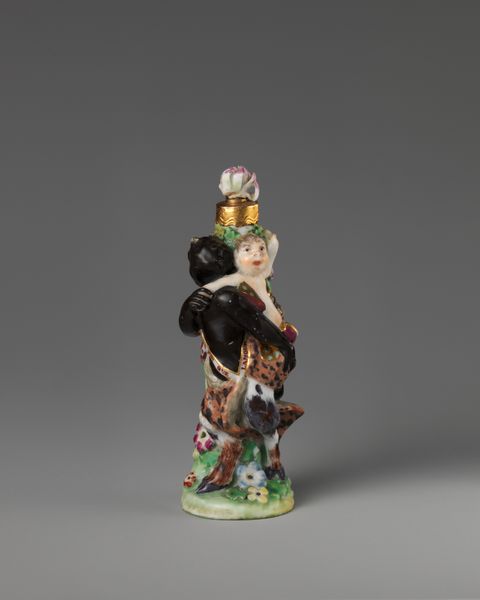
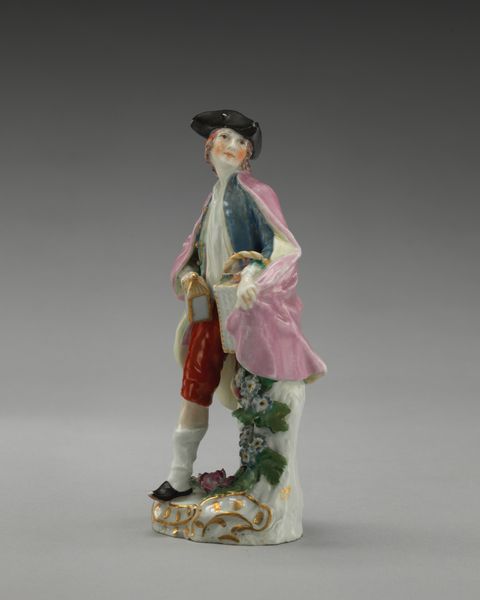
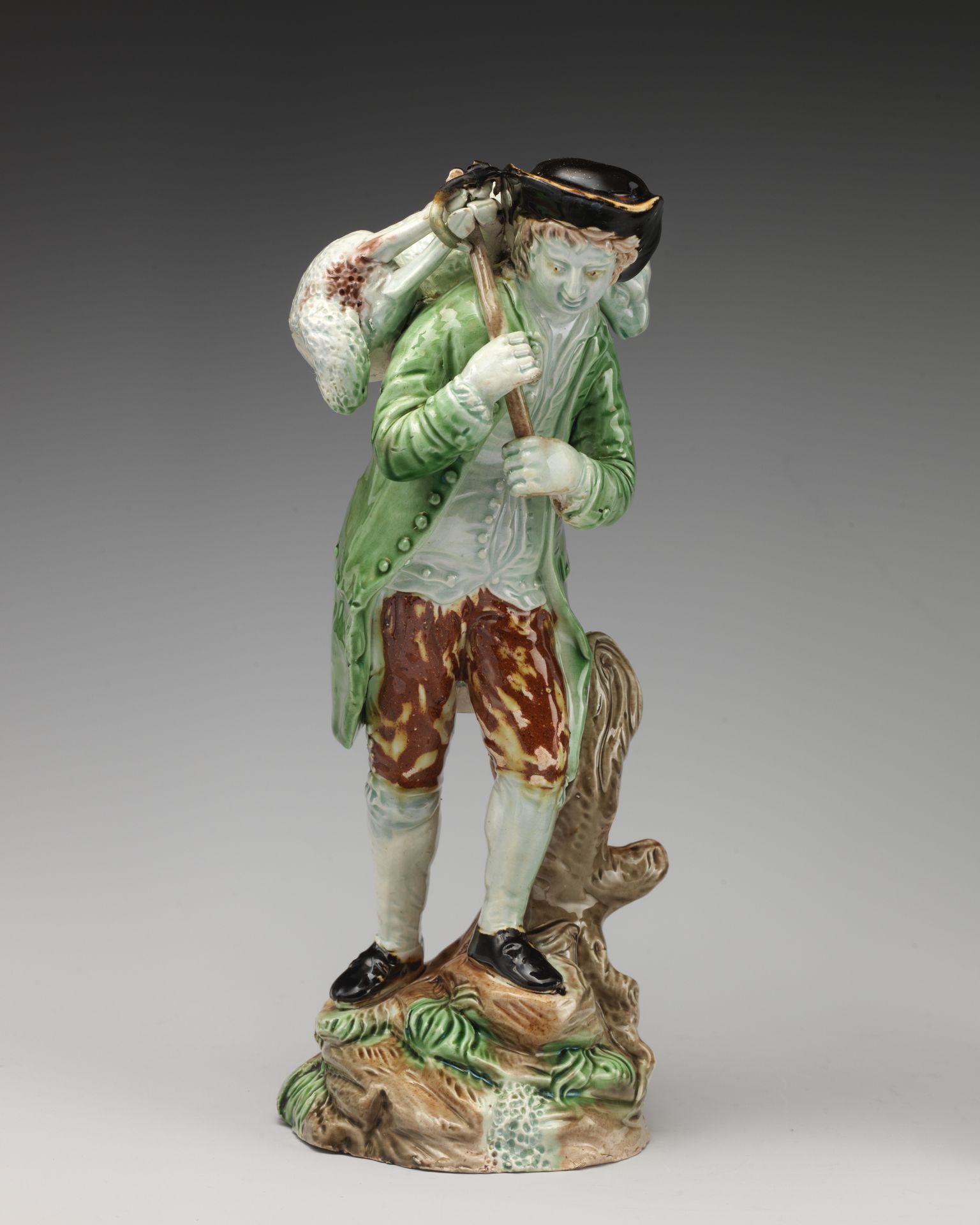
"Farmer carrying trussed sheep over his shoulder" is a Staffordshire earthenware figure made by Ralph Wood the Younger. The effigy is an exquisite demonstration of rococo aesthetics. The farmer's form is characterized by carefully modulated curves. These undulating lines are repeated in the soft wool of the sheep. The base of the sculpture consists of a gnarled tree stump which further demonstrates the craftsman's ability to render naturalistic textures in clay. A complex interplay between the figure's pose and the lines of the tree stump add dynamism and depth to the otherwise static form. The muted palette of greens, browns, and creams, accentuates the figure's pastoral theme. The artist’s focus is not just on replication but on conveying the essence of the natural world through the manipulation of form and color. Together, these elements contribute to an engaging commentary on man's relationship with the land.
Farmer carrying trussed sheep over his shoulder
1775 - 1785

Ralph Wood the Younger
1748 - 1795
The Metropolitan Museum of Art
Metropolitan Museum of Art, New York, NYArtwork details
- Dimensions
- Height: 8 1/2 in. (21.6 cm)
- Location
- Metropolitan Museum of Art, New York, NY
- Copyright
- Public Domain
Comments
Be the first to share your thoughts about this work.
About this artwork
"Farmer carrying trussed sheep over his shoulder" is a Staffordshire earthenware figure made by Ralph Wood the Younger. The effigy is an exquisite demonstration of rococo aesthetics. The farmer's form is characterized by carefully modulated curves. These undulating lines are repeated in the soft wool of the sheep. The base of the sculpture consists of a gnarled tree stump which further demonstrates the craftsman's ability to render naturalistic textures in clay. A complex interplay between the figure's pose and the lines of the tree stump add dynamism and depth to the otherwise static form. The muted palette of greens, browns, and creams, accentuates the figure's pastoral theme. The artist’s focus is not just on replication but on conveying the essence of the natural world through the manipulation of form and color. Together, these elements contribute to an engaging commentary on man's relationship with the land.
Comments
Be the first to share your thoughts about this work.