About this artwork
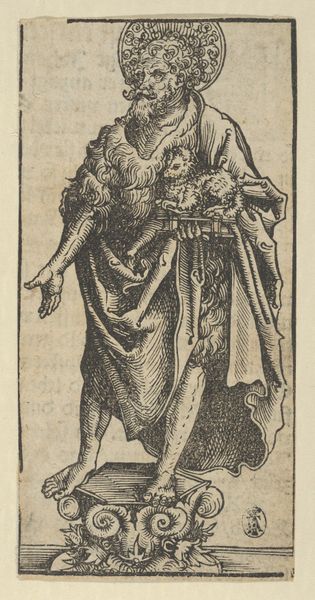
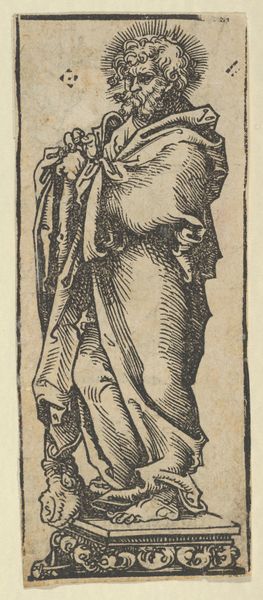
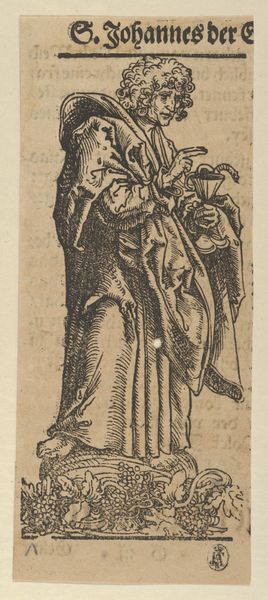
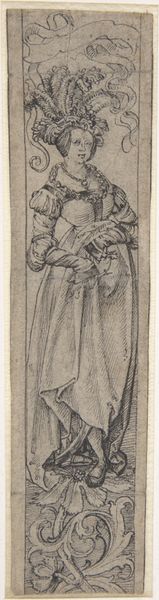
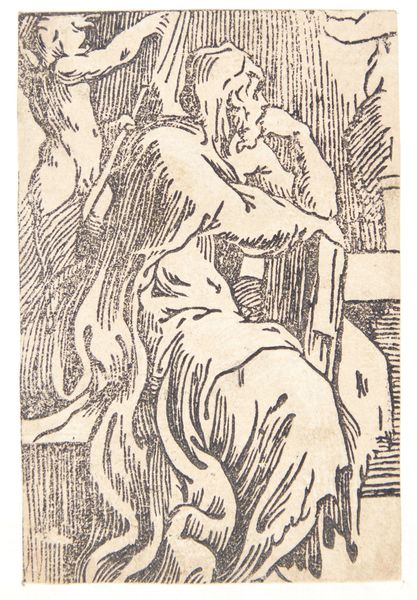
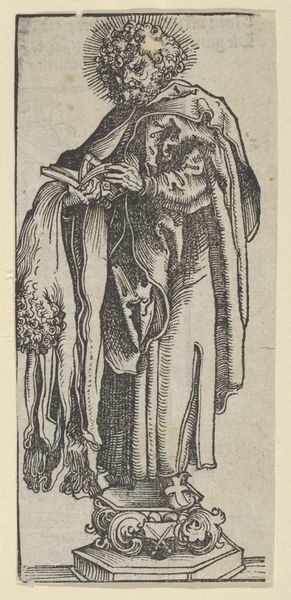
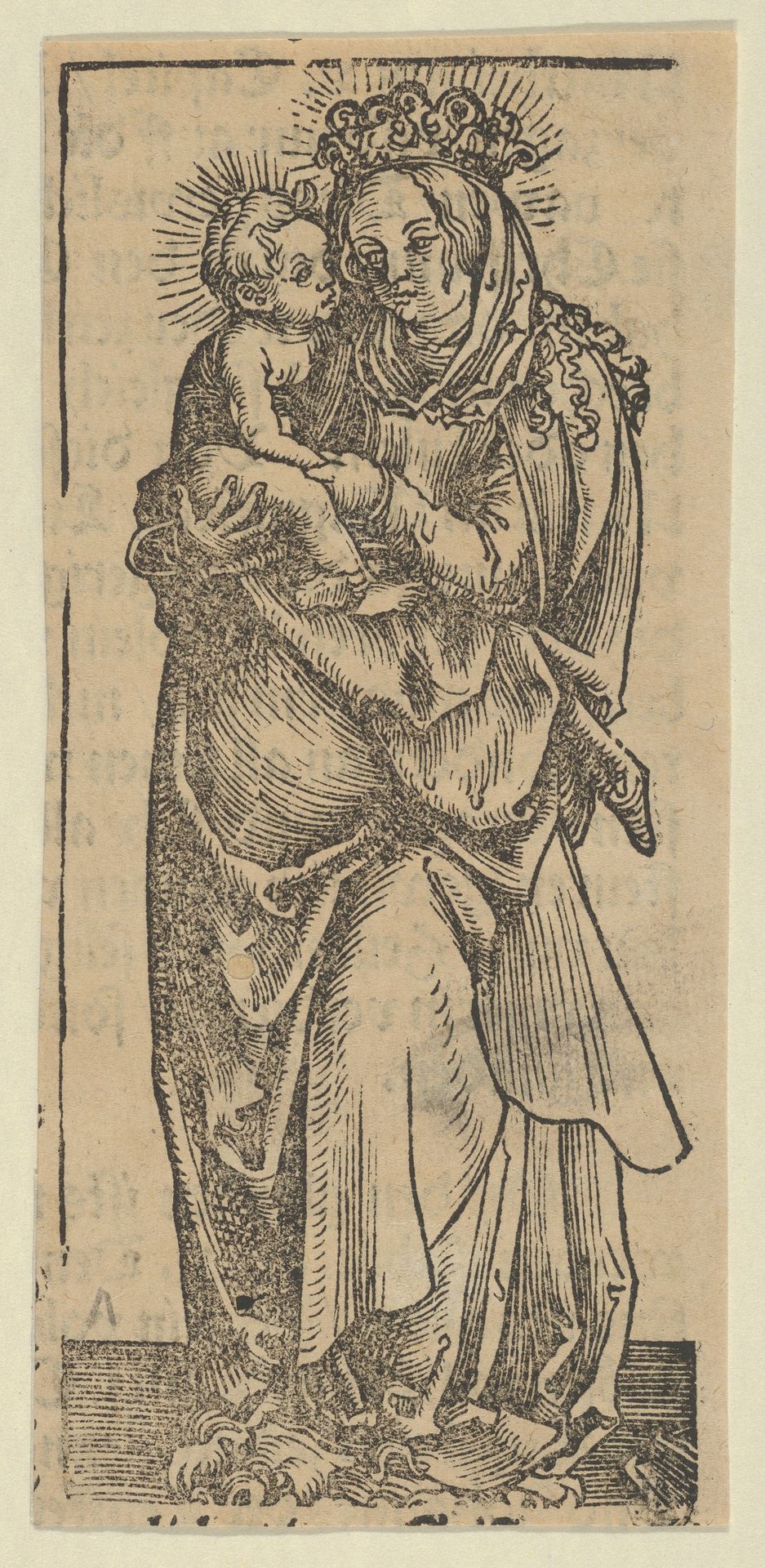
Lucas Cranach the Elder created "The Virgin and Child Standing" using woodcut techniques. The composition emphasizes verticality, drawing the eye upwards along the full figures of the Virgin Mary and infant Christ, framed by linear halos. Cranach's use of stark contrasts between black lines and the white paper creates a compelling visual rhythm. This formal choice evokes a sense of depth and texture, enhancing the iconographic representation of the Virgin and Child. The texture created by closely hatched lines and dense patterns of hatching articulate Mary's robes. This work invites a deeper examination into the structural elements of the image, particularly the interplay between line and space, which invites a semiotic interpretation, leading us to consider the symbolic weight of each component and their contribution to the broader narrative. The careful articulation of form is critical to Cranach’s ability to invest the image with theological meaning and cultural resonance.
The Virgin and Child Standing
1472 - 1553

Lucas Cranach the Elder
1472 - 1553
The Metropolitan Museum of Art
Metropolitan Museum of Art, New York, NYArtwork details
- Medium
- drawing, print, woodcut
- Dimensions
- Sheet: 2 7/16 × 5 1/8 in. (6.2 × 13 cm)
- Location
- Metropolitan Museum of Art, New York, NY
- Copyright
- Public Domain
Tags
Comments
Share your thoughts
About this artwork
Lucas Cranach the Elder created "The Virgin and Child Standing" using woodcut techniques. The composition emphasizes verticality, drawing the eye upwards along the full figures of the Virgin Mary and infant Christ, framed by linear halos. Cranach's use of stark contrasts between black lines and the white paper creates a compelling visual rhythm. This formal choice evokes a sense of depth and texture, enhancing the iconographic representation of the Virgin and Child. The texture created by closely hatched lines and dense patterns of hatching articulate Mary's robes. This work invites a deeper examination into the structural elements of the image, particularly the interplay between line and space, which invites a semiotic interpretation, leading us to consider the symbolic weight of each component and their contribution to the broader narrative. The careful articulation of form is critical to Cranach’s ability to invest the image with theological meaning and cultural resonance.
Comments
Share your thoughts