About this artwork
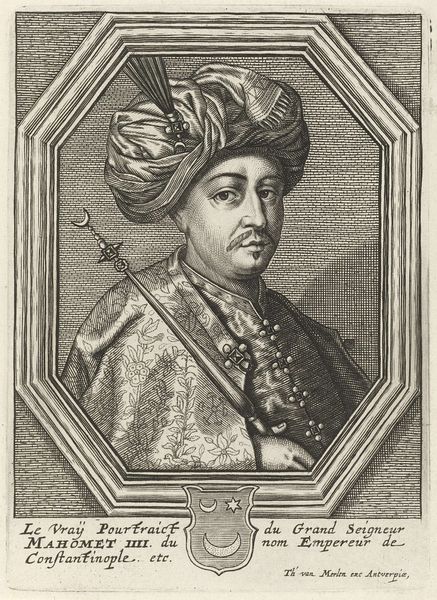
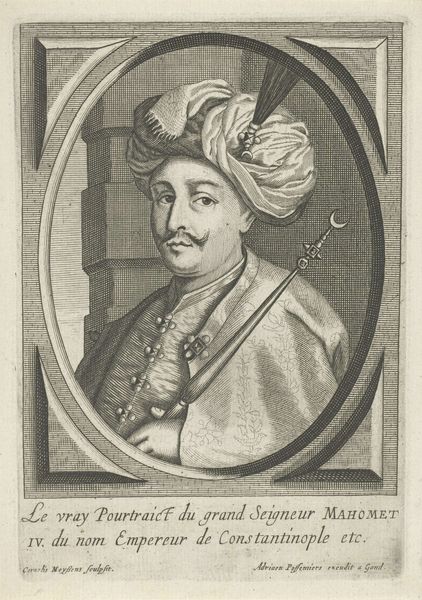
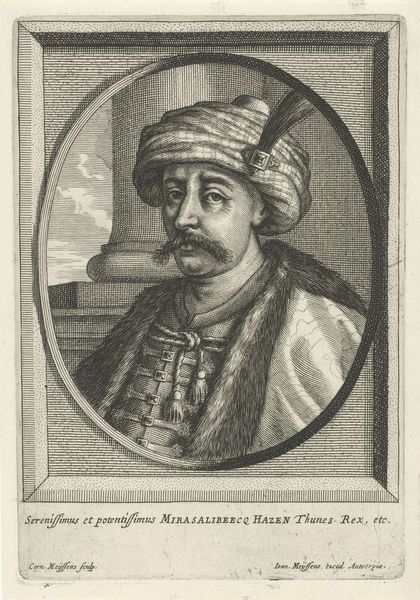
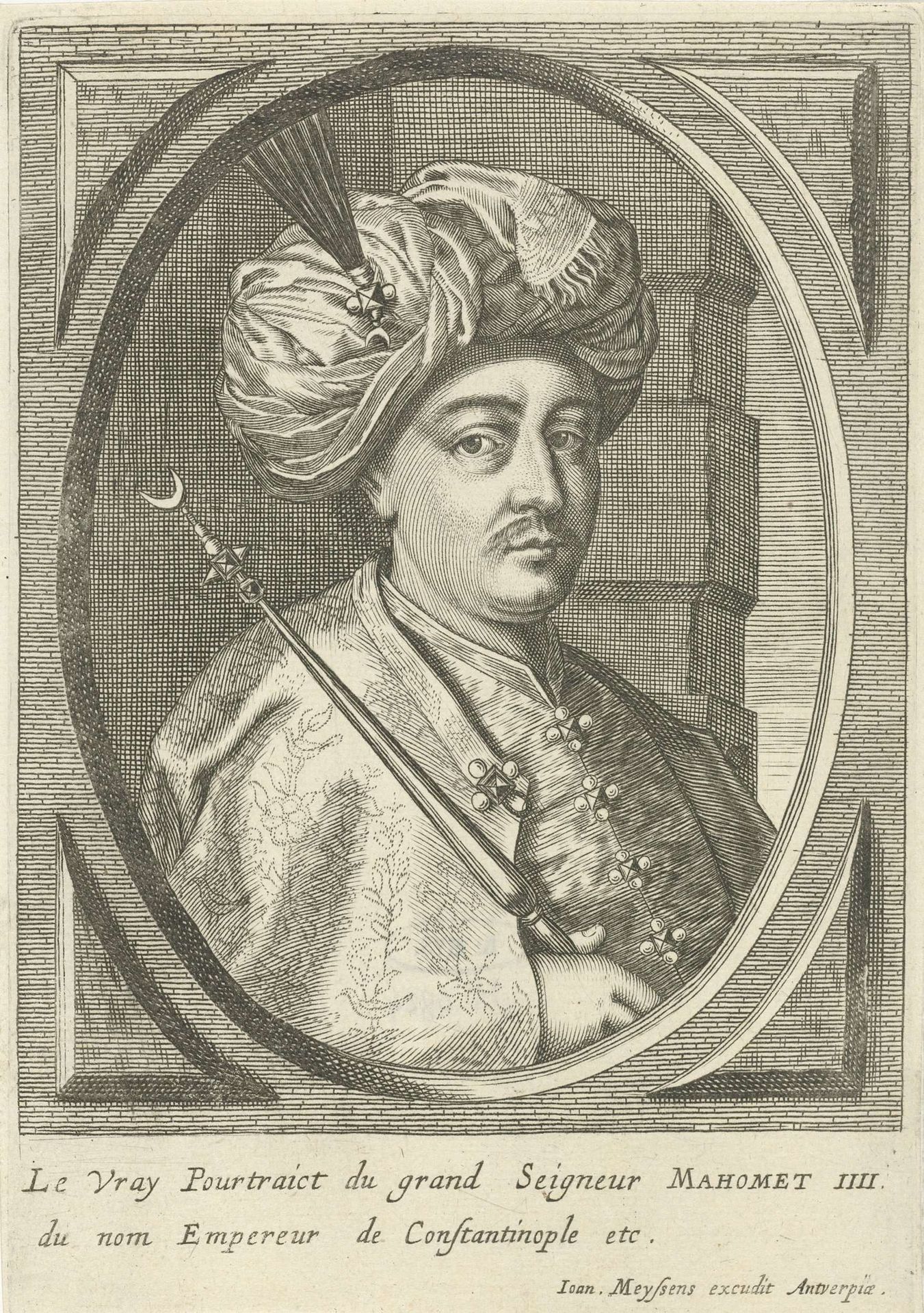
This engraving by Joannes Meyssens depicts Sultan Mehmet IV of the Ottoman Empire. Dominating the image is the crescent moon atop a staff, a symbol deeply rooted in pre-Islamic Central Asia. The crescent was associated with lunar deities and celestial power, later adopted by the Ottoman Empire. It signified sovereignty and divine favor, much like the Roman eagle or the fleur-de-lis of France. Interestingly, the crescent has precursors in ancient Near Eastern art, adorning the brows of Mesopotamian lunar gods. This symbol’s journey across millennia reveals a potent cultural memory. Such symbols persist in the collective unconscious, resurfacing in new contexts. The staff, often associated with shepherds or rulers, can be traced back to the scepters of pharaohs. It demonstrates that gestures of power resonate across cultures, tapping into subconscious recognition of authority and control. These symbols are not static; they are dynamic carriers of cultural meaning.
Portret van sultan Mehmet IV van het Ottomaanse Rijk
1640 - 1670

Joannes Meyssens
1612 - 1670Location
RijksmuseumArtwork details
- Medium
- print, engraving
- Dimensions
- height 175 mm, width 121 mm
- Location
- Rijksmuseum
- Copyright
- Rijks Museum: Open Domain
Tags
Comments
Share your thoughts
About this artwork
This engraving by Joannes Meyssens depicts Sultan Mehmet IV of the Ottoman Empire. Dominating the image is the crescent moon atop a staff, a symbol deeply rooted in pre-Islamic Central Asia. The crescent was associated with lunar deities and celestial power, later adopted by the Ottoman Empire. It signified sovereignty and divine favor, much like the Roman eagle or the fleur-de-lis of France. Interestingly, the crescent has precursors in ancient Near Eastern art, adorning the brows of Mesopotamian lunar gods. This symbol’s journey across millennia reveals a potent cultural memory. Such symbols persist in the collective unconscious, resurfacing in new contexts. The staff, often associated with shepherds or rulers, can be traced back to the scepters of pharaohs. It demonstrates that gestures of power resonate across cultures, tapping into subconscious recognition of authority and control. These symbols are not static; they are dynamic carriers of cultural meaning.
Comments
Share your thoughts