1625 - 1660
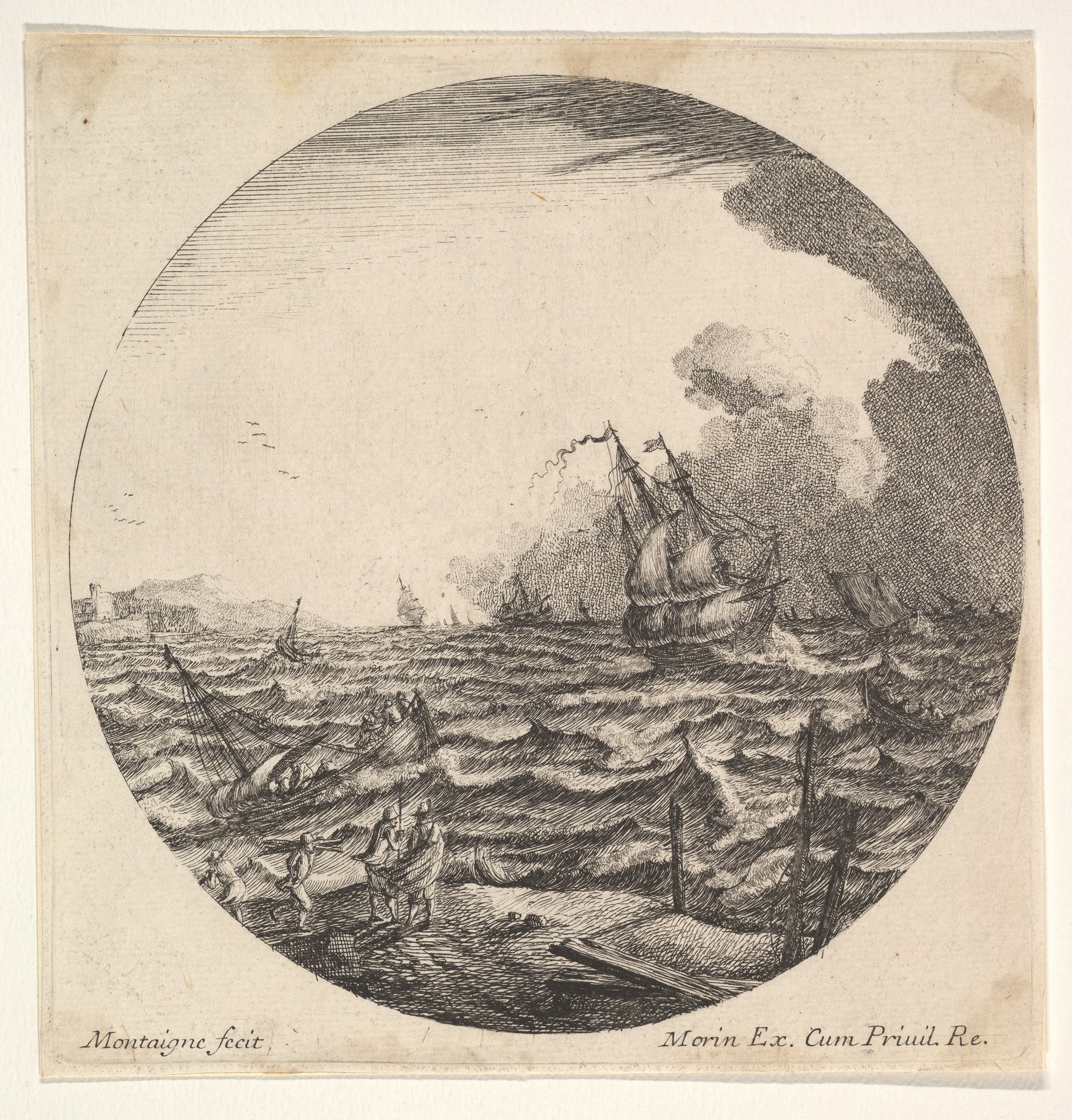
Tempest in a roundel composition, at left waves toss a small ship occupied by seven figures, ships and dark clouds beyond

Matthijs van Plattenberg
1600 - 1660
The Metropolitan Museum of Art
Metropolitan Museum of Art, New York, NYListen to curator's interpretation
Curatorial notes
Curator: Looking at this scene, I immediately feel the instability—a precariousness reflected in the waves. Editor: Indeed. This engraving, "Tempest in a roundel composition, at left waves toss a small ship occupied by seven figures, ships and dark clouds beyond," created sometime between 1625 and 1660, plunges us into the Baroque era's dramatic seascapes. Matthijs van Plattenberg, also known as Montaigne, captured this intense moment. Curator: The choice of the roundel is interesting, containing this chaotic scene like a memory. Ships struggling, almost miniature figures dwarfed by nature. There's something deeply humbling here. The iconography is clear—human struggle against overwhelming odds. Editor: Precisely. Van Plattenberg masterfully manipulates the limited tones of the engraving medium. Note the density of the lines creating the churning clouds versus the finer strokes used to suggest distance and atmosphere. He crafts texture brilliantly; it's all about the manipulation of dark and light. Curator: And the way light is used is striking; piercing through those dark clouds, illuminating a path perhaps. There's the human desire to believe in the hope for rescue in what feels like insurmountable struggle, something innate embedded across eras, wouldn’t you say? The symbol of a ship in peril carries considerable weight through history and persists into contemporary collective consciousness, reflecting our most elemental fears of the unknown. Editor: Absolutely. I see that dramatic contrast pushing against the structure of the circular format—the dynamism struggling against its container. Van Plattenberg sets up this tension formally and conceptually. Curator: Examining the history paintings of that period we see such a desire for the rendering of moments where individuals confront intense adversity, moments where perhaps we glimpse both their potential and ultimate limits. We cannot avoid seeing the psychological dimensions embedded within this landscape and nautical allegory. Editor: Yes, it’s compelling how the piece, as a contained aesthetic object, echoes the emotional containment and struggle of the figures within the tempest itself. Curator: So true. I find that duality especially thought-provoking. Editor: As do I. It really is a striking testament to artistic choices elevating emotional resonance within structured forms.