1832
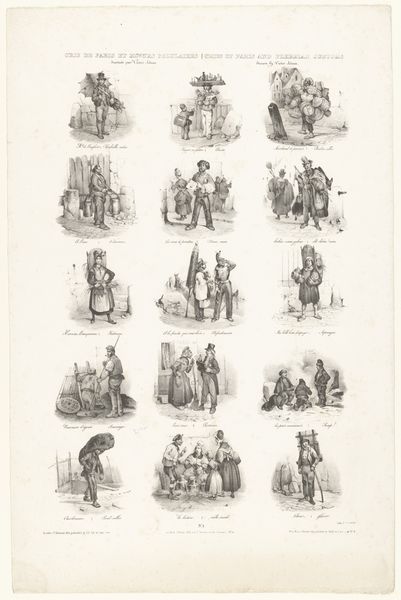
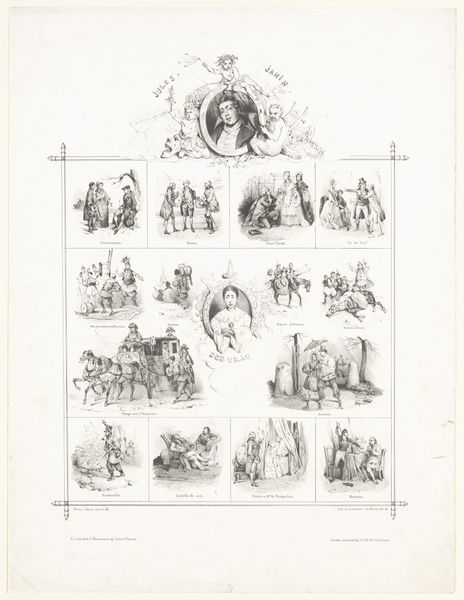
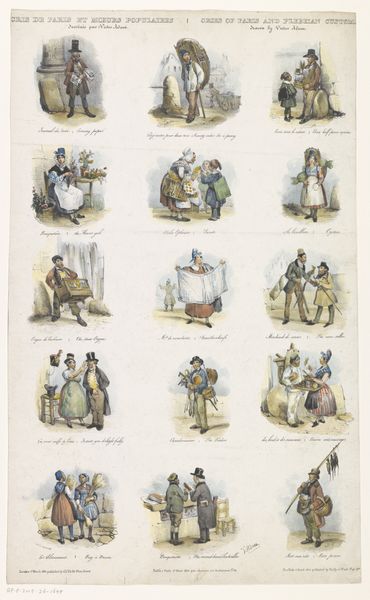
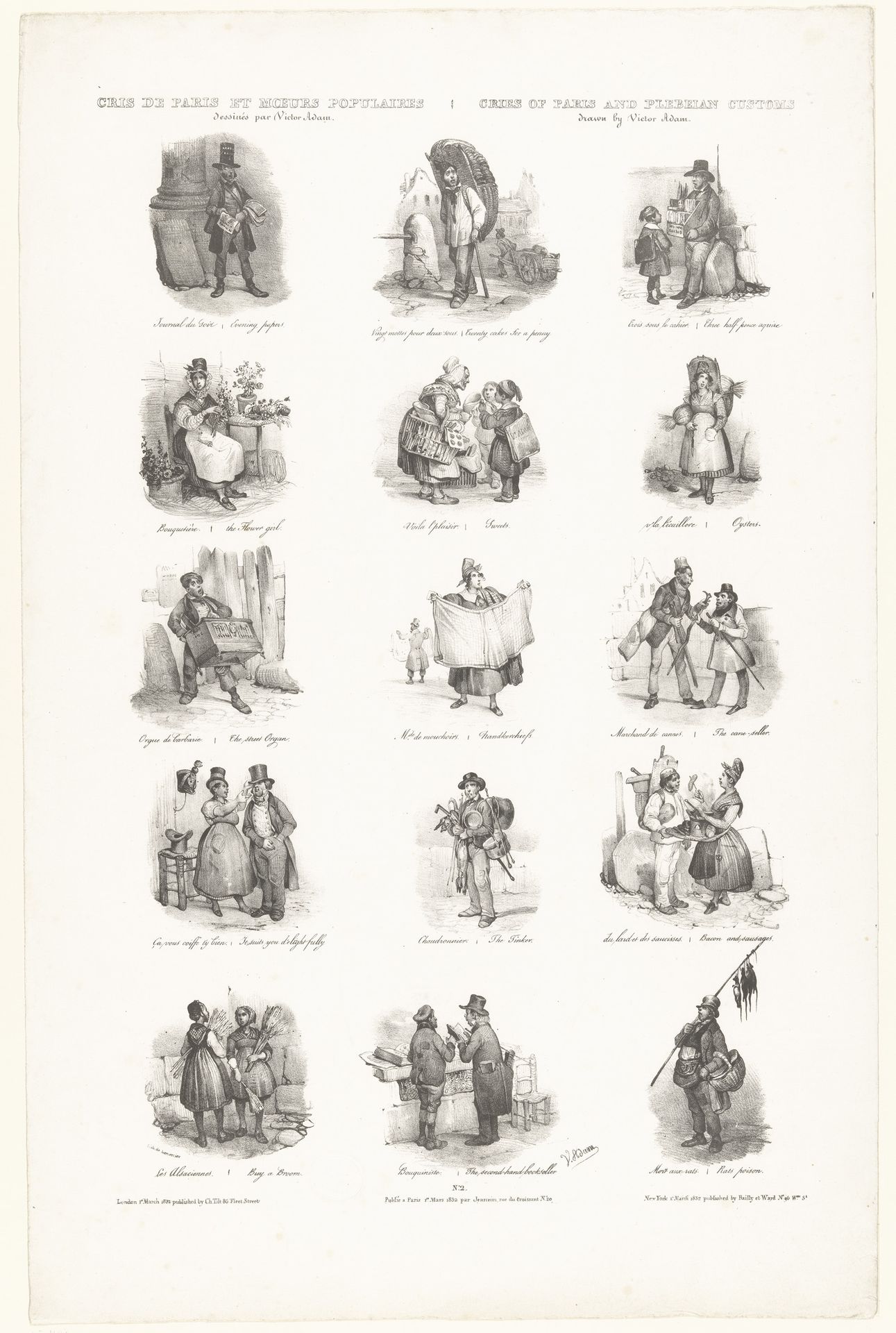
Vijftien voorstellingen van Parijse straatventers

Victor Adam
1801 - 1866Location
RijksmuseumListen to curator's interpretation
Curatorial notes
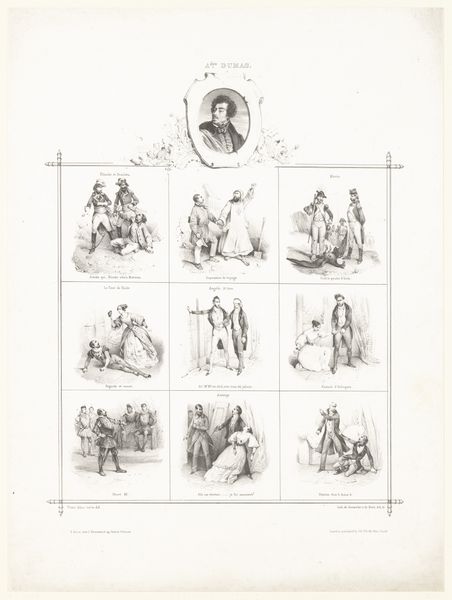
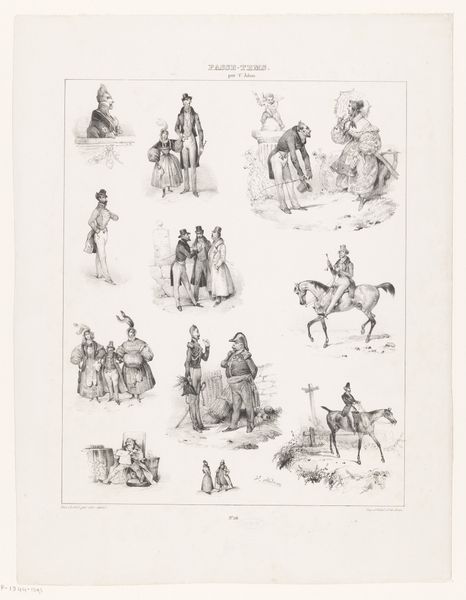
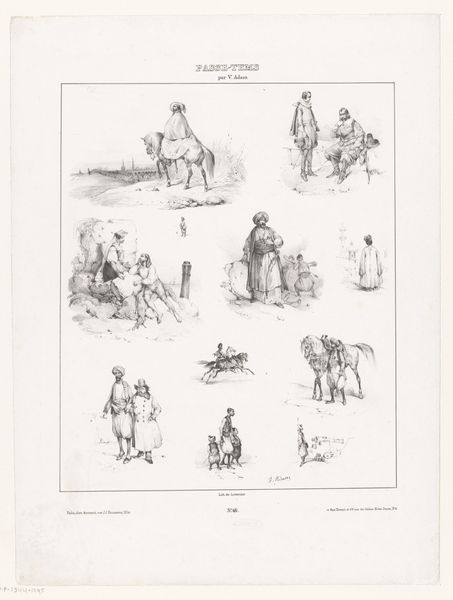
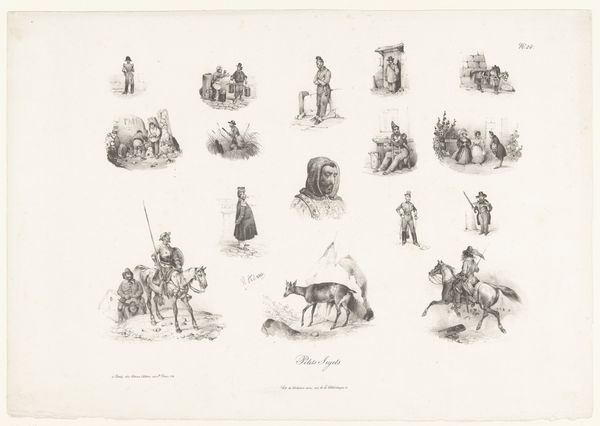
Editor: Here we have Victor Adam's "Fifteen Depictions of Parisian Street Vendors," an engraving from 1832. It gives off a documentary vibe, like a collection of photographs before photography. What can you tell me about this depiction of Parisian life? Curator: Well, it is important to consider this work as part of a broader trend. These types of images were immensely popular in the 19th century. Prints like this helped create a visual archive of everyday life. Do you think these images only depict reality? Or something else too? Editor: I guess it’s trying to represent these people, but I’m sure there's some idealization or commentary thrown in. Like a curated version of reality, for sure. Curator: Exactly. Consider how these prints circulated, they were often collected in albums and viewed as a form of entertainment and education for the middle class. The exoticization, and sometimes humorous depictions, offered a safe encounter with other social classes. Editor: That’s interesting. So it’s not just documenting, it's also reinforcing class distinctions. How might the rise of industrialization played a part in this piece? Curator: Industrialization dramatically changed urban life, pushing more people into cities, which created a more diverse urban experience. Images like this captured fleeting moments of a changing social fabric and served as nostalgia, or as an artifact, for what was increasingly a lifestyle of the past. The prints, cheap to produce, also made art more democratic, spreading artistic visions across society. Editor: That's really made me think about art's role in documenting and shaping society's understanding of itself. Thanks! Curator: Absolutely. Looking at art through the lens of its social and political context really enriches our appreciation of it.