About this artwork
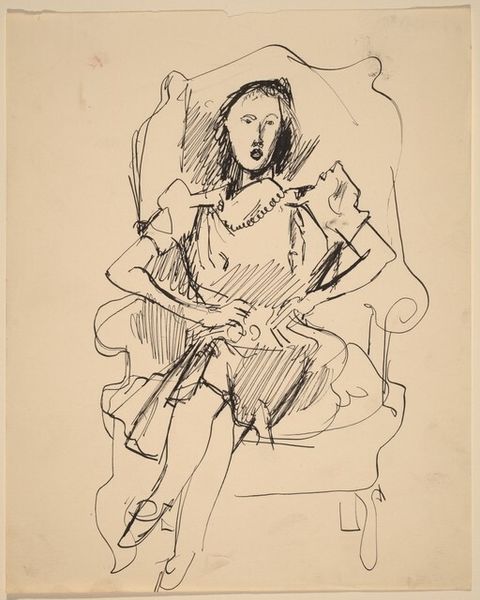
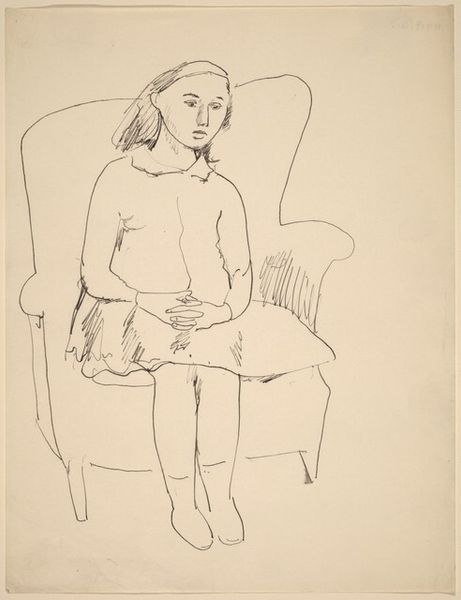
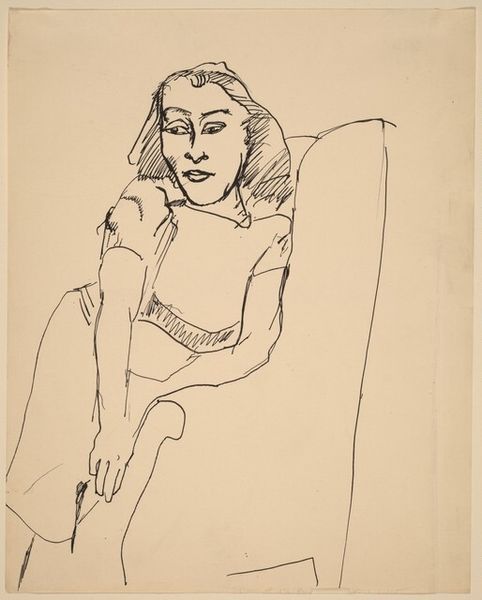
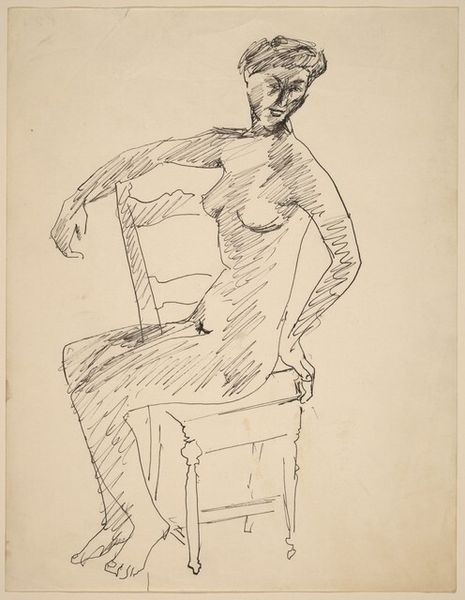
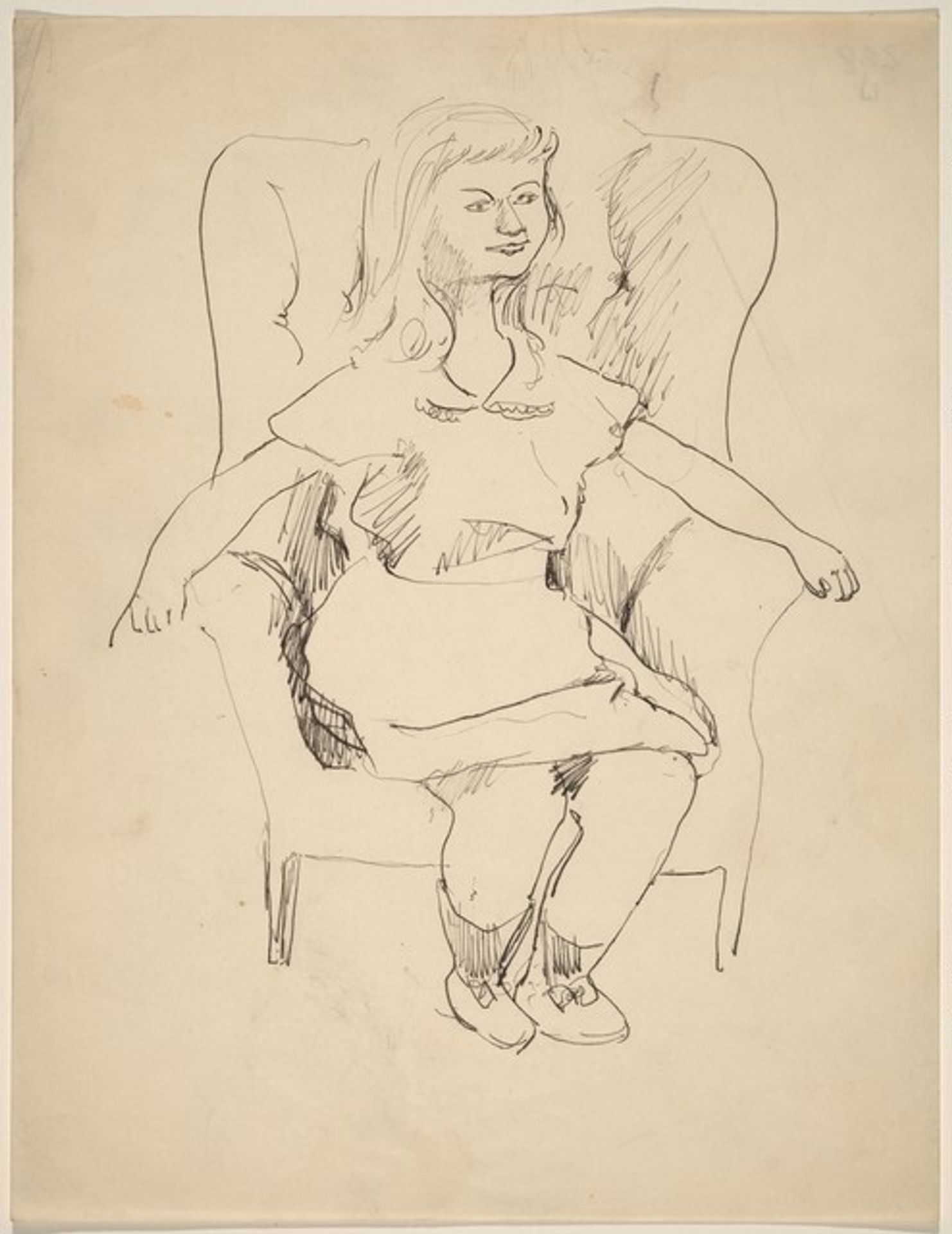
Mark Rothko sketched this image of a young girl in a wing chair in an undated drawing, using pen and ink on paper. The girl sits rigidly, her posture suggesting a certain formality, a constraint that echoes the rigid structure of the chair itself. The wing chair, historically a symbol of comfort and status, here seems to confine her, emphasizing a tension between youth and the expectations placed upon it. We see echoes of similar poses across centuries, from Renaissance portraits to Victorian photography, all capturing a struggle between the individual and societal roles. This drawing captures the ambivalence of childhood, suspended between freedom and imposed structure. It subtly evokes a psychoanalytic understanding of how early experiences shape our identities. The girl's gaze, averted slightly, invites us to contemplate the inner world, the unspoken narratives of development, and the complex interplay between self and society.
Young Girl Seated Erectly in Wing Chair


Artwork details
- Medium
- drawing, paper, ink
- Dimensions
- overall: 27.9 x 21.5 cm (11 x 8 7/16 in.)
- Copyright
- National Gallery of Art: CC0 1.0
Tags
portrait
drawing
ink drawing
figuration
paper
ink
genre-painting
academic-art
Comments
No comments
About this artwork
Mark Rothko sketched this image of a young girl in a wing chair in an undated drawing, using pen and ink on paper. The girl sits rigidly, her posture suggesting a certain formality, a constraint that echoes the rigid structure of the chair itself. The wing chair, historically a symbol of comfort and status, here seems to confine her, emphasizing a tension between youth and the expectations placed upon it. We see echoes of similar poses across centuries, from Renaissance portraits to Victorian photography, all capturing a struggle between the individual and societal roles. This drawing captures the ambivalence of childhood, suspended between freedom and imposed structure. It subtly evokes a psychoanalytic understanding of how early experiences shape our identities. The girl's gaze, averted slightly, invites us to contemplate the inner world, the unspoken narratives of development, and the complex interplay between self and society.
Comments
No comments