
Curatorial notes
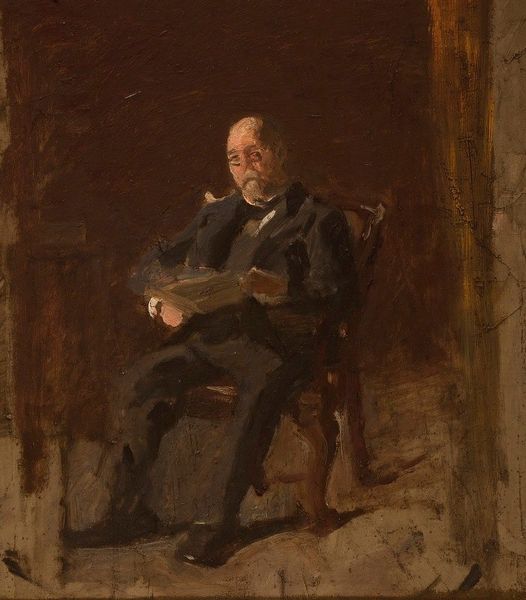
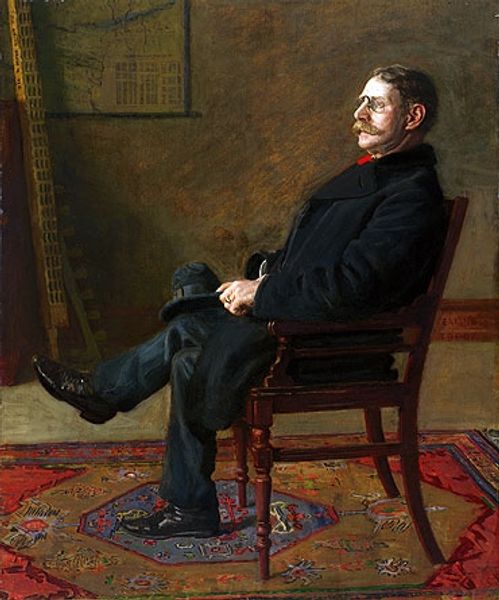
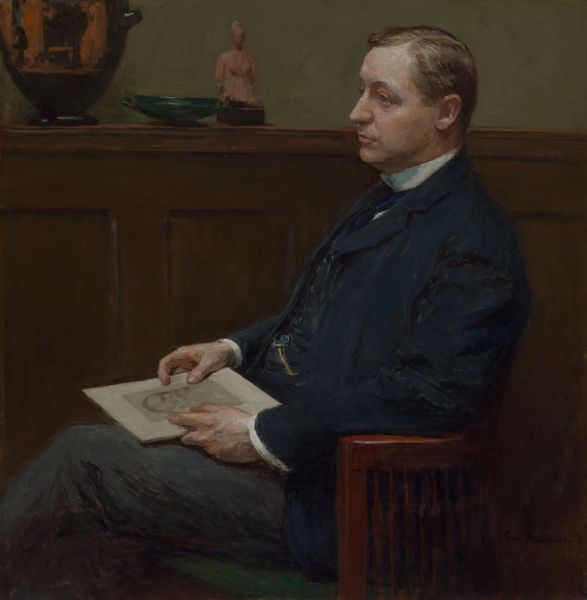
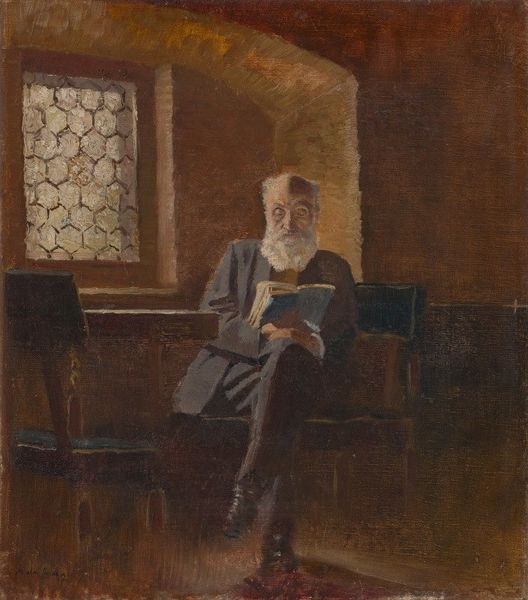
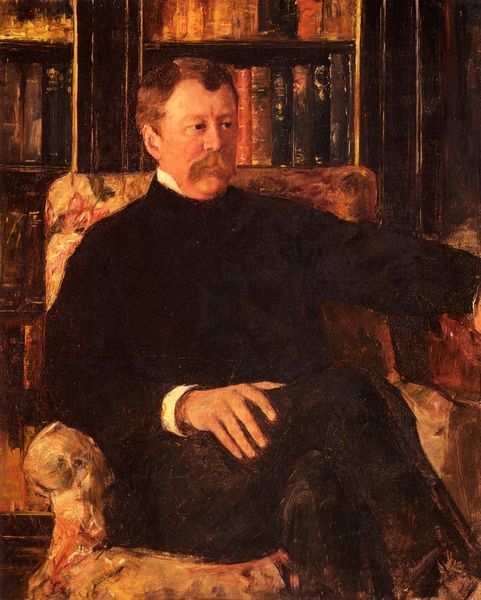
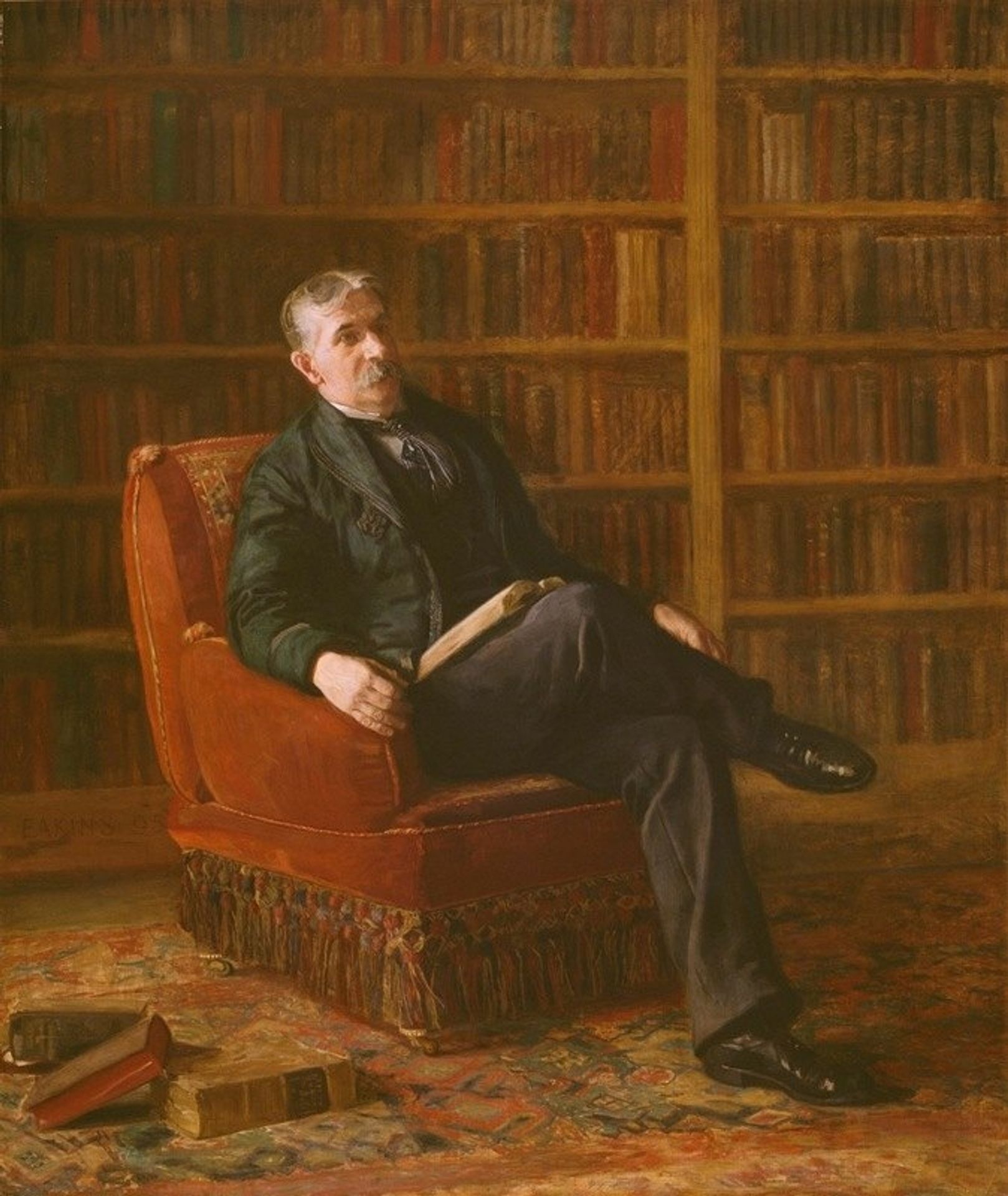
Thomas Eakins painted "Riter Fitzgerald," using oil on canvas, capturing the sitter amidst his personal library. The portrait acts as a window into the cultural values of late 19th-century America. The towering bookshelves and the scattered volumes signal Fitzgerald's intellectual status, reflecting a society that placed high value on learning and literary achievement. Eakins’s realist style— his careful attention to detail and refusal to idealize his sitter—speaks to a broader artistic movement that sought to depict the world honestly, rather than through romanticized lenses. This was a time when American artists were questioning the established academic traditions, seeking to create an art that was both distinctly American and socially relevant. To truly understand a work like this, we delve into the archives, newspapers, and personal letters of the period. By understanding the cultural and institutional contexts, we gain a richer appreciation for the portrait's nuanced meanings.