About this artwork
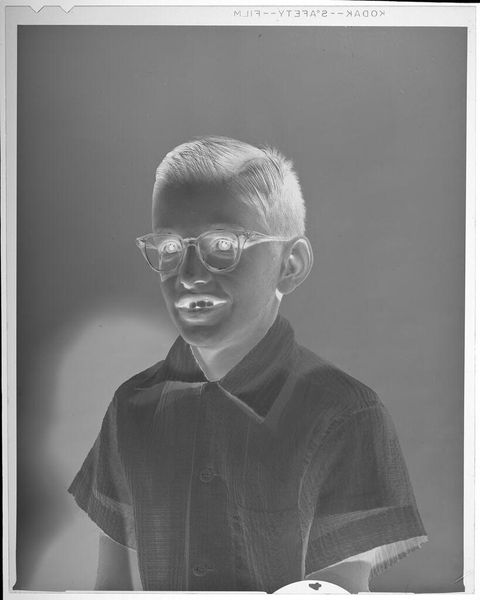
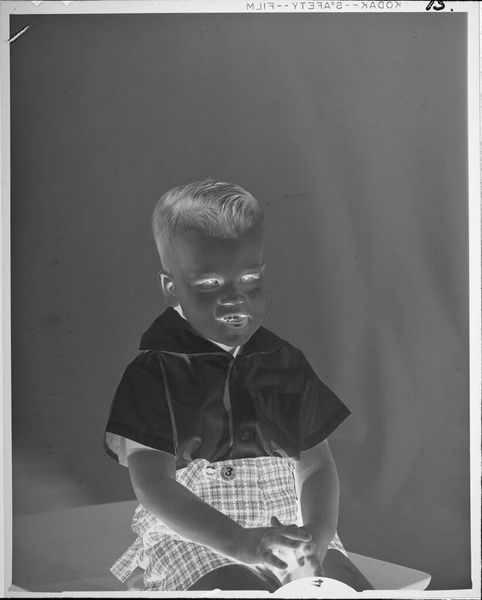
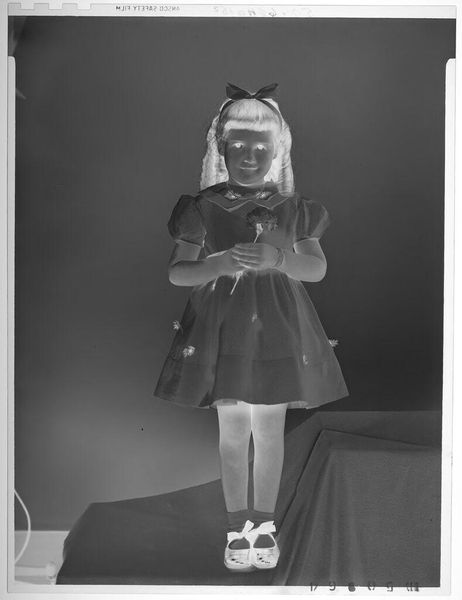
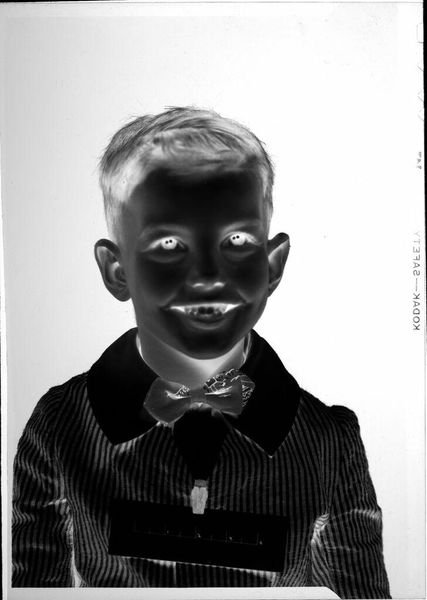
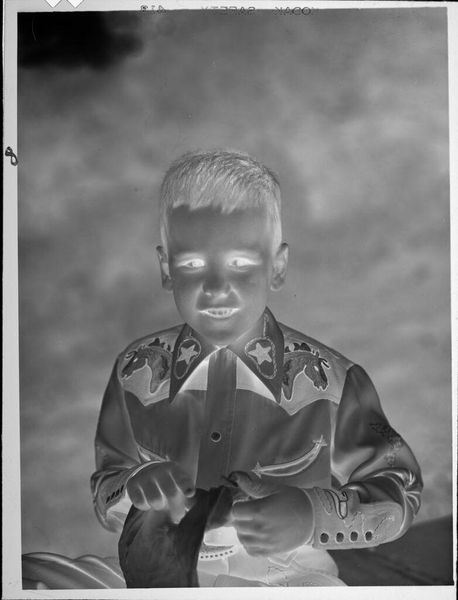
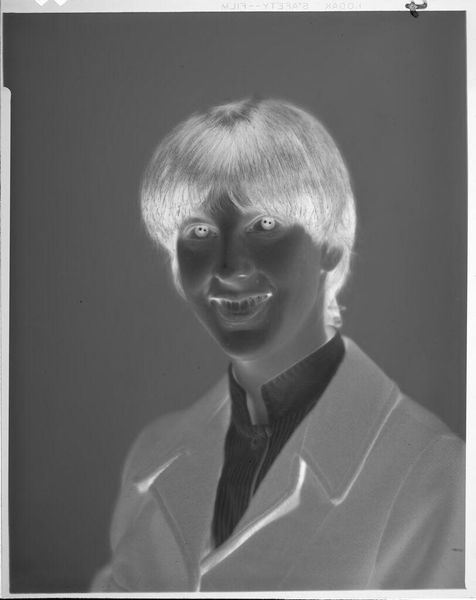
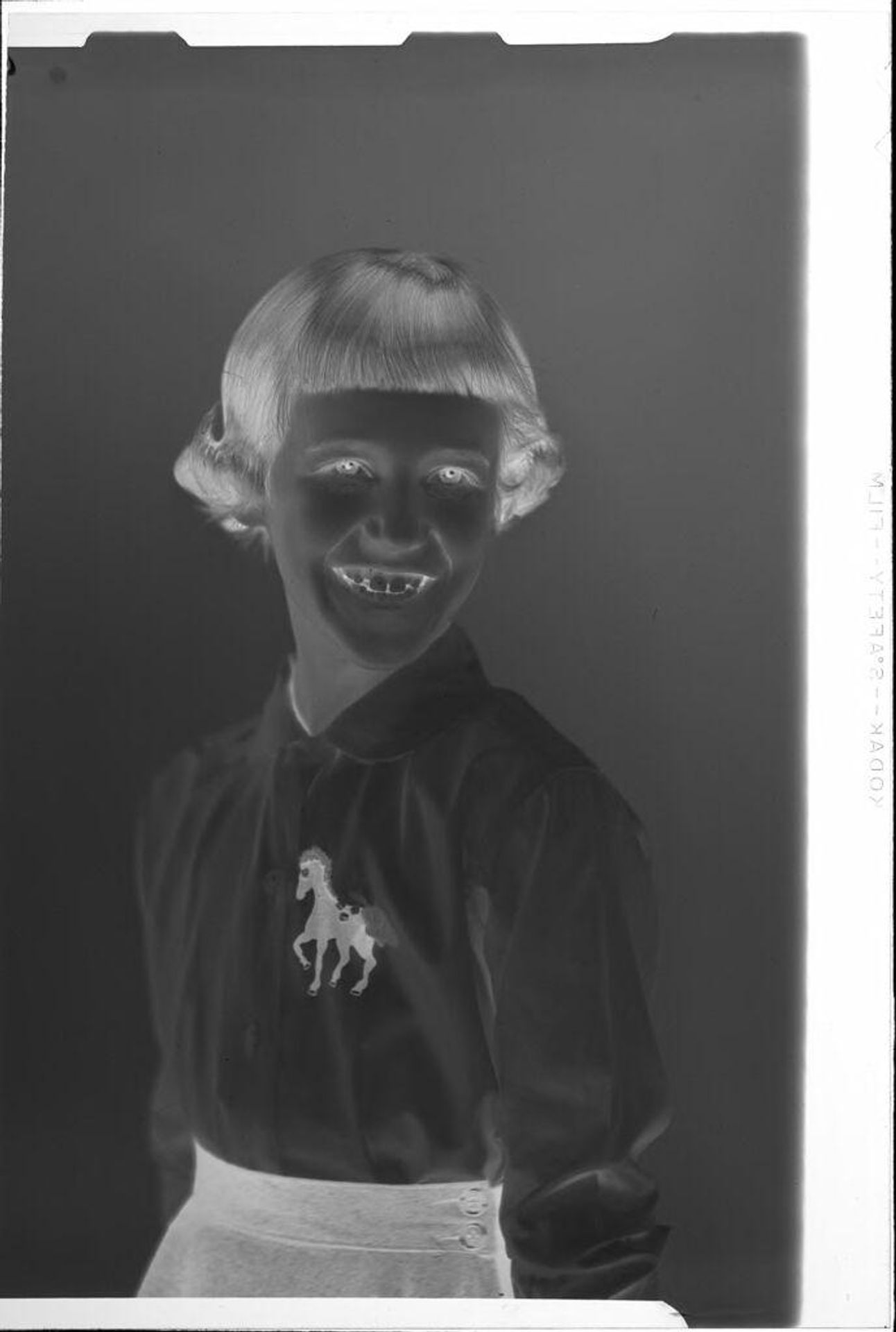
Curator: This silver gelatin print, about the size of a notecard, is listed as "Untitled (portrait of girl with horse on shirt)" by Ken Whitmire Associates. Editor: The inversion of tones definitely gives it an unsettling, almost ghostly quality. It speaks to vulnerability, especially with the girl's braces so clearly visible. Curator: The horse on her shirt is fascinating. Horses often symbolize freedom and untamed spirit, but here it feels domesticated, almost like a brand. What do you think of that juxtaposition? Editor: Absolutely. The image taps into complex ideas about childhood and the societal forces that attempt to shape identity. It could be read as a commentary on the constraints placed upon young girls. Curator: Interesting. The horse, as a symbol, also has links to status and aristocracy, reminding us that even childhood can be shaped by socio-economic factors. Editor: Thinking about the context of portraiture, how does it play into the construction of identity, particularly for young women who are often hyper-visible? Curator: Indeed. The image leaves me pondering the long-lasting impact of these formative years. Editor: For me, it underscores the enduring power of images in shaping our understanding of ourselves and others.
Untitled (portrait of girl with horse on shirt)
c. 1950

Artwork details
- Dimensions
- 7.62 x 12.7 cm (3 x 5 in.)
- Location
- Harvard Art Museums
- Copyright
- CC0 1.0
Comments
Share your thoughts
About this artwork
Curator: This silver gelatin print, about the size of a notecard, is listed as "Untitled (portrait of girl with horse on shirt)" by Ken Whitmire Associates. Editor: The inversion of tones definitely gives it an unsettling, almost ghostly quality. It speaks to vulnerability, especially with the girl's braces so clearly visible. Curator: The horse on her shirt is fascinating. Horses often symbolize freedom and untamed spirit, but here it feels domesticated, almost like a brand. What do you think of that juxtaposition? Editor: Absolutely. The image taps into complex ideas about childhood and the societal forces that attempt to shape identity. It could be read as a commentary on the constraints placed upon young girls. Curator: Interesting. The horse, as a symbol, also has links to status and aristocracy, reminding us that even childhood can be shaped by socio-economic factors. Editor: Thinking about the context of portraiture, how does it play into the construction of identity, particularly for young women who are often hyper-visible? Curator: Indeed. The image leaves me pondering the long-lasting impact of these formative years. Editor: For me, it underscores the enduring power of images in shaping our understanding of ourselves and others.
Comments
Share your thoughts