
Curatorial notes
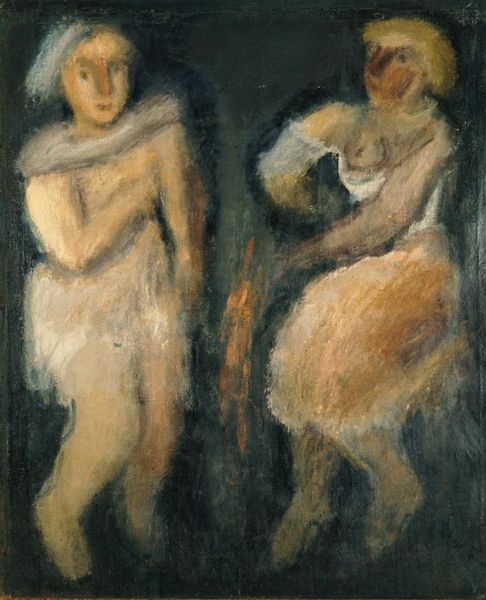
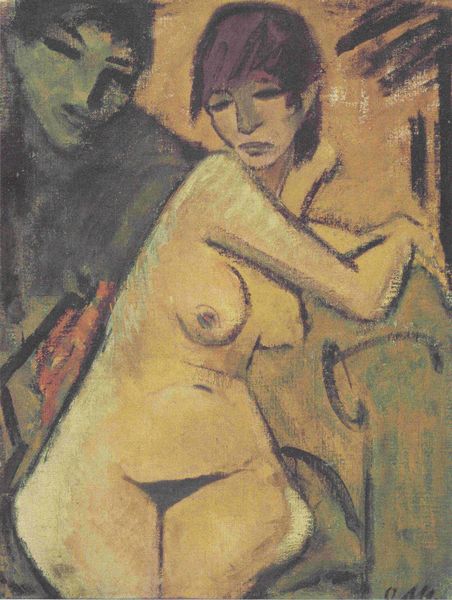
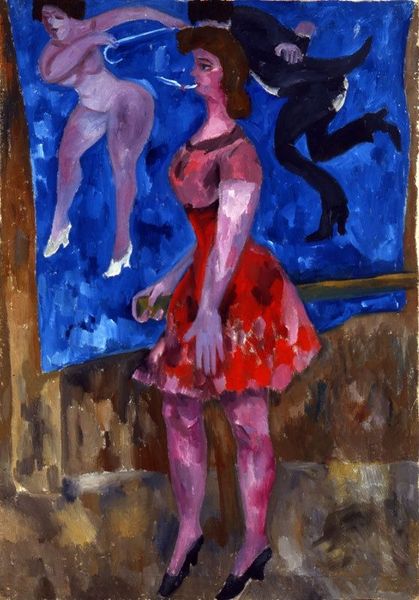
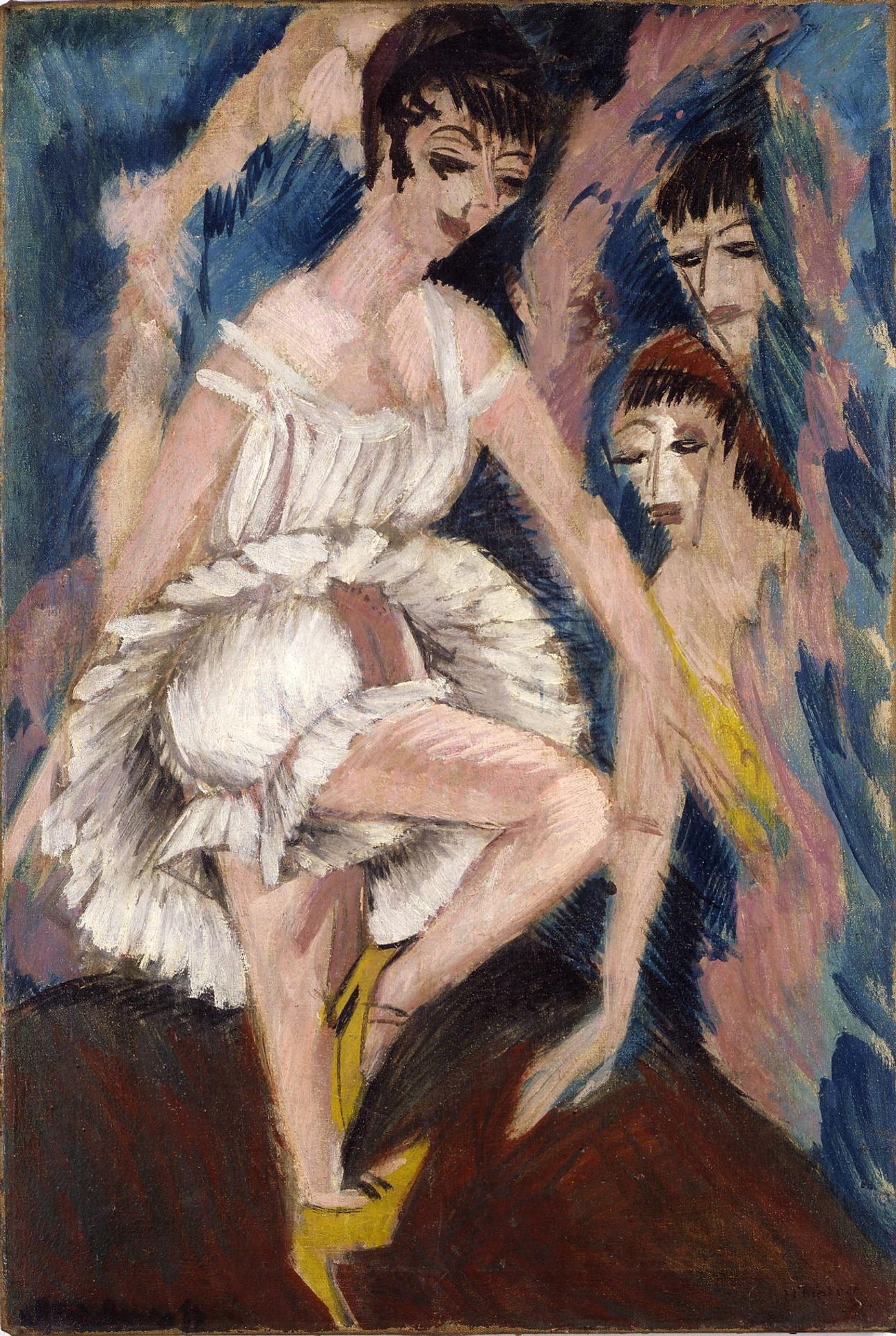
Editor: So here we have Kirchner's "Dancer," painted in 1914, in oil. My first thought is how the bold strokes and almost clashing colours give it such a vibrant, uneasy energy. It's not your typical graceful ballerina painting, is it? What do you see in this piece, something beyond just a dancer? Curator: Oh, absolutely not! It's buzzing, isn't it? Like a hive. I feel the pulse of the city, that frenetic energy, all captured in this one figure. Look at the sharp angles, the way he defines her – it's almost aggressive, a stark contrast to the softness we usually associate with dance. Do you notice how her eyes seem almost… knowing? Editor: Yeah, there's a definite edge to her gaze. And the two shadowy figures in the background... what do you make of those? Curator: Ah, the silent observers! I imagine them as fragments of her psyche, perhaps the expectations, the judgment, that constantly swirl around her. Or maybe they are the lingering gazes of a male-dominated audience? Consider also the art-historical context and the emerging, subversive avant-garde practices in 1914 in Germany. But does the setting or location impact your interpretation? Editor: I didn't initially think about that, but now I see what you mean; she appears caught in the flux of some liminal space that reinforces the psychological weight, her state of mind, in addition to her physical one. I never thought a ballet dancer could seem so… vulnerable, almost burdened. Curator: And yet, undeniably powerful! It is a potent visual summary of a new, fractured and dynamic age in Germany, captured through one performance, one performer. I guess what struck me initially was the fact that despite its jarring nature, I actually find her quietly inspiring and resolute in her purpose. Editor: Definitely. Thanks, that’s really given me a new appreciation for it, a whole different perspective, especially in seeing those figures not just as background elements, but facets of her inner world. Curator: It just reminds me to always look for those little unexpected layers within. Art can surprise, it seems, and teach, if we only make the time to contemplate it.