About this artwork
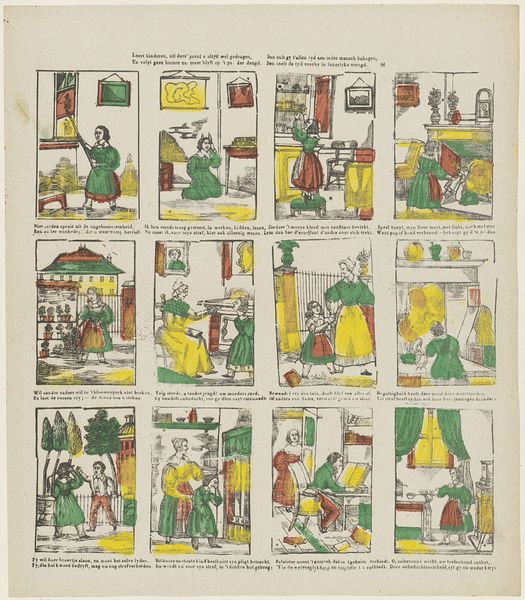
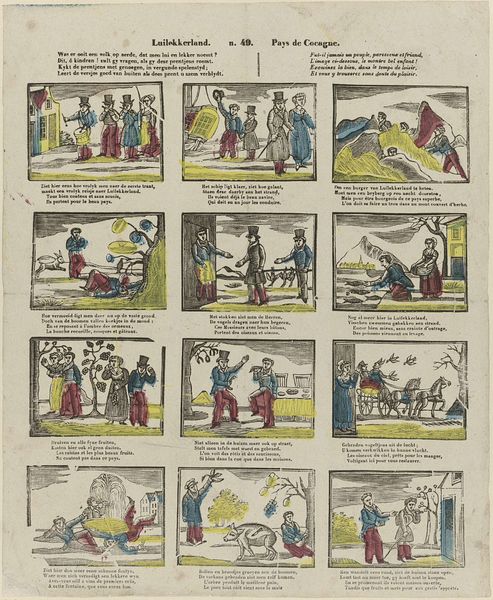
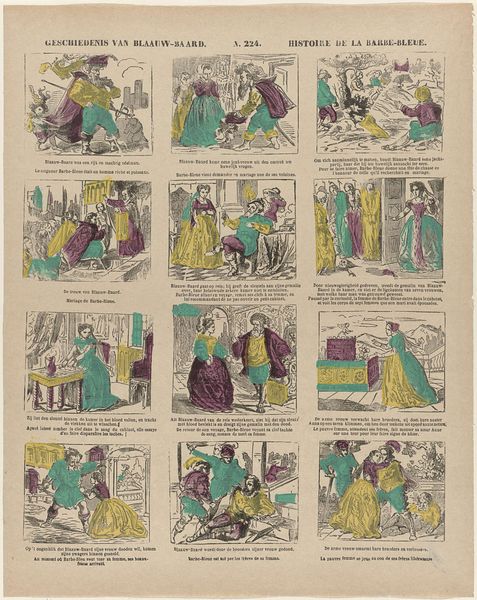
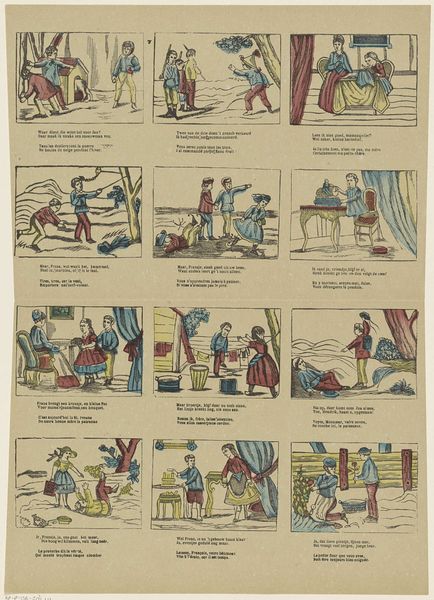
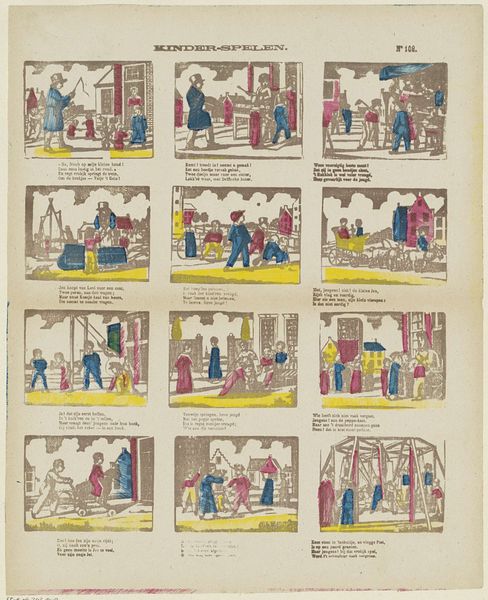
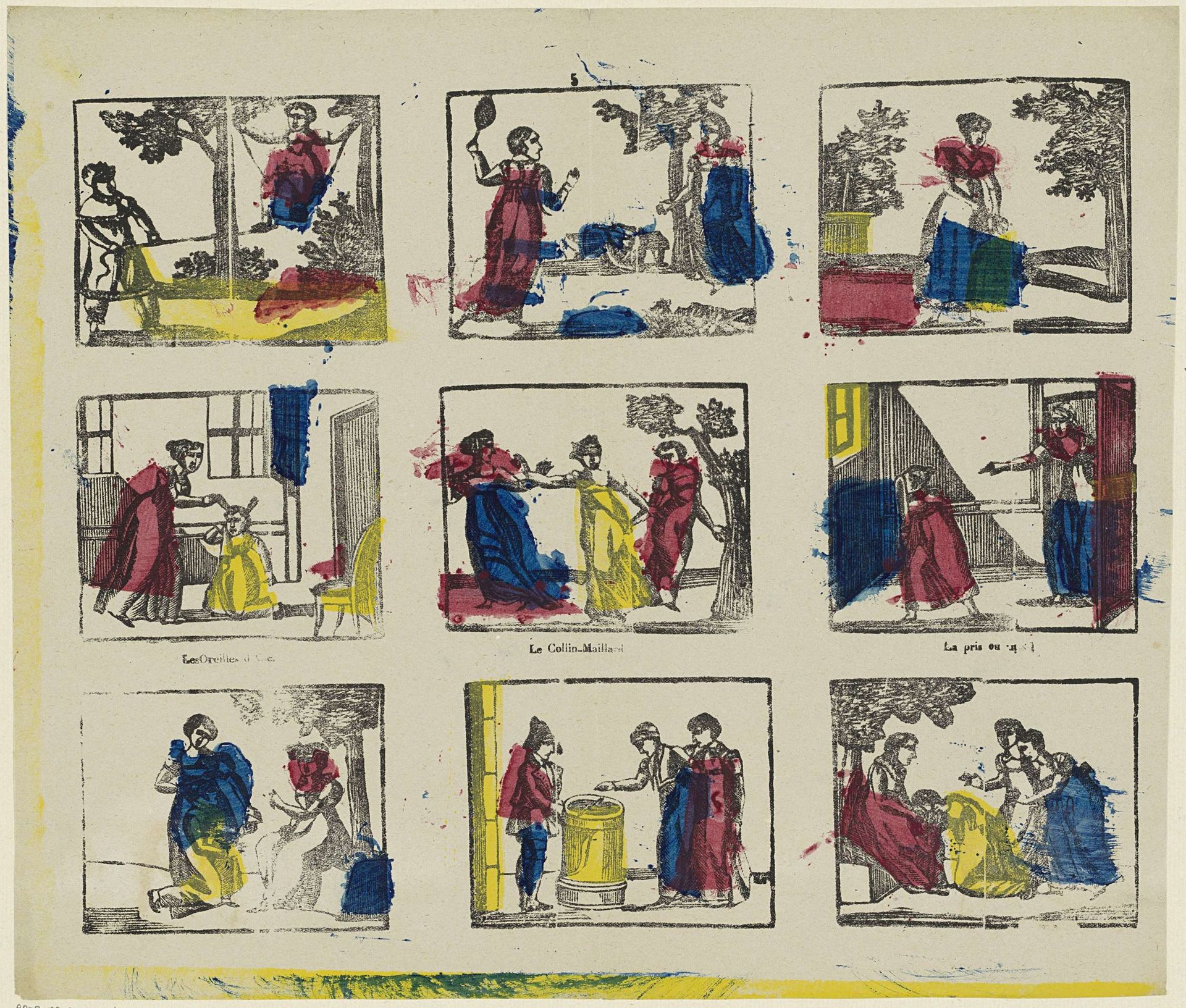
M. Hemeleers-van Houter created this print, “Meisjesspelen en bezigheden” or “Girls' Games and Activities,” during the nineteenth century. Here, we see how the artist used printmaking to reflect on the lives of young women. The print depicts nine vignettes, each capturing different pastimes, like playing on a swing, or other activities. It offers us a glimpse into the leisure and social lives deemed appropriate for young girls at the time, as shaped by social norms. Made in Europe, the work reflects the period’s emphasis on domesticity and the cultivation of virtues in women. To fully grasp the print's meaning, we might look at etiquette manuals, educational treatises, and literature from the period. These sources could reveal much about the social expectations and values that shaped women's lives and roles in the 1800s. Through this kind of historical investigation, we discover that the print is not just a depiction of play, but also a window into the social and cultural landscape of its time.

Artwork details
- Medium
- print, etching, intaglio, engraving
- Dimensions
- height 322 mm, width 375 mm
- Location
- Rijksmuseum
- Copyright
- Rijks Museum: Open Domain
Tags
Comments
Share your thoughts
About this artwork
M. Hemeleers-van Houter created this print, “Meisjesspelen en bezigheden” or “Girls' Games and Activities,” during the nineteenth century. Here, we see how the artist used printmaking to reflect on the lives of young women. The print depicts nine vignettes, each capturing different pastimes, like playing on a swing, or other activities. It offers us a glimpse into the leisure and social lives deemed appropriate for young girls at the time, as shaped by social norms. Made in Europe, the work reflects the period’s emphasis on domesticity and the cultivation of virtues in women. To fully grasp the print's meaning, we might look at etiquette manuals, educational treatises, and literature from the period. These sources could reveal much about the social expectations and values that shaped women's lives and roles in the 1800s. Through this kind of historical investigation, we discover that the print is not just a depiction of play, but also a window into the social and cultural landscape of its time.
Comments
Share your thoughts