About this artwork
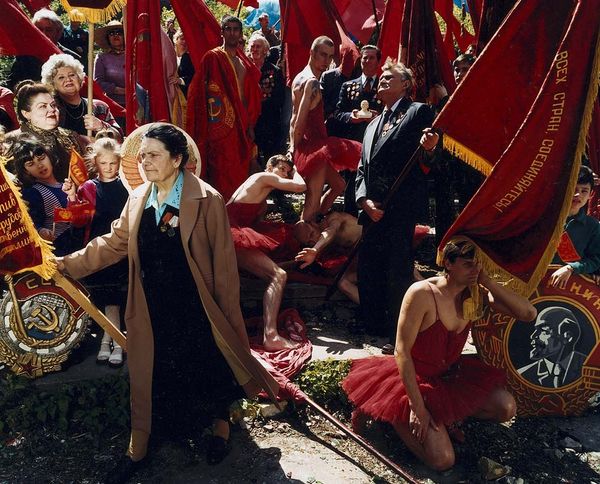
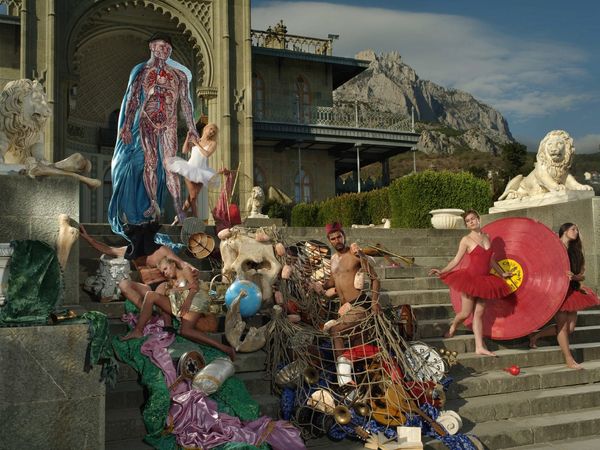
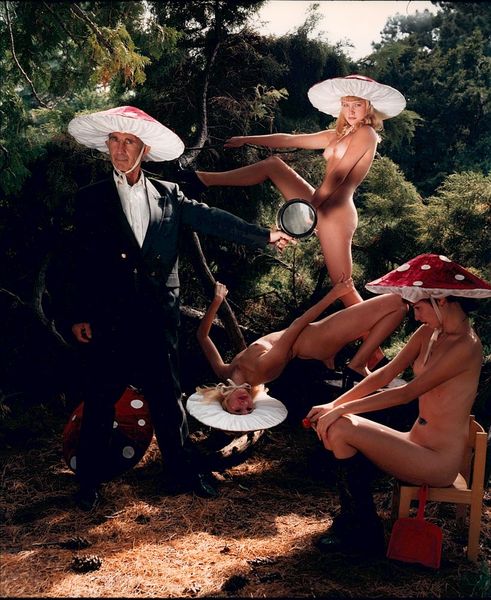
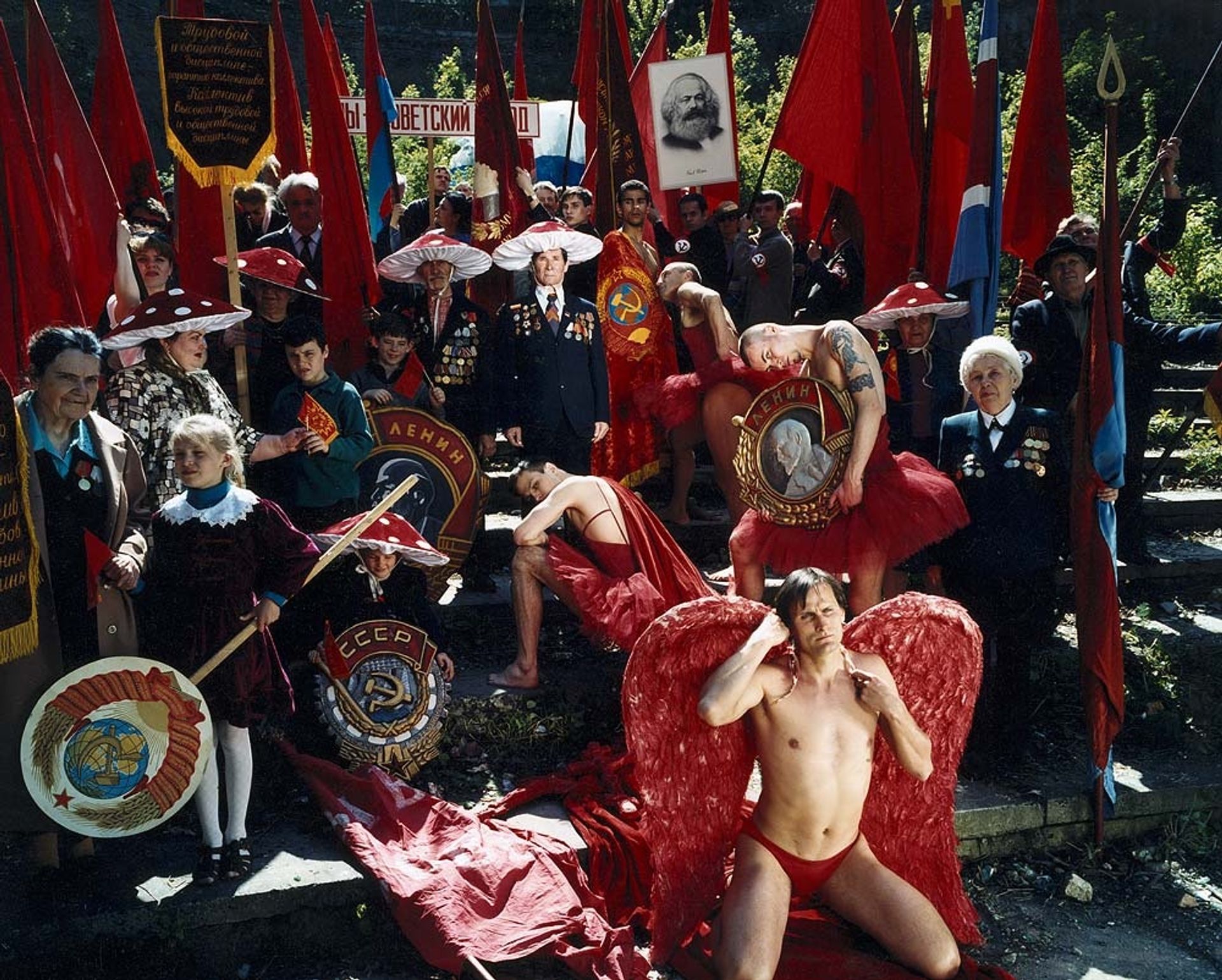
Arsen Savadov's photograph, "Collective Red - part 2", is a cacophony of bodies and Bolshevik iconography, a process of layering history, memory, and performance. The pervasive red is, of course, the first thing you notice. It's not a flat, uniform red; instead, it's got a tactile quality, a visual noise that vibrates with historical tension. The red of the flags, the awkward angel wings, the dancers' tutus, and the mushroom hats, all contribute to a scene that feels both staged and spontaneous. Look at the face of the man kneeling in the foreground wearing the angel wings. The look on his face is a mixture of exhaustion, irony, and maybe a little bit of resignation. It's a gesture that speaks volumes about the weight of history and the absurdity of ideology. It reminds me a little of some of the work of the Russian performance artists, like Oleg Kulik, where the body becomes a site of political and social commentary. Art's always in conversation with itself, isn't it? It's never really finished, more like an ongoing, messy, and often funny, debate.

Artwork details
- Medium
- performance, photography
- Copyright
- Arsen Savadov,Fair Use
Tags
portrait
street festival
performance
conceptual-art
appropriation
soviet-nonconformist-art
photography
group-portraits
Comments
No comments
About this artwork
Arsen Savadov's photograph, "Collective Red - part 2", is a cacophony of bodies and Bolshevik iconography, a process of layering history, memory, and performance. The pervasive red is, of course, the first thing you notice. It's not a flat, uniform red; instead, it's got a tactile quality, a visual noise that vibrates with historical tension. The red of the flags, the awkward angel wings, the dancers' tutus, and the mushroom hats, all contribute to a scene that feels both staged and spontaneous. Look at the face of the man kneeling in the foreground wearing the angel wings. The look on his face is a mixture of exhaustion, irony, and maybe a little bit of resignation. It's a gesture that speaks volumes about the weight of history and the absurdity of ideology. It reminds me a little of some of the work of the Russian performance artists, like Oleg Kulik, where the body becomes a site of political and social commentary. Art's always in conversation with itself, isn't it? It's never really finished, more like an ongoing, messy, and often funny, debate.
Comments
No comments