About this artwork
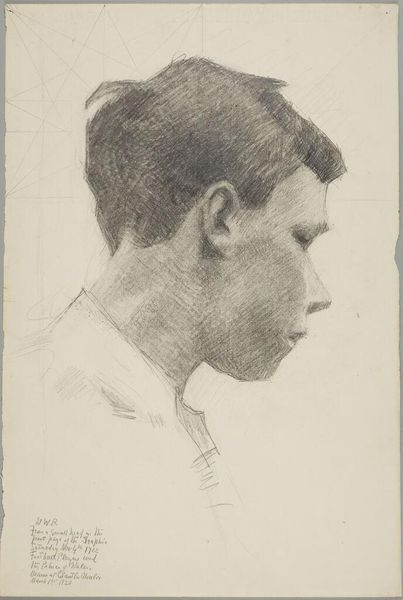
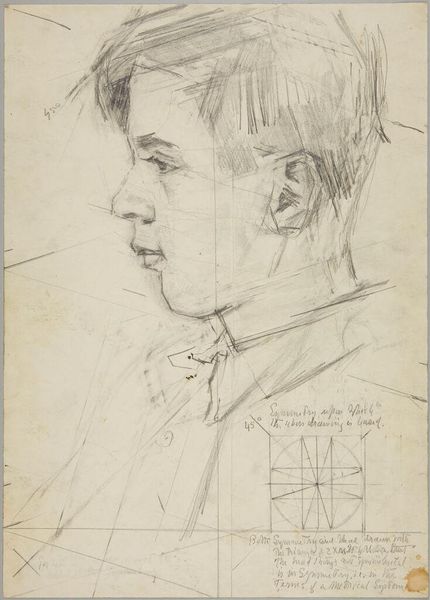
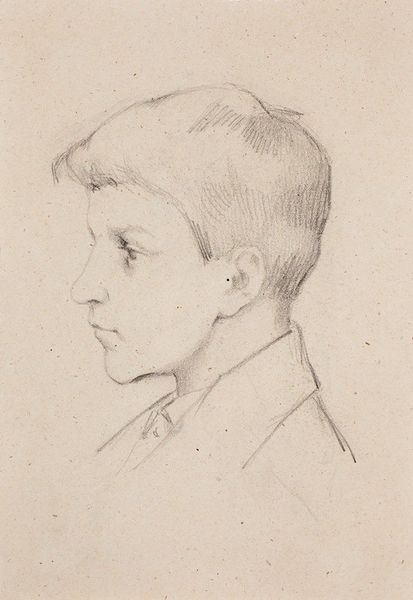
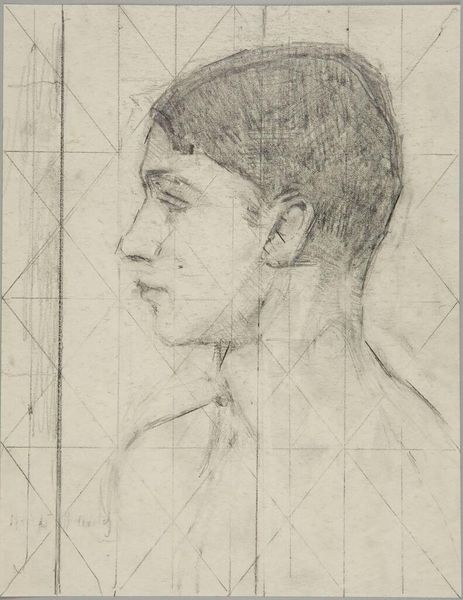
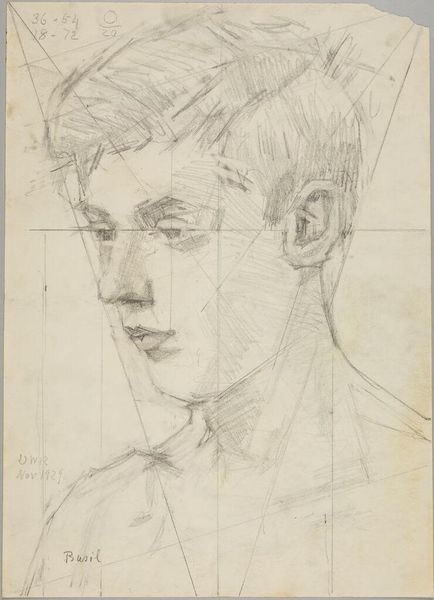
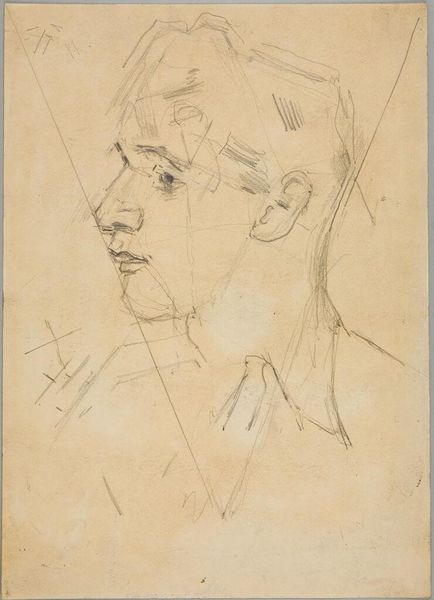
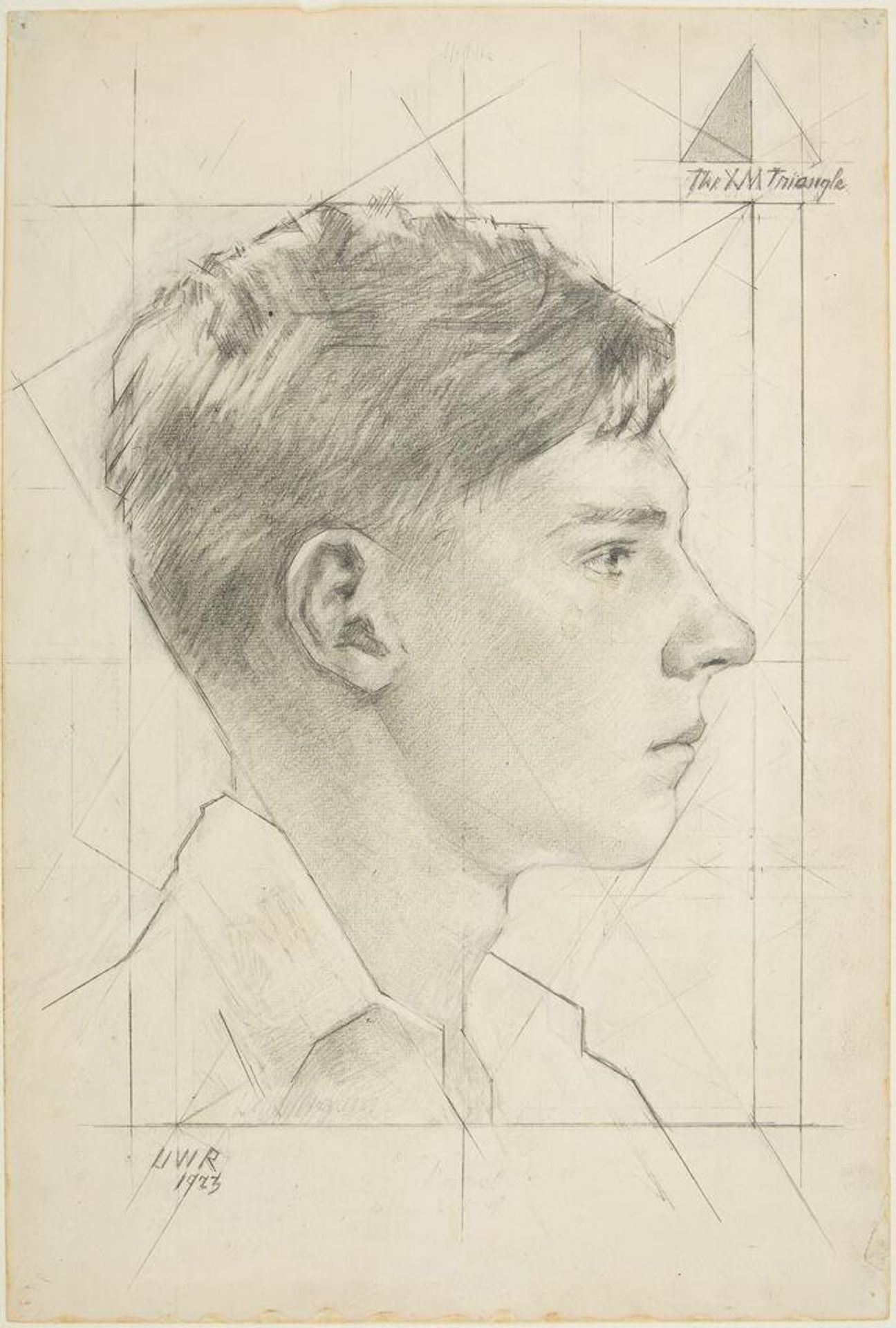
Curator: We’re looking at Denman Waldo Ross’s "Profile Head of a Boy," currently residing here at the Harvard Art Museums. Editor: My first impression is a study in tonal control—so much detail rendered with such delicate pencil work. Curator: Ross was very interested in color theory and design, and that's evident in the underlying grid system he's employed here. He’s imposing order, a structure onto what appears to be a simple portrait. Editor: Absolutely. Notice how the lines of the grid interact with the subject's features, emphasizing the geometric underpinnings of the human form. Curator: It reflects a broader trend in art education at the time, emphasizing academic rigor. The grid is as much about learning to see as it is about representation. This wasn't just art; it was pedagogy. Editor: It makes you consider the relationship between the artist and his subject, doesn't it? It highlights the artist's own structural view of the world around him. Curator: I agree. Ross's exploration offers us insight into the educational theories circulating at the time. Editor: A keen reminder to perceive the intentionality ingrained in line and form.
Profile Head of a Boy
1923

Artwork details
- Dimensions
- 45.2 x 30 cm (17 13/16 x 11 13/16 in.)
- Location
- Harvard Art Museums
- Copyright
- CC0 1.0
Comments
Share your thoughts
About this artwork
Curator: We’re looking at Denman Waldo Ross’s "Profile Head of a Boy," currently residing here at the Harvard Art Museums. Editor: My first impression is a study in tonal control—so much detail rendered with such delicate pencil work. Curator: Ross was very interested in color theory and design, and that's evident in the underlying grid system he's employed here. He’s imposing order, a structure onto what appears to be a simple portrait. Editor: Absolutely. Notice how the lines of the grid interact with the subject's features, emphasizing the geometric underpinnings of the human form. Curator: It reflects a broader trend in art education at the time, emphasizing academic rigor. The grid is as much about learning to see as it is about representation. This wasn't just art; it was pedagogy. Editor: It makes you consider the relationship between the artist and his subject, doesn't it? It highlights the artist's own structural view of the world around him. Curator: I agree. Ross's exploration offers us insight into the educational theories circulating at the time. Editor: A keen reminder to perceive the intentionality ingrained in line and form.
Comments
Share your thoughts