About this artwork
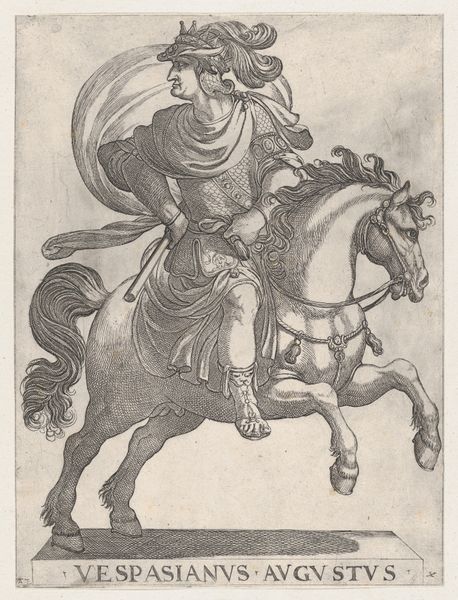
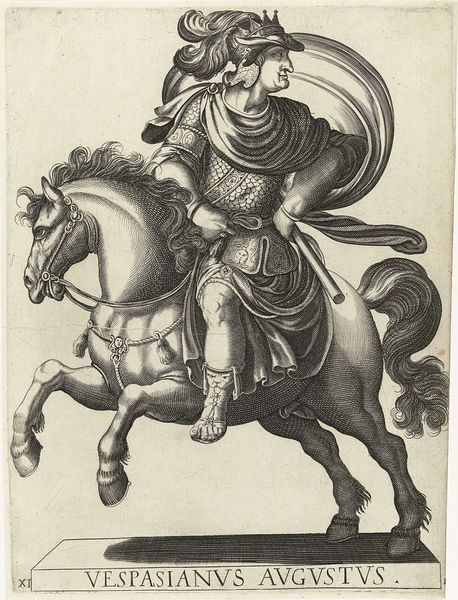
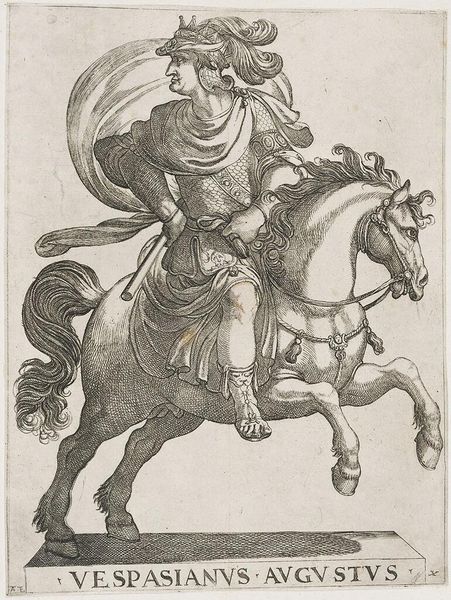
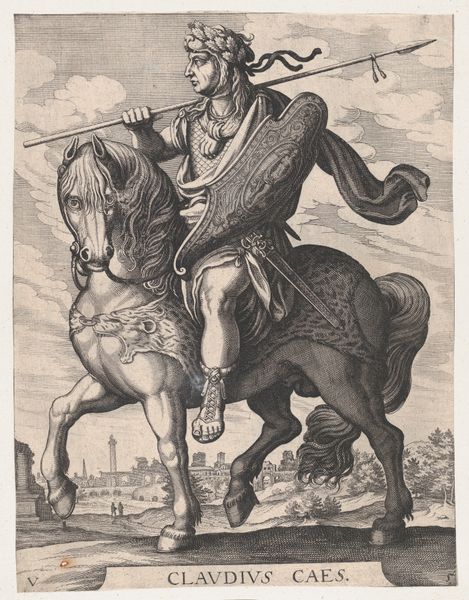
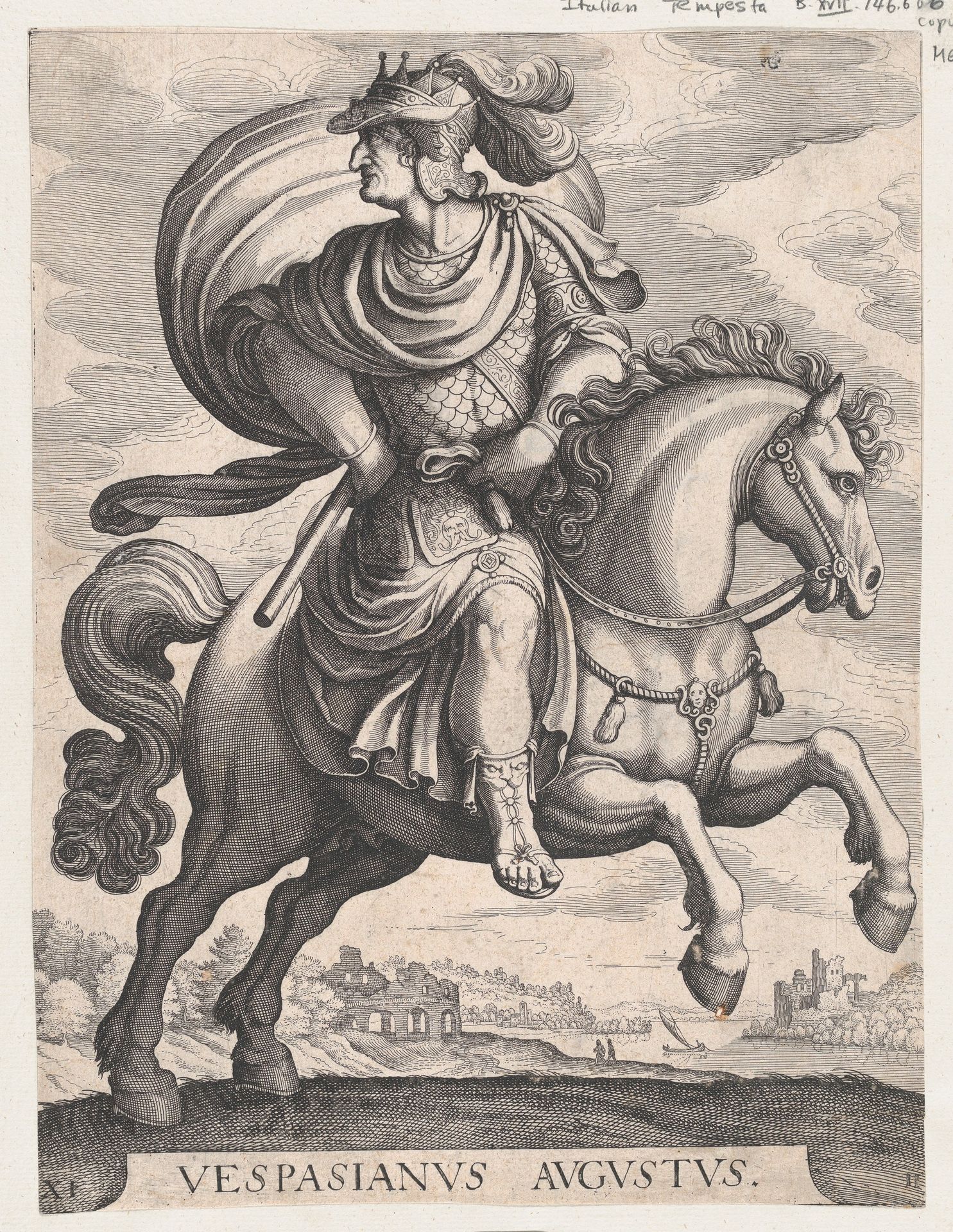
Matthäus Merian the Elder created this engraving of Emperor Vespasian on horseback as part of his series "The First Twelve Roman Caesars." Merian lived during the Thirty Years' War, a period marked by religious and political conflict across Europe. His work often reflected an interest in historical subjects and the representation of power. Vespasian, who ruled the Roman Empire from 69 to 79 AD, is depicted here in full military regalia, symbolizing strength and authority. But it's worth asking ourselves, what does it mean to represent power? Is this a neutral record, or does the artist participate in the creation of such images? The choice to portray Vespasian on horseback is no accident. Horses have long been associated with nobility and command, and the image serves to reinforce Vespasian's status as a ruler. Images like these were used to shape perceptions of leadership. Merian's engraving invites us to consider how historical figures are memorialized and the messages conveyed through such representations.
Emperor Vespasian on Horseback, from the series The First Twelve Roman Caesars, plate 11 1610 - 1650


Artwork details
- Medium
- drawing, print, engraving
- Dimensions
- sheet: 14 5/8 x 20 1/2 in. (37.2 x 52 cm) plate: 11 5/8 x 9 1/16 in. (29.5 x 23 cm)
- Location
- Metropolitan Museum of Art, New York, NY
- Copyright
- Public Domain
Tags
portrait
drawing
ancient-mediterranean
horse
history-painting
engraving
Comments
No comments
About this artwork
Matthäus Merian the Elder created this engraving of Emperor Vespasian on horseback as part of his series "The First Twelve Roman Caesars." Merian lived during the Thirty Years' War, a period marked by religious and political conflict across Europe. His work often reflected an interest in historical subjects and the representation of power. Vespasian, who ruled the Roman Empire from 69 to 79 AD, is depicted here in full military regalia, symbolizing strength and authority. But it's worth asking ourselves, what does it mean to represent power? Is this a neutral record, or does the artist participate in the creation of such images? The choice to portray Vespasian on horseback is no accident. Horses have long been associated with nobility and command, and the image serves to reinforce Vespasian's status as a ruler. Images like these were used to shape perceptions of leadership. Merian's engraving invites us to consider how historical figures are memorialized and the messages conveyed through such representations.
Comments
No comments