1871
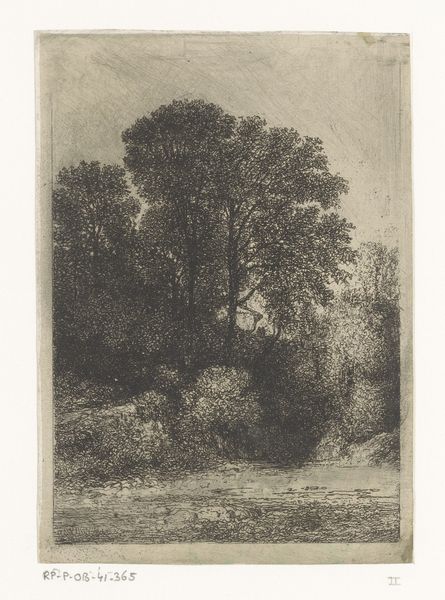
The Cows' Resting Place (Le Dormoir des vâches)


Listen to curator's interpretation
Curatorial notes
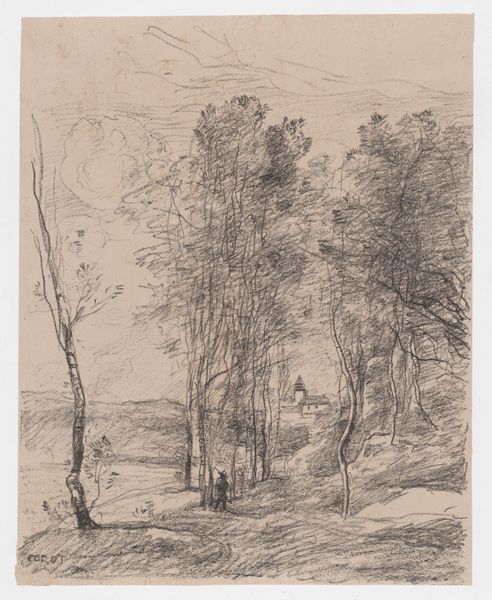
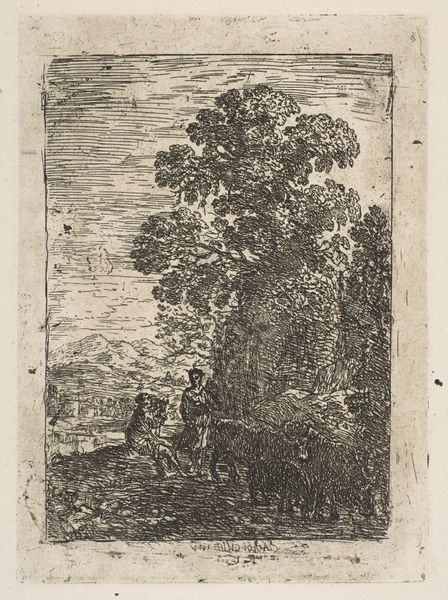
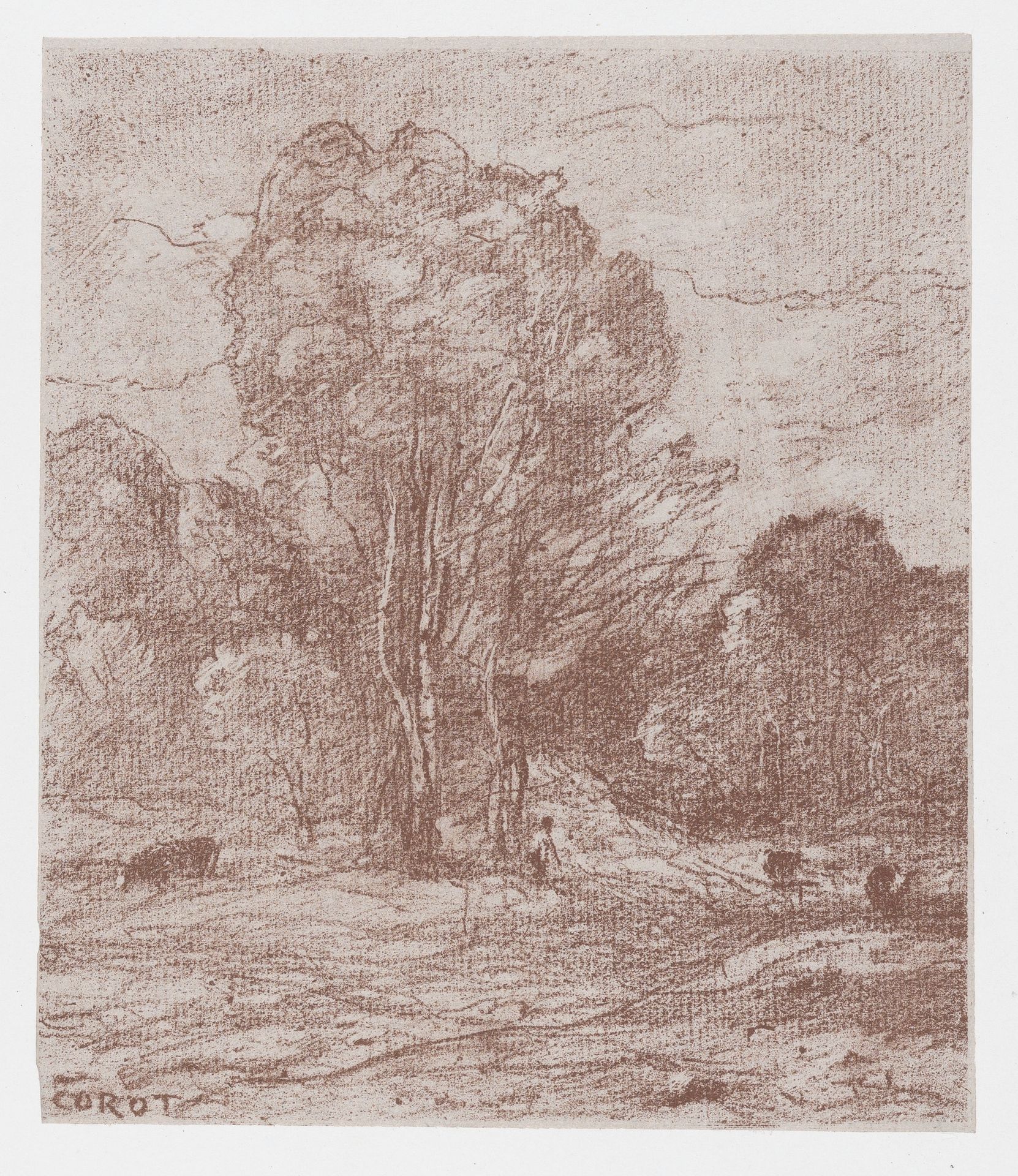
Curator: Welcome. Today, we'll be looking at Camille Corot’s “The Cows' Resting Place,” also known as “Le Dormoir des vaches,” an etching created in 1871. Editor: It evokes a sense of serene timelessness. The monochromatic palette and soft lines lend it a dreamlike quality, like a memory fading at the edges. Curator: Absolutely. Corot's use of etching speaks to a fascination with capturing fleeting moments in nature. Cows traditionally symbolize abundance and nourishment. Paired with resting, it reflects a theme of pastoral idyll, doesn’t it? Editor: It does, but I am interested in how the marks define the space. See how he creates depth using variations in line thickness? It emphasizes the volume of the trees against the horizon, right? There's a sort of structured spontaneity here. Curator: A keen observation. This interplay reveals an attempt to reconcile fleeting impressionism with a more durable rendering, a reflection of human labor, human relationships to nature, and, fundamentally, domesticity. Editor: I wonder, however, about the lone figure standing beneath the tree, watching the animals; there seems to be a connection to a traditional biblical rendering, perhaps to Moses watching the flock in the fields? Curator: That's a thoughtful suggestion; It may reflect the broader cultural memory of the French peasantry after the Franco-Prussian war, maybe as both observer and steward. Editor: So while appearing simplistic, this scene of resting cows contains layers of societal understanding—domestic life, tradition, and pastoral imagery—constructed and emphasized by Corot’s distinctive artistic choices? Curator: Exactly. “The Cows’ Resting Place” may seem like a straightforward landscape at first glance, but beneath that tranquility lie complex symbols. Editor: Precisely, a reminder that appearances can belie nuanced composition, intention, and context. Curator: It leaves one considering what images stay with us and what narratives are woven in along the way. Thank you for considering Corot's rendering.