1918
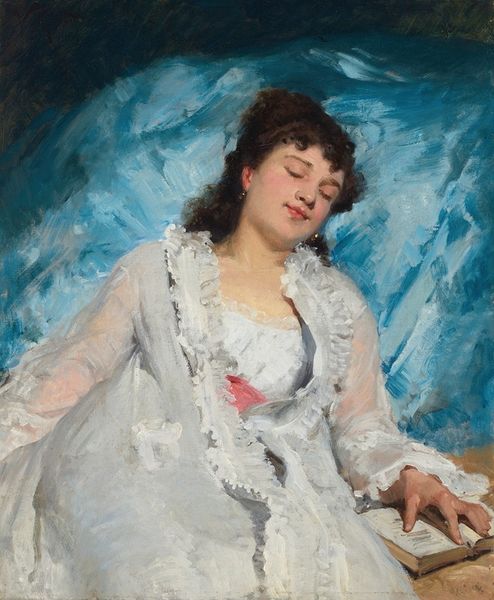
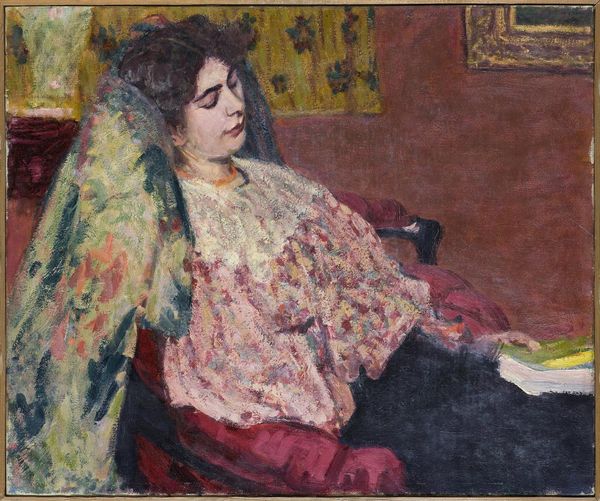
Marguerite

Rose O'Neill
1874 - 1944Location
Bowers Museum, Santa Ana, CA, USListen to curator's interpretation
Curatorial notes
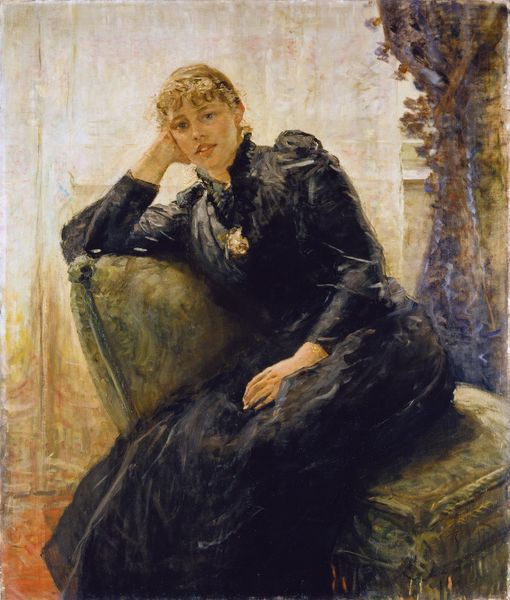
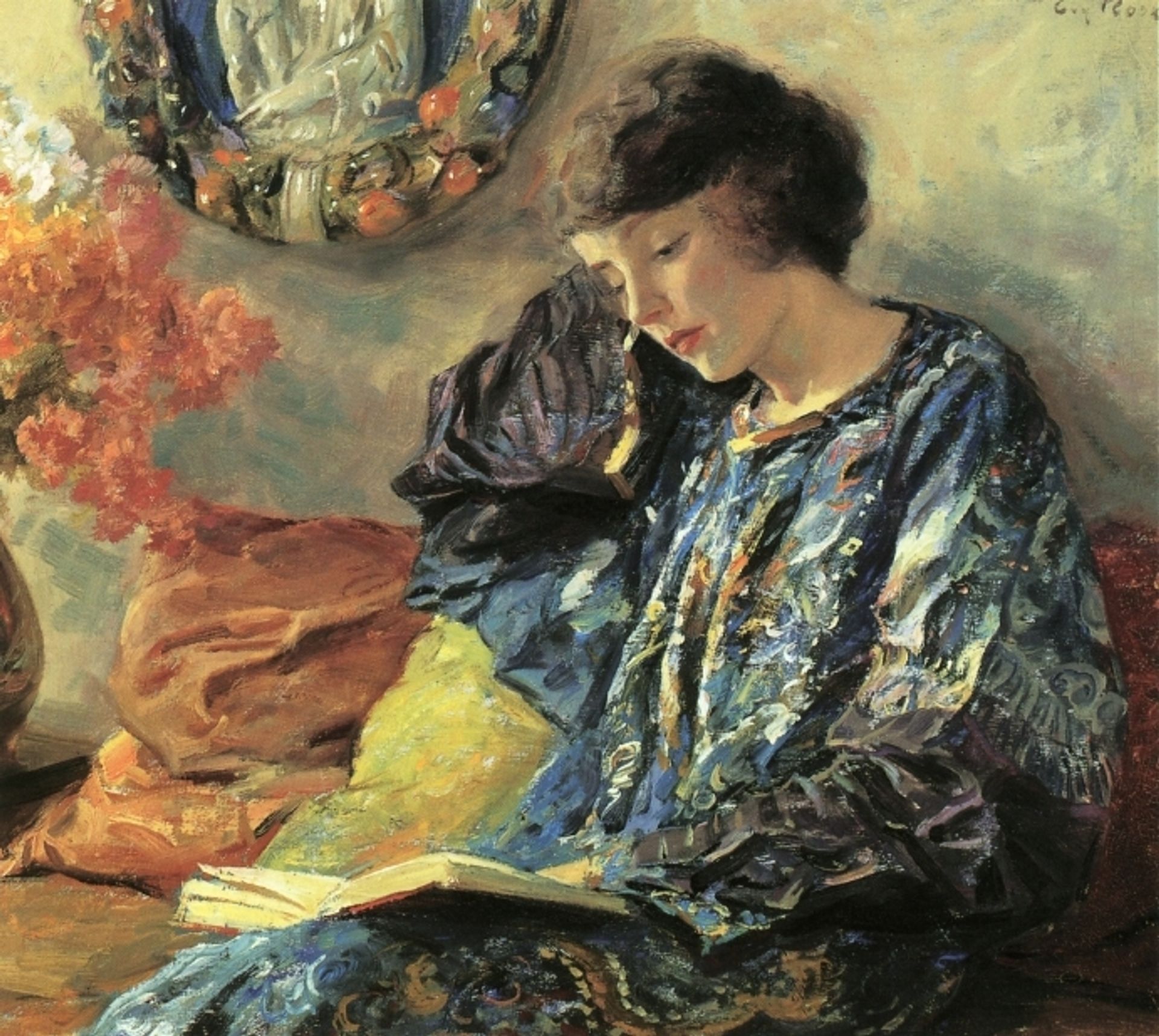
Editor: Here we have Rose O’Neill’s “Marguerite,” painted in 1918. It looks like an oil painting of a young woman reading on a comfy couch. The colours are so vibrant, yet there's this feeling of quiet contemplation about the scene. What catches your eye in this piece? Curator: You know, it’s the dreaminess of it all, isn't it? The brushstrokes feel like whispers. Rose O'Neill, of Kewpie Doll fame, exploring deeper emotional territory. I'm seeing Impressionistic influences here – a concern with light and atmosphere, but it’s the *interior* atmosphere of Marguerite's world, sealed off in a quiet time. Do you get a sense of narrative at all? Editor: Hmm, not exactly a clear story, but I am curious what she’s reading! Maybe it's a romantic novel that's completely capturing her imagination. Or, since it was painted during World War One, perhaps she's engrossed in something more serious and the setting is creating a refuge for her. Curator: That resonates. Refuge. Rose O’Neill saw a lot in her day and wasn’t shy about the fact that beauty, however simple, was indeed worth fighting for. There's such a personal quality, the scene appears so close, yet the loose brushstrokes seem to soften what would otherwise be just an illustration. I feel almost invited to imagine how she came to depict this exact setting, and who "Marguerite" was. Editor: I like that idea. And those floral arrangements…I hadn’t paid much attention, but their vibrant colours seem to frame her concentration so the flowers and artwork amplify the calmness. Curator: Exactly! Like stage decorations that reinforce the performance. "Marguerite’s" reading—her retreat into thought— is an act of defiance and beauty all at once. Thanks, Rose, for painting a picture. Editor: This conversation has shown me to appreciate all the nuances in this simple depiction of leisure, giving "Marguerite" new layers of depth and meaning.