About this artwork
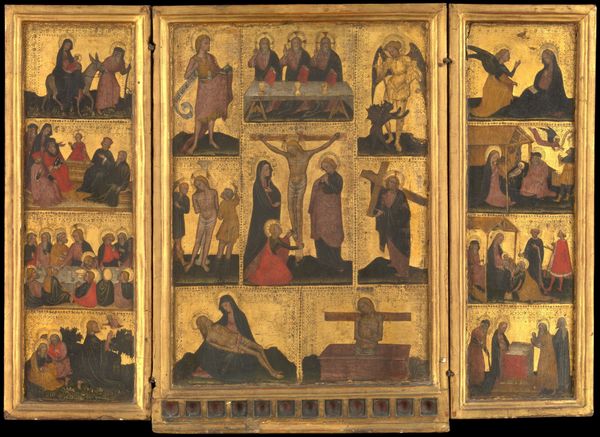
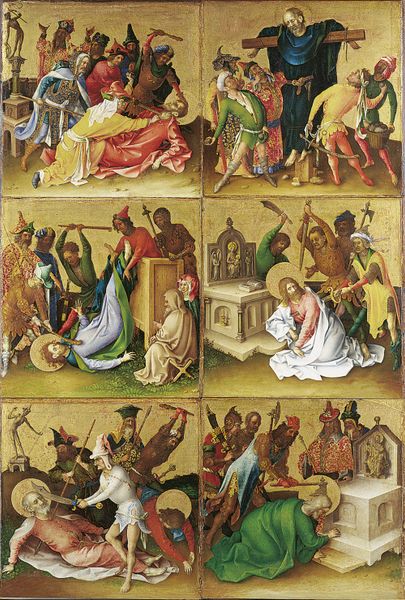
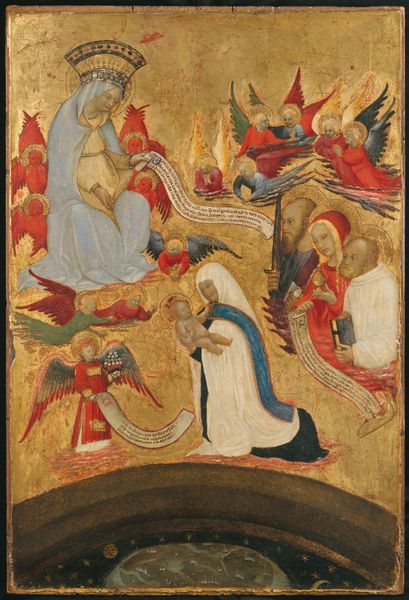
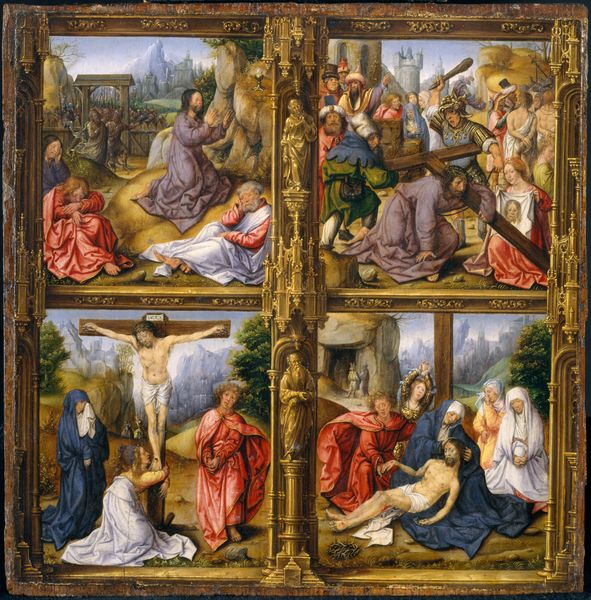
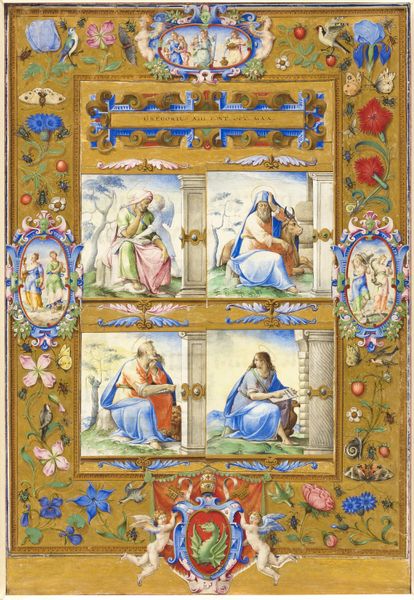
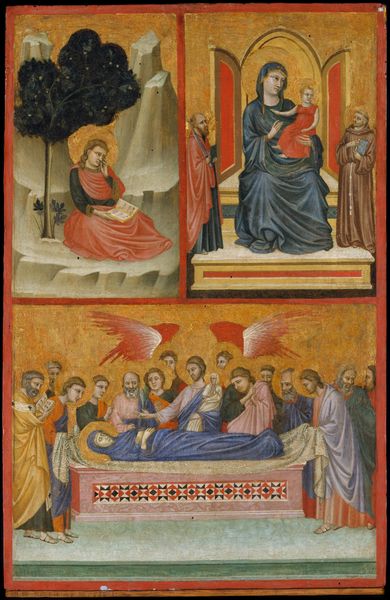
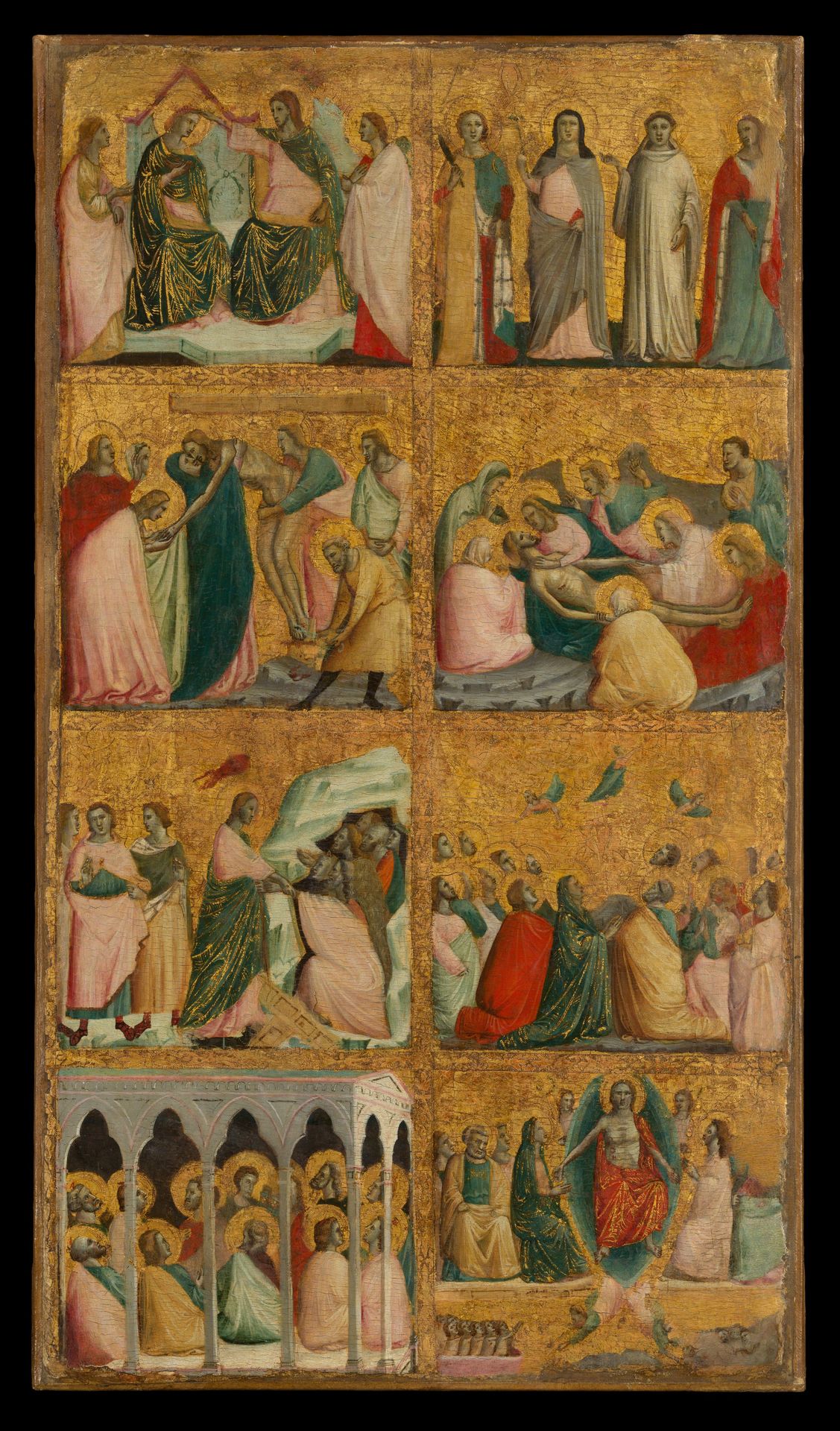
This panel showing scenes from the life of Christ was made in Italy by Giovanni Baronzio in the 1300s. It is made from tempera and gold leaf on wood. These are traditional artist’s materials, but their combination is quite interesting. The smooth egg tempera gives a sense of realism to the figures, and the gold leaf has been carefully applied. This is skilled work; each tiny piece has to be laid down perfectly, or the whole effect would be ruined. The gold background, or gilding, suggests a divine realm, against which the earthly scenes play out. The use of gold is not only decorative but symbolic, an application of specialized labor. The artist has divided the panel into sections, each showing a different episode from Christ's life. It's interesting to consider this piece, and others like it, as a work of art, but also a piece of complex craft. It invites us to look past the narrative and to think about the processes and labor, involved in its making.
Scenes from the Life of Christ
1344 - 1346


Artwork details
- Medium
- tempera, painting
- Dimensions
- 26 1/4 x 15 in. (66.7 x 38.1 cm)
- Location
- Metropolitan Museum of Art, New York, NY
- Copyright
- Public Domain
Tags
Comments
Share your thoughts
About this artwork
This panel showing scenes from the life of Christ was made in Italy by Giovanni Baronzio in the 1300s. It is made from tempera and gold leaf on wood. These are traditional artist’s materials, but their combination is quite interesting. The smooth egg tempera gives a sense of realism to the figures, and the gold leaf has been carefully applied. This is skilled work; each tiny piece has to be laid down perfectly, or the whole effect would be ruined. The gold background, or gilding, suggests a divine realm, against which the earthly scenes play out. The use of gold is not only decorative but symbolic, an application of specialized labor. The artist has divided the panel into sections, each showing a different episode from Christ's life. It's interesting to consider this piece, and others like it, as a work of art, but also a piece of complex craft. It invites us to look past the narrative and to think about the processes and labor, involved in its making.
Comments
Share your thoughts