About this artwork
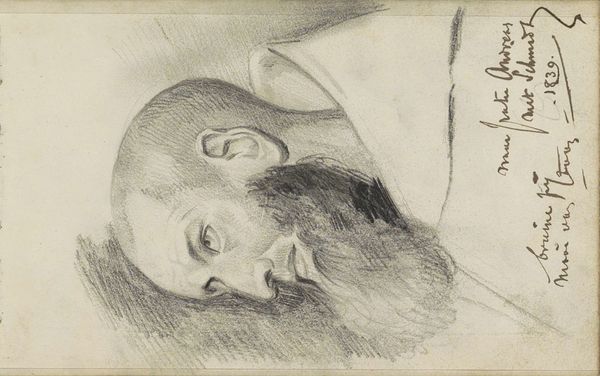
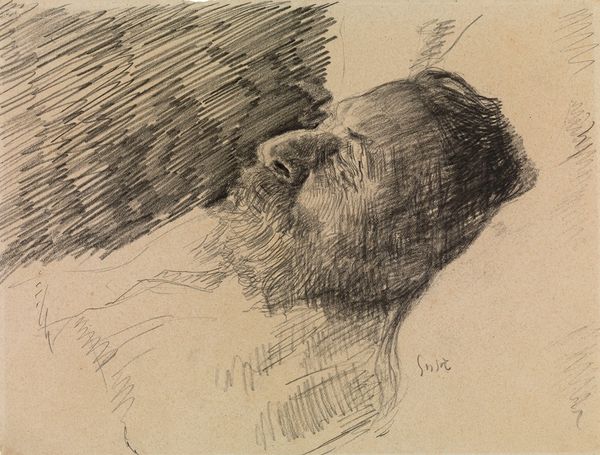
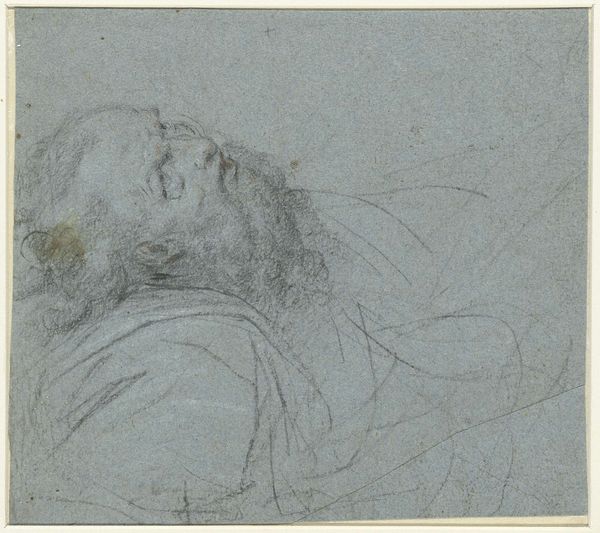
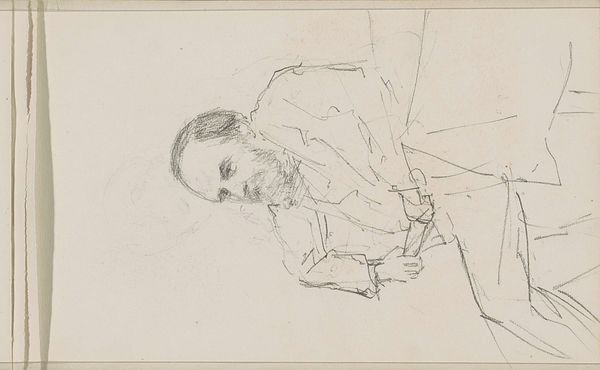
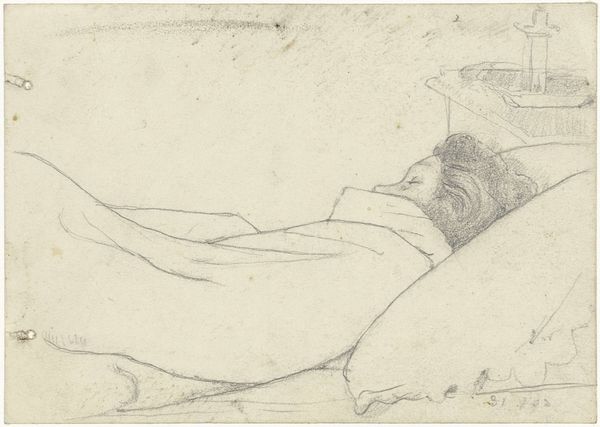
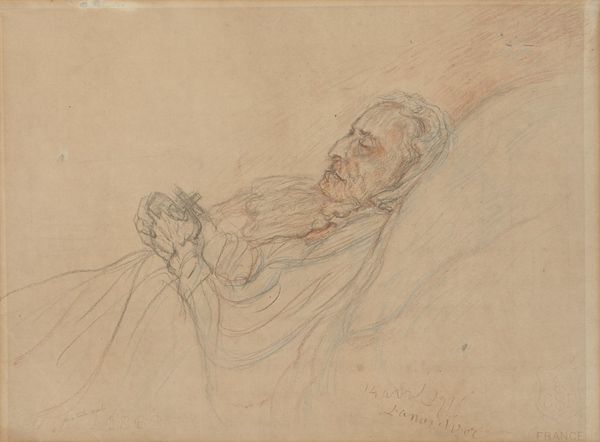
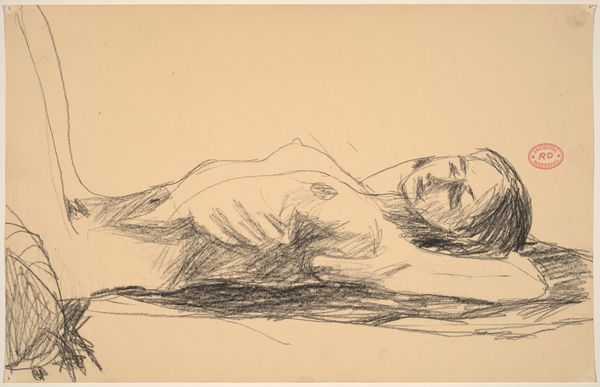
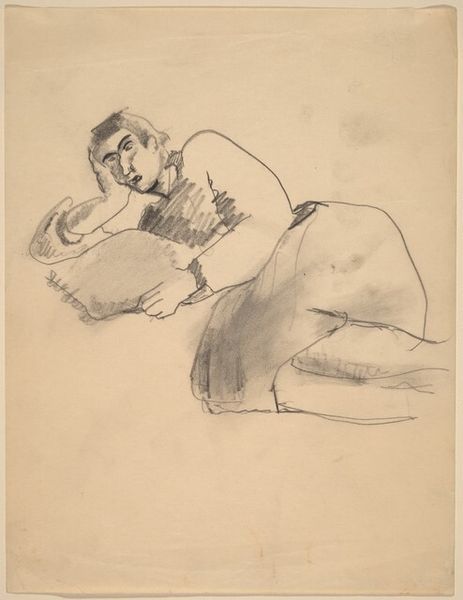
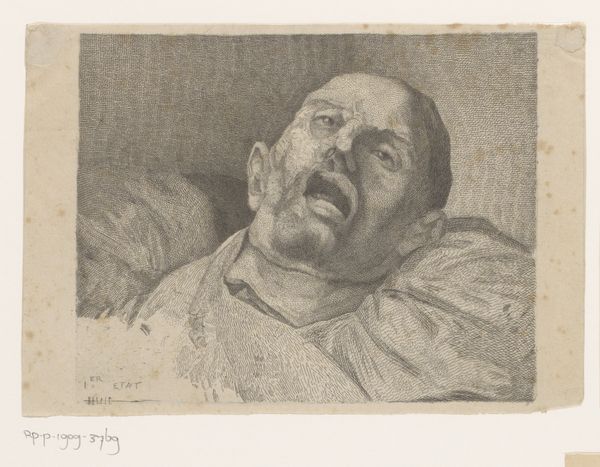
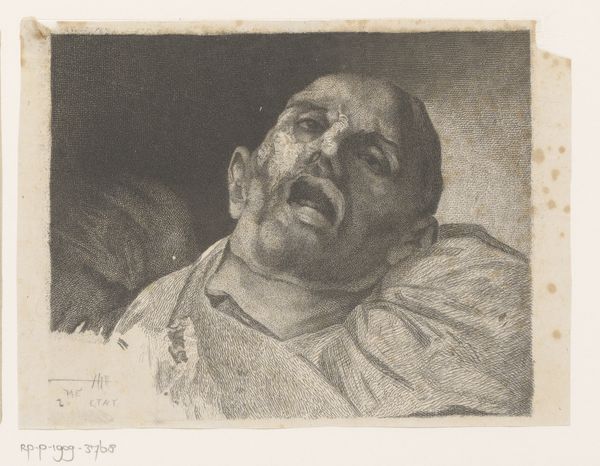
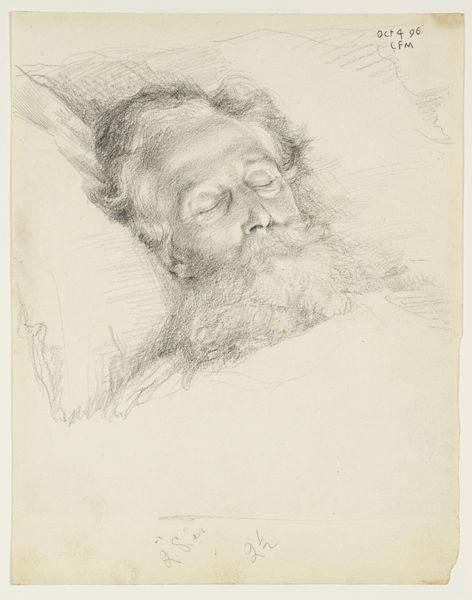
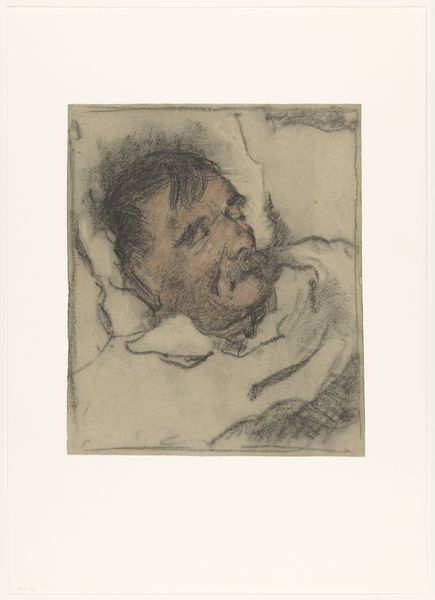
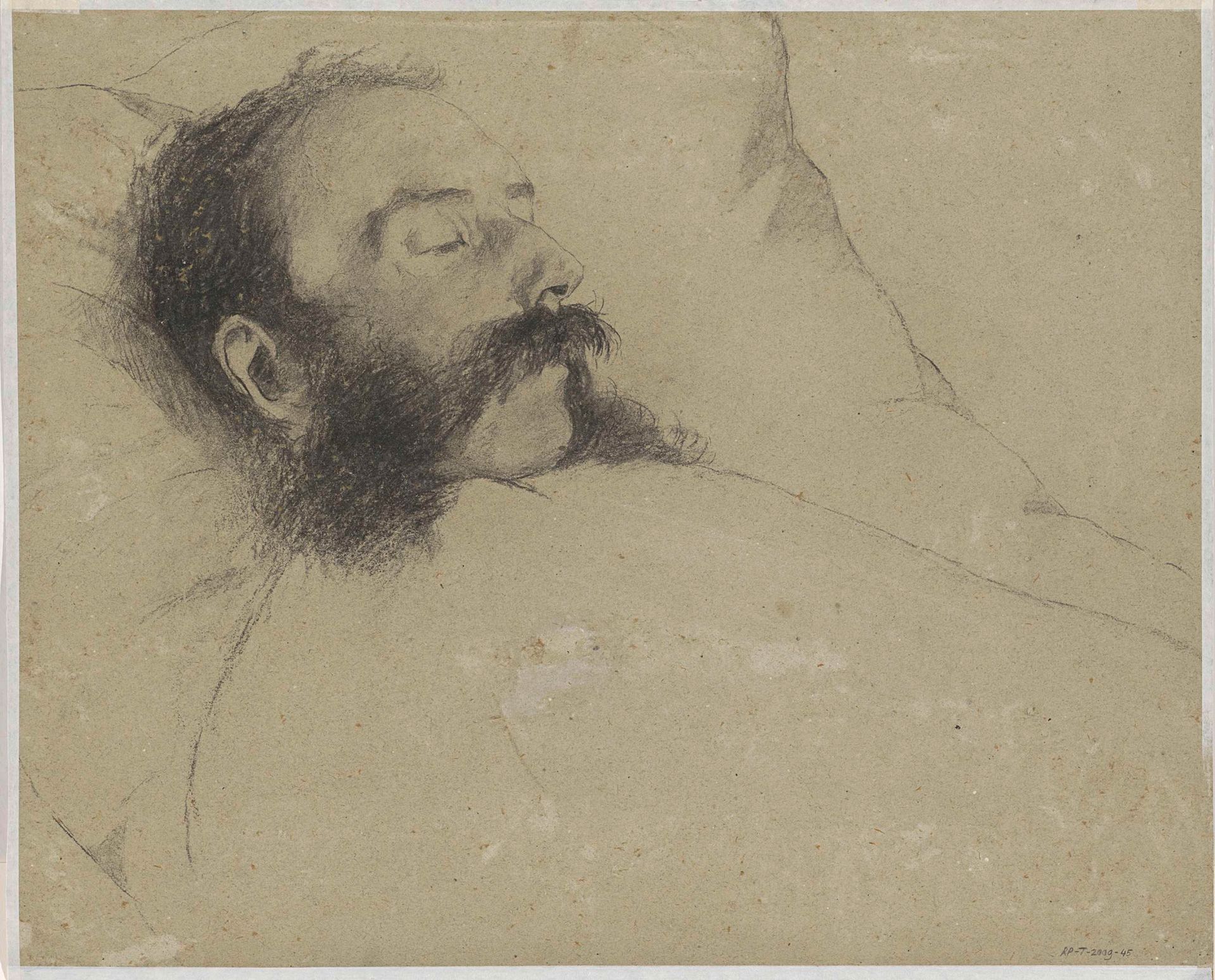
Thérèse Schwartze captured this resting or deceased man in a drawing with graphite on paper. The dominant symbol here is the repose of death, seen in the closed eyes and stillness, echoing across centuries in funerary art. The image evokes a sense of eternal sleep, a motif that stretches back to ancient effigies and sarcophagi, where the deceased are often depicted in peaceful slumber, a visual metaphor for the afterlife. Consider the countless images of saints and martyrs lying in state, their faces serene, suggesting transcendence. The act of portraying death is an attempt to make sense of mortality, to reconcile the living with the departed, and to find continuity in the face of inevitable change. It becomes a powerful memento mori, urging viewers to contemplate their own existence. The portrayal of death has resurfaced, evolved, and taken on new meanings in different historical contexts.
Portret van een rustende/ gestorven man op bed c. 1861 - 1918

Thérèse Schwartze
1851 - 1918Location
RijksmuseumArtwork details
- Medium
- drawing, charcoal
- Dimensions
- height 595 mm, width 485 mm
- Location
- Rijksmuseum
- Copyright
- Rijks Museum: Open Domain
Tags
portrait
pencil drawn
drawing
amateur sketch
toned paper
light pencil work
dutch-golden-age
pencil sketch
charcoal drawing
portrait reference
pencil drawing
portrait drawing
pencil work
charcoal
realism
Comments
No comments
About this artwork
Thérèse Schwartze captured this resting or deceased man in a drawing with graphite on paper. The dominant symbol here is the repose of death, seen in the closed eyes and stillness, echoing across centuries in funerary art. The image evokes a sense of eternal sleep, a motif that stretches back to ancient effigies and sarcophagi, where the deceased are often depicted in peaceful slumber, a visual metaphor for the afterlife. Consider the countless images of saints and martyrs lying in state, their faces serene, suggesting transcendence. The act of portraying death is an attempt to make sense of mortality, to reconcile the living with the departed, and to find continuity in the face of inevitable change. It becomes a powerful memento mori, urging viewers to contemplate their own existence. The portrayal of death has resurfaced, evolved, and taken on new meanings in different historical contexts.
Comments
No comments