c. 1880
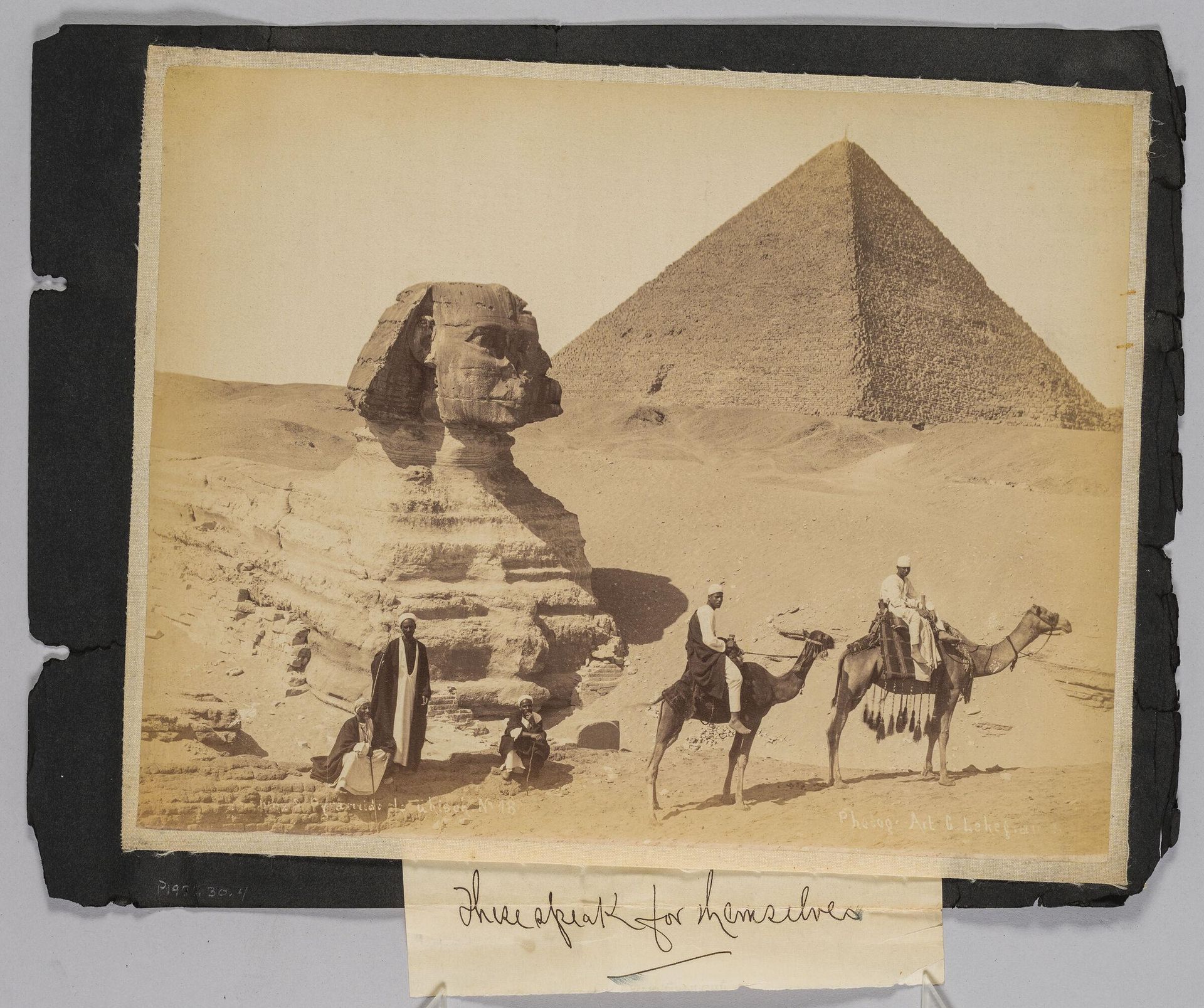
Sphinx and Pyramid

Listen to curator's interpretation
Curatorial notes
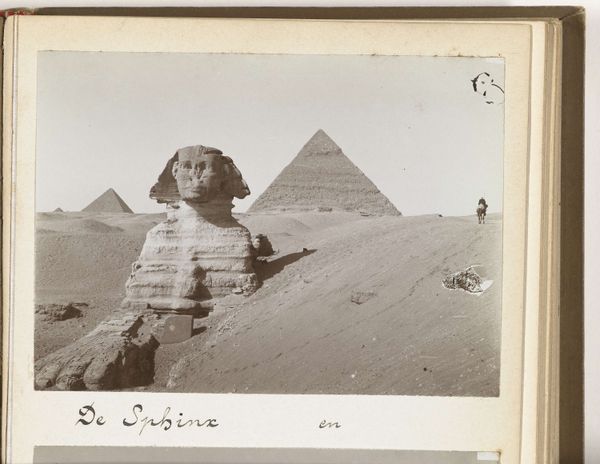
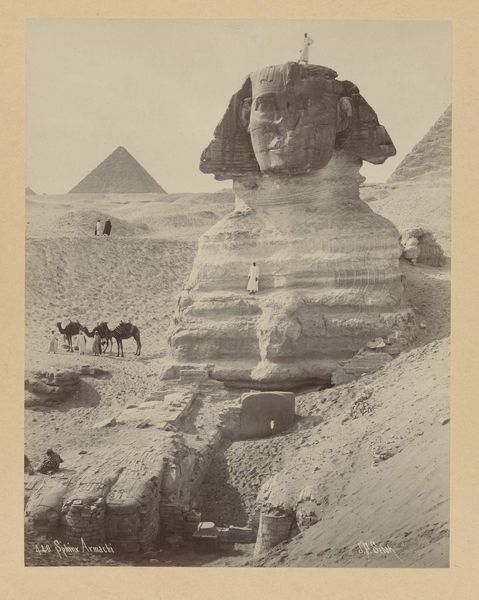
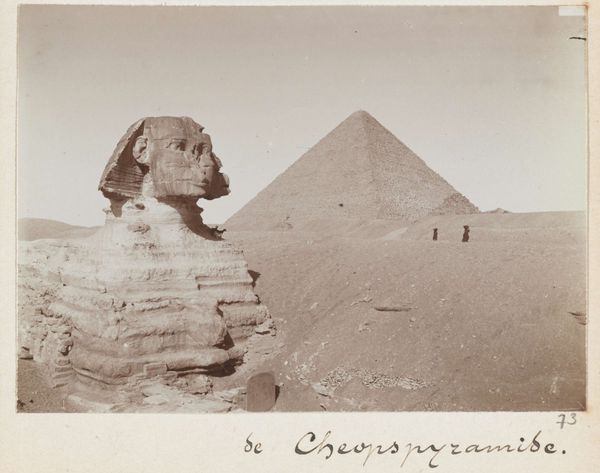
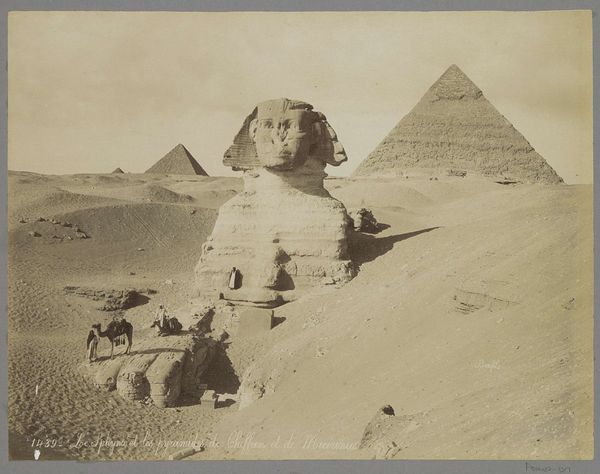
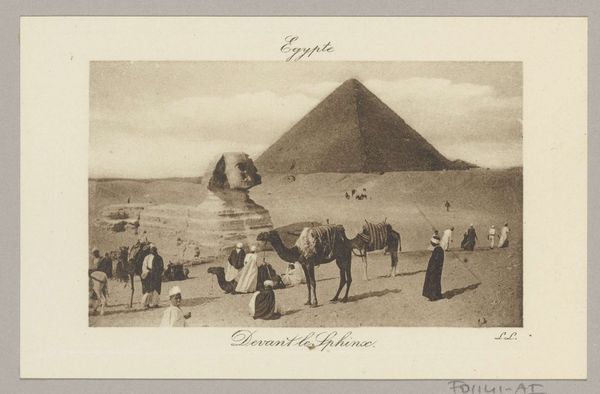
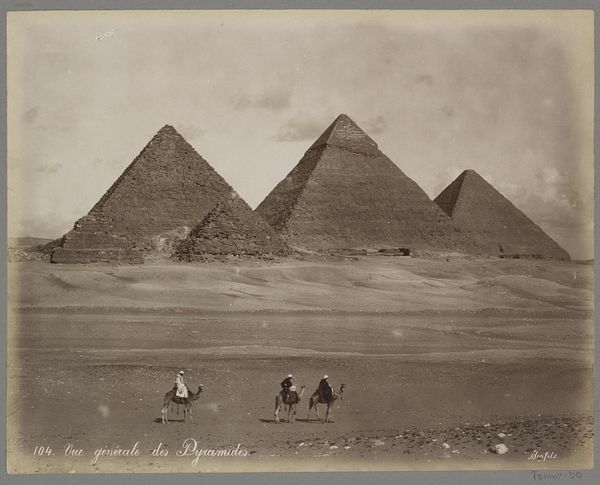
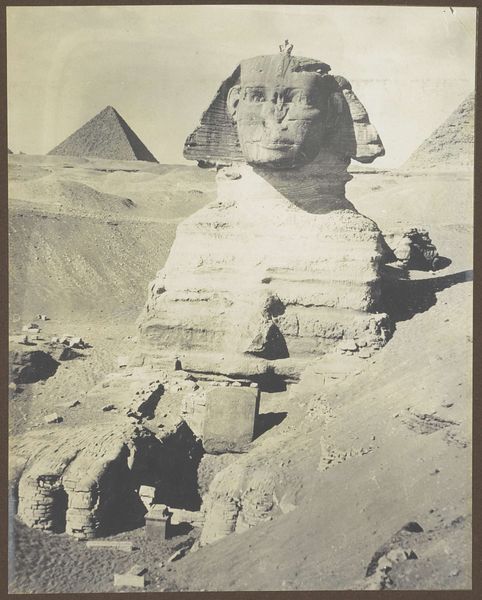
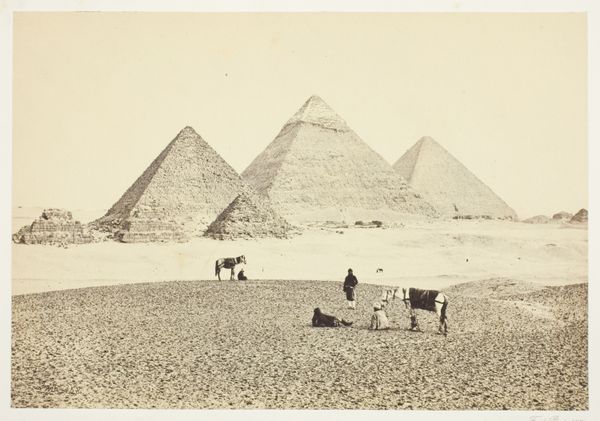
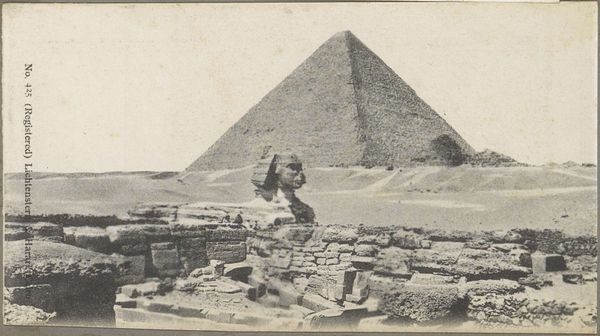
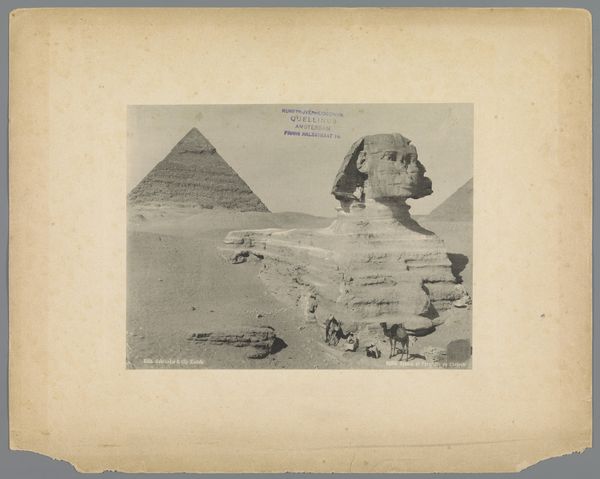
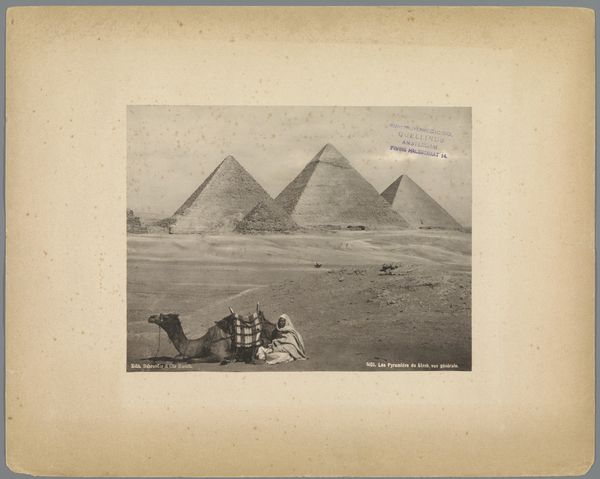
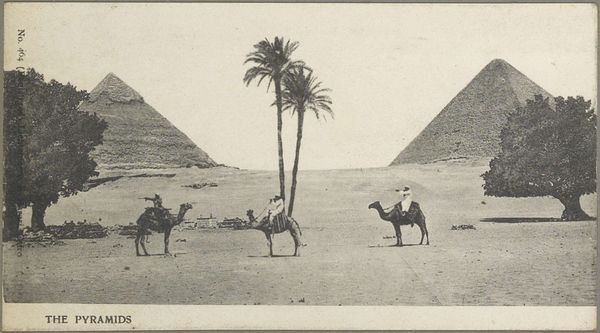
Curator: Lékégian's photograph, simply titled "Sphinx and Pyramid," presents such a stark, almost desolate scene. Editor: Yes, the sepia tones lend a timeless quality, but it's the arrangement, the almost staged composition that strikes me. The people and camels seem placed, not naturally occurring. Curator: The very act of photographing these monuments, the materials used to create this image, signifies a particular moment in the West's relationship with Egypt. It represents resource extraction. Editor: And the role of the photographer! He is, in effect, curating a view of a civilization for consumption, literally framing it. It speaks volumes about the power dynamics at play. Curator: I think that the photograph flattens the labor required to create these monuments, focusing instead on an exoticized and romantic vision. Editor: Still, the starkness underscores a vital aspect of our cultural inheritance: the gaze, the interpretation, and how they shift over time. Curator: Exactly, and it invites contemplation regarding how we engage with such iconic structures today. Editor: It reminds us to question whose stories are being told, and perhaps more importantly, whose are not.