1801
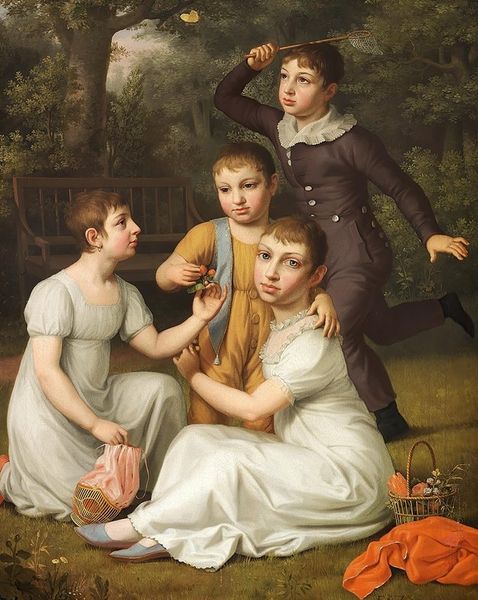
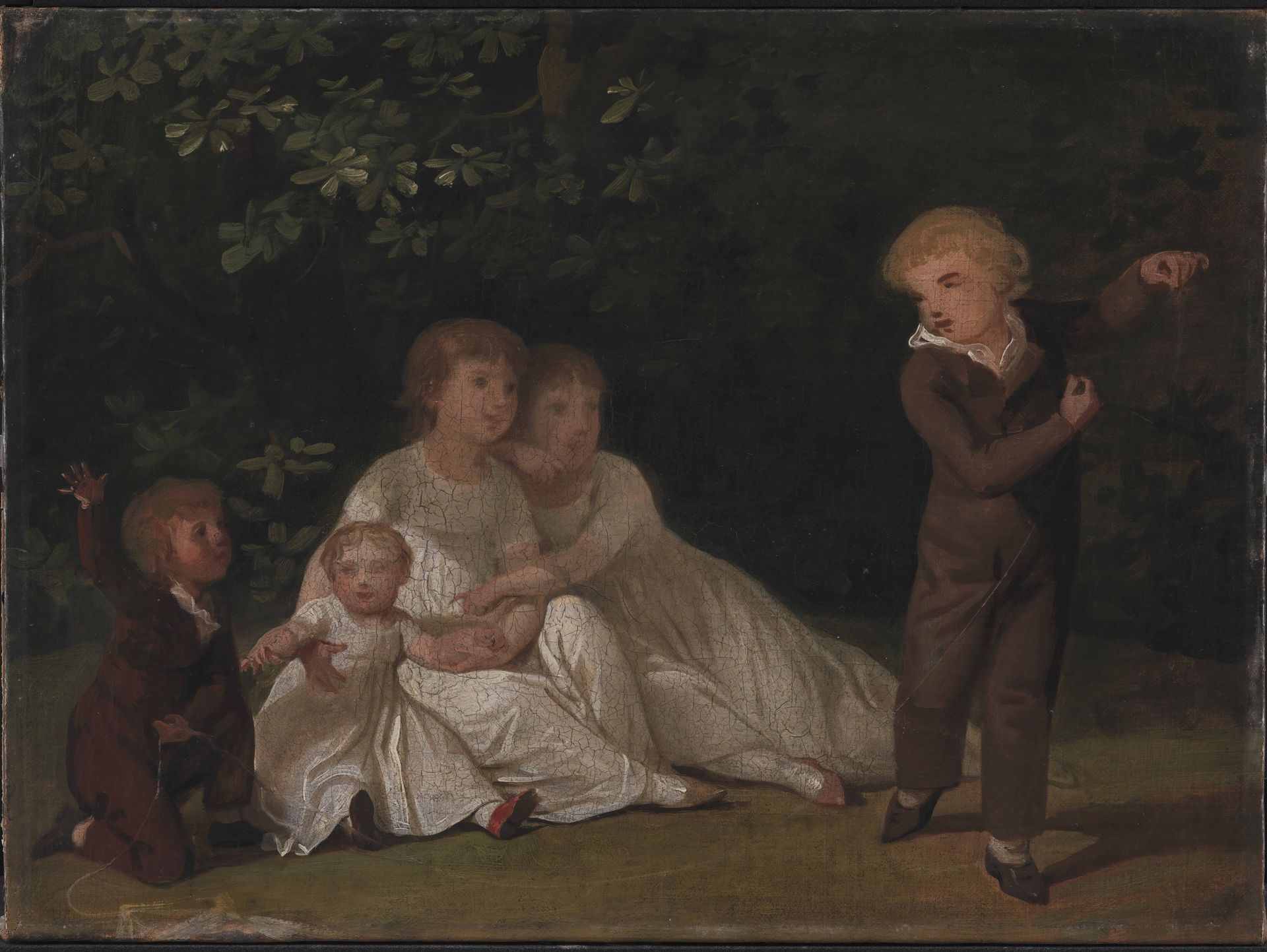
The Artist's Five Children in a garden. Study


Listen to curator's interpretation
Curatorial notes
Jens Juel painted this study of his five children in a garden with oil on canvas, though we don’t know exactly when. The work offers an intimate glimpse into the domestic sphere of a leading Danish portraitist. Juel's loose brushwork captures the children in informal poses, a departure from the rigid formality of traditional aristocratic portraiture. But what does this informality really tell us? This image was created during the Enlightenment, a period in which the concept of childhood innocence emerged. Perhaps Juel is participating in a broader cultural project, one which promoted specific ideas about family and domestic life. To properly understand this painting, we must consider the social conditions that shaped its production. Archival sources – letters, diaries, and household inventories – can reveal much about the realities of 18th-century bourgeois life. By situating the artwork within its original cultural and institutional context, we begin to understand its significance as a historical document, a mirror reflecting the values and aspirations of its time.