1937
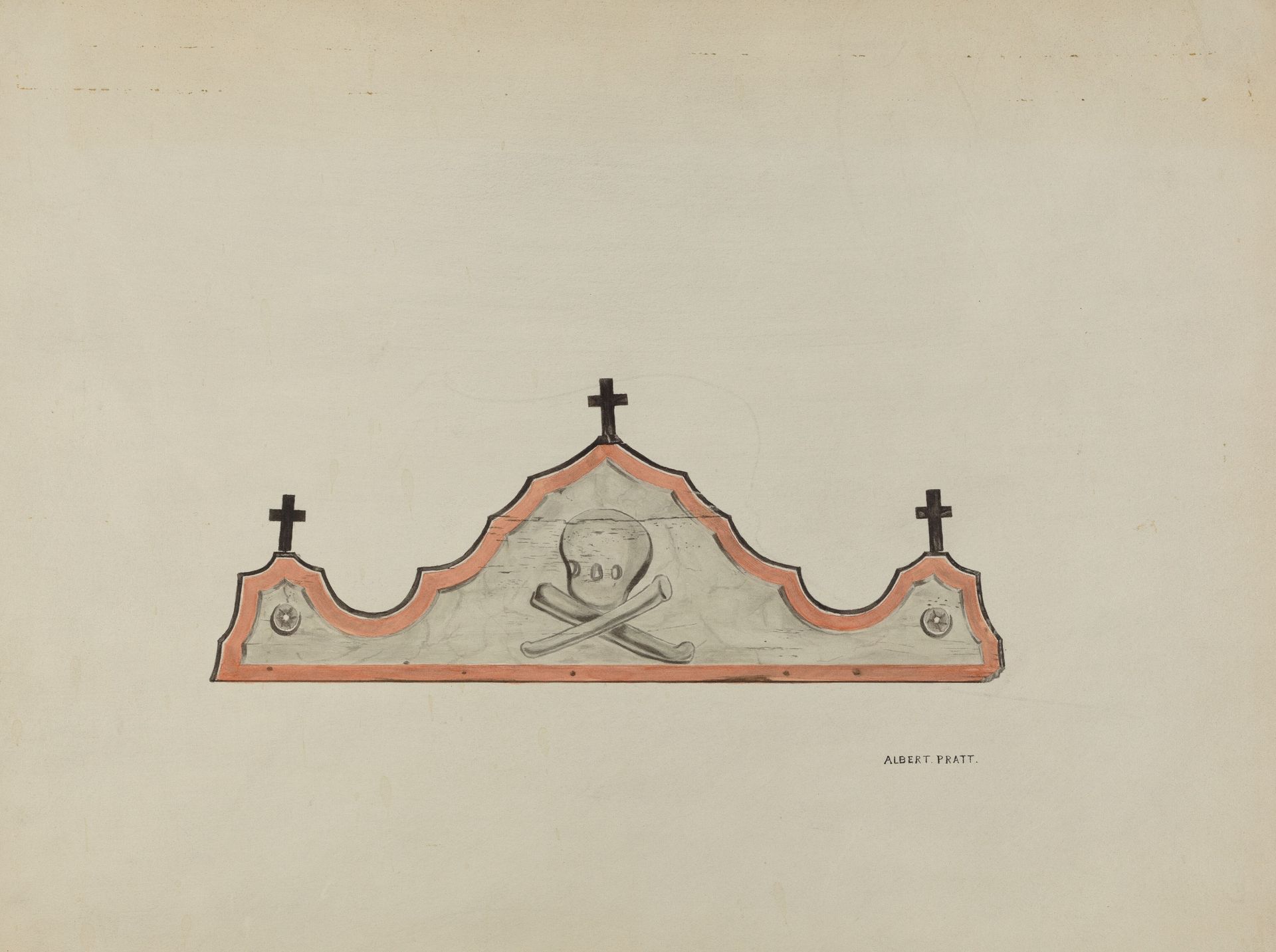
Lintel, over Cemetery Gateway


Listen to curator's interpretation
Curatorial notes
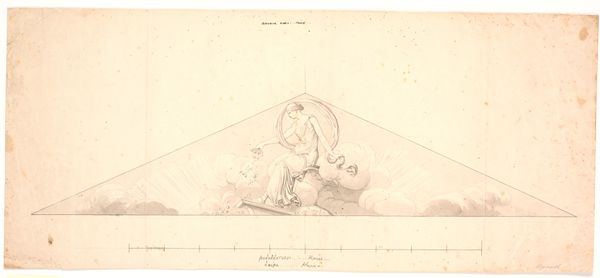
Curator: Welcome. We’re looking at Albert Pratt's "Lintel, over Cemetery Gateway," dating back to 1937. This piece is rendered in ink and pencil, reflecting Pratt's engagement with historical themes, using a distinctive lined style. Editor: Immediately, what strikes me is this unsettling sweetness. A cemetery entrance is a pretty sobering topic, and here it's almost playful. Is that a slightly wonky skull I see, grinning above crossed bones? Curator: It's an interesting contrast, isn’t it? The academic approach suggests that this kind of memento mori iconography would've been a familiar trope in memorial art and architecture, reminding viewers of mortality within a Christian context. We have these three crosses and yet we see death, but it’s mediated, rendered, almost…domesticated. Editor: Domesticated death, I like that. And those little dots suggesting wooden pegs, holding this ornamental lintel together - or perhaps this reality together, too? There is also a sense of the architectural, something planned and lasting versus this idea of a transient existence of all of us. It reminds me of childhood doodles, darkly humorous, poking fun at the great mystery. I guess death is as good as anything else. Curator: Perhaps Pratt aimed for such personal and accessible feeling, rather than an impersonal historical observation. Remember that public art and commemorative works during this period frequently served didactic or propagandistic aims. This may be more introspective. The lined style also brings some fragility to this sense. Editor: Definitely. You sense the hand, the imperfection, in every line. It's the anti-monument. The skull itself seems to wink knowingly, doesn’t it? Curator: It subverts the stoic, official commemoration. Ultimately it poses a more personal contemplation about mortality. Editor: Absolutely, I now see the skull feels lighter, a more optimistic viewpoint about the great mystery we all get to unravel one day, something to smile about. Thank you. Curator: A perspective I certainly value. Thank you for sharing.