About this artwork
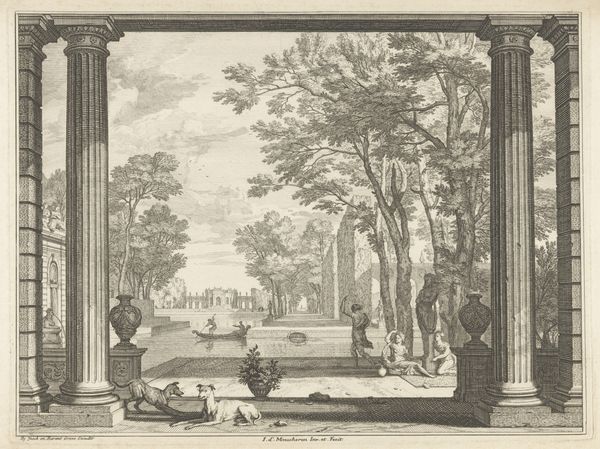
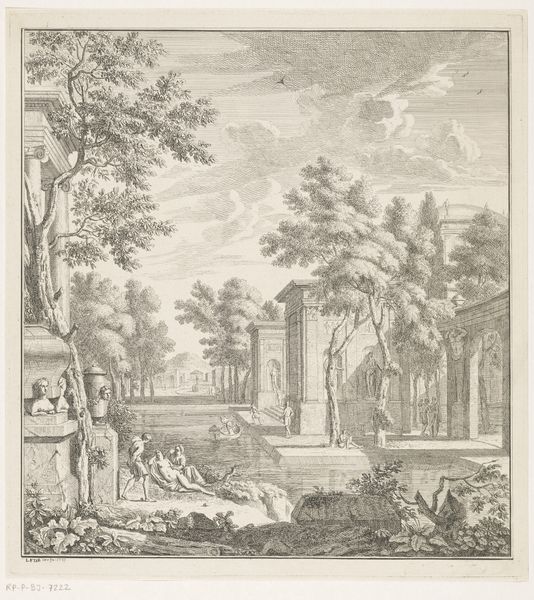
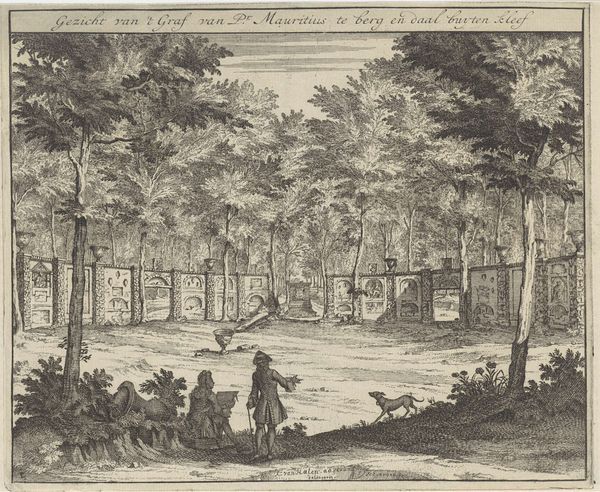
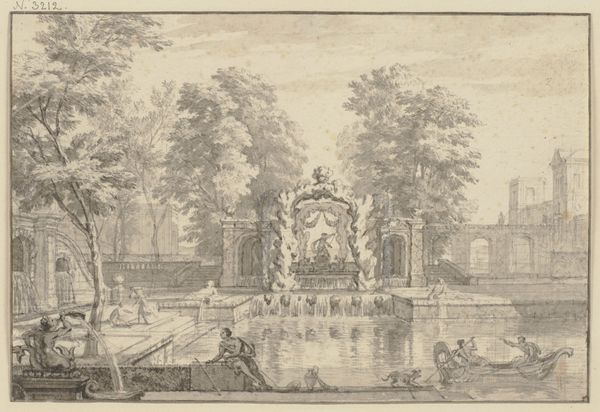
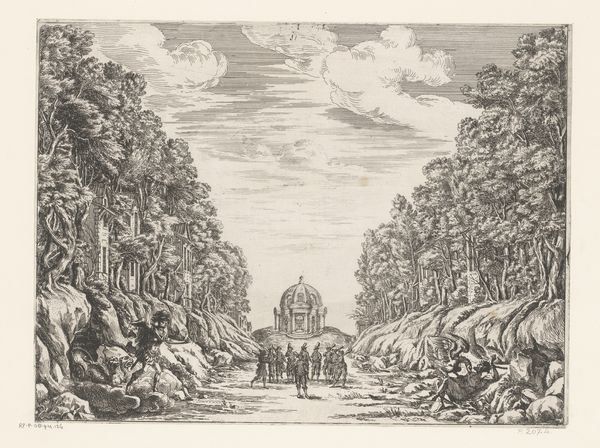
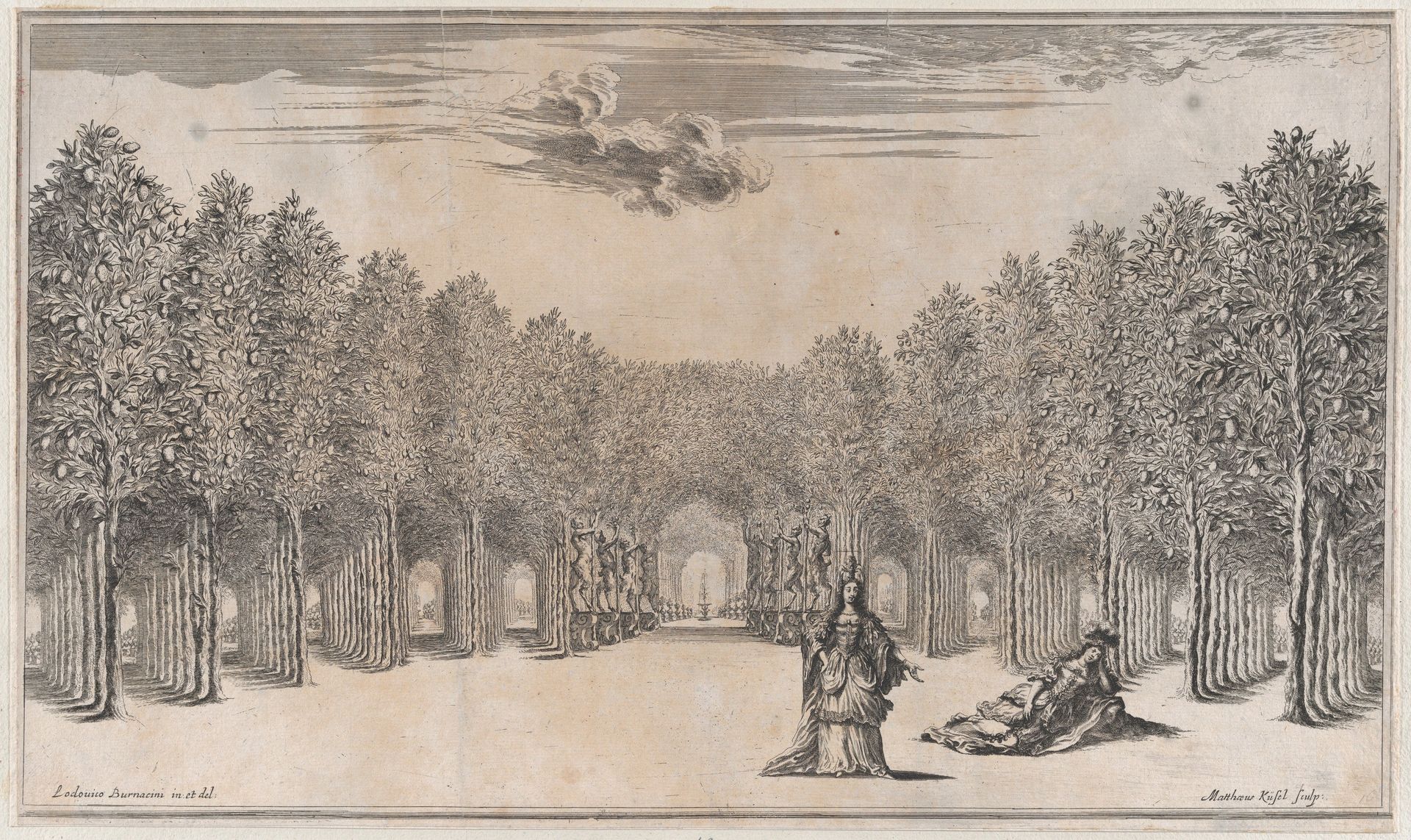
Mathäus Küsel designed this set with etching techniques for 'Il Pomo D'Oro'. The idealized garden and the figures tell a story beyond mere aesthetics. Consider the garden itself, reminiscent of the classical Golden Age, a symbol of paradise and unattainable desire. Note how the statues lining the garden path evoke the figures of antiquity, carrying with them centuries of cultural memory. The reclining female figure echoes the classical motif of languid beauty, seen across centuries from Titian's Venus to Manet's Olympia, a symbol of both allure and vulnerability. This gesture speaks to an enduring human fascination with pleasure, beauty, and the subconscious desires that drive us. Each era imprints its own anxieties and aspirations onto these archetypes, revealing a cyclical pattern of cultural reinterpretation. The motifs persist, yet their meanings ripple and shift, echoing our collective psyche.
Two females in the foreground, one standing the other reclining, surrounded by tree-lined paths; set design from 'Il Pomo D'Oro'
1668


Artwork details
- Medium
- drawing, print, etching
- Dimensions
- Sheet (Trimmed): 10 1/4 × 17 1/4 in. (26.1 × 43.8 cm)
- Location
- Metropolitan Museum of Art, New York, NY
- Copyright
- Public Domain
Tags
Comments
Share your thoughts
About this artwork
Mathäus Küsel designed this set with etching techniques for 'Il Pomo D'Oro'. The idealized garden and the figures tell a story beyond mere aesthetics. Consider the garden itself, reminiscent of the classical Golden Age, a symbol of paradise and unattainable desire. Note how the statues lining the garden path evoke the figures of antiquity, carrying with them centuries of cultural memory. The reclining female figure echoes the classical motif of languid beauty, seen across centuries from Titian's Venus to Manet's Olympia, a symbol of both allure and vulnerability. This gesture speaks to an enduring human fascination with pleasure, beauty, and the subconscious desires that drive us. Each era imprints its own anxieties and aspirations onto these archetypes, revealing a cyclical pattern of cultural reinterpretation. The motifs persist, yet their meanings ripple and shift, echoing our collective psyche.
Comments
Share your thoughts