About this artwork
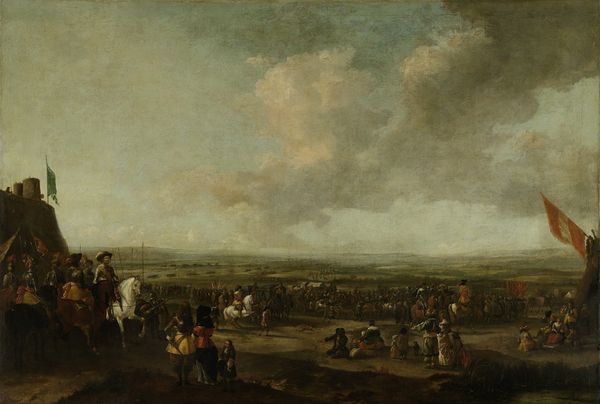
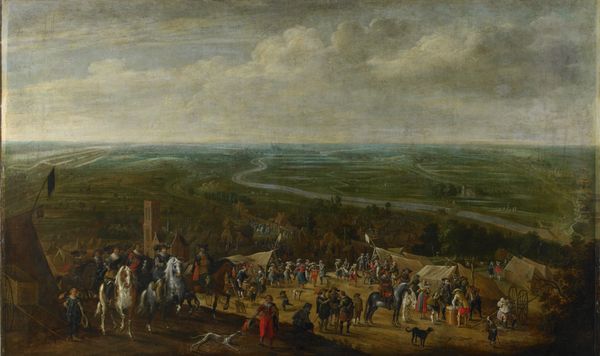
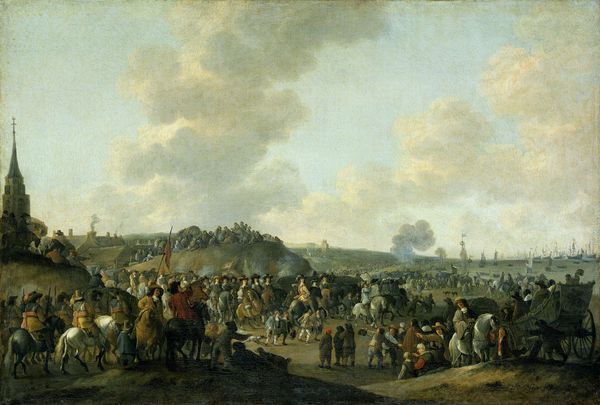
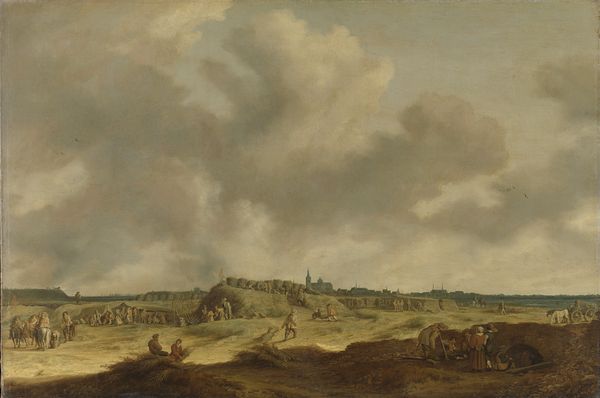
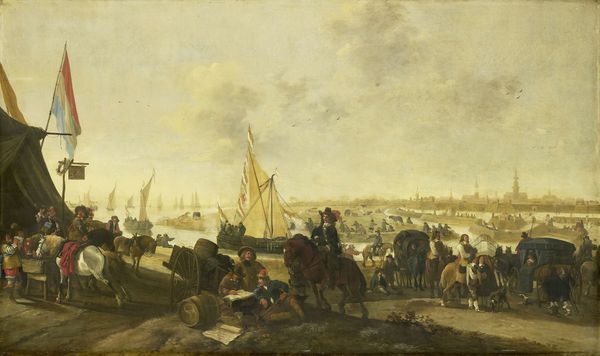
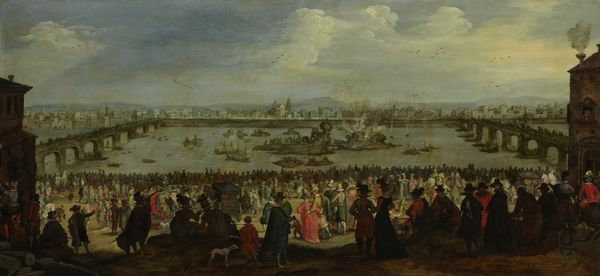
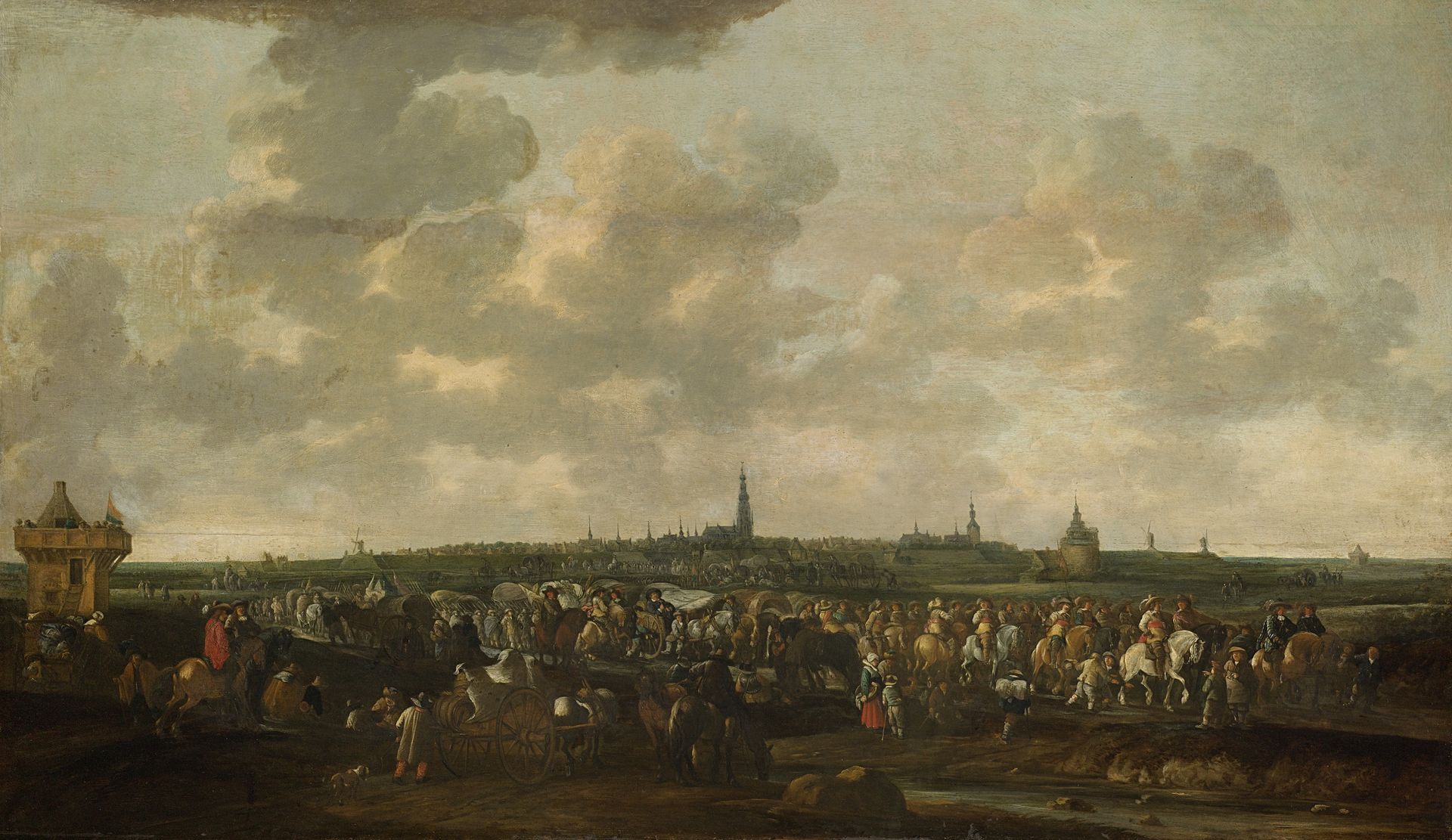
Hendrick de Meijer painted “Departure of Spanish Occupation Troops from Breda, October 10, 1637” to commemorate a political event. It represents the handover of the city of Breda, in the Netherlands, from Spanish to Dutch control. The painting reminds us that even seemingly neutral landscape art can function as political imagery, particularly in times of conflict. Holland was at war with Spain at this time. De Meijer’s composition can be read as a comment on the social structures of the period. The artist highlights a change in the cultural landscape. The painting style and composition reflect the traditions of Dutch Golden Age painting. It combines close observation with the political function of monumental history painting. To understand this work better, we might research 17th century Dutch and Spanish political history, the history of landscape painting, and the traditions of civic ritual.
Departure of Spanish Occupation Troops from Breda, October 10, 1637
1647 - 1683

Artwork details
- Medium
- oil-paint
- Dimensions
- height 94.5 cm, width 162 cm
- Copyright
- Rijks Museum: Open Domain
Tags
Comments
Share your thoughts
About this artwork
Hendrick de Meijer painted “Departure of Spanish Occupation Troops from Breda, October 10, 1637” to commemorate a political event. It represents the handover of the city of Breda, in the Netherlands, from Spanish to Dutch control. The painting reminds us that even seemingly neutral landscape art can function as political imagery, particularly in times of conflict. Holland was at war with Spain at this time. De Meijer’s composition can be read as a comment on the social structures of the period. The artist highlights a change in the cultural landscape. The painting style and composition reflect the traditions of Dutch Golden Age painting. It combines close observation with the political function of monumental history painting. To understand this work better, we might research 17th century Dutch and Spanish political history, the history of landscape painting, and the traditions of civic ritual.
Comments
Share your thoughts