About this artwork
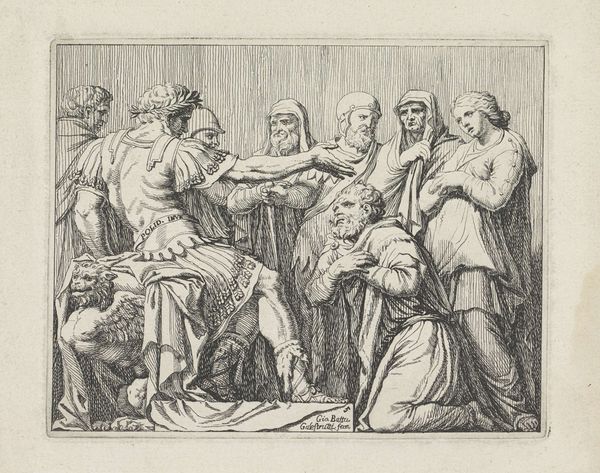
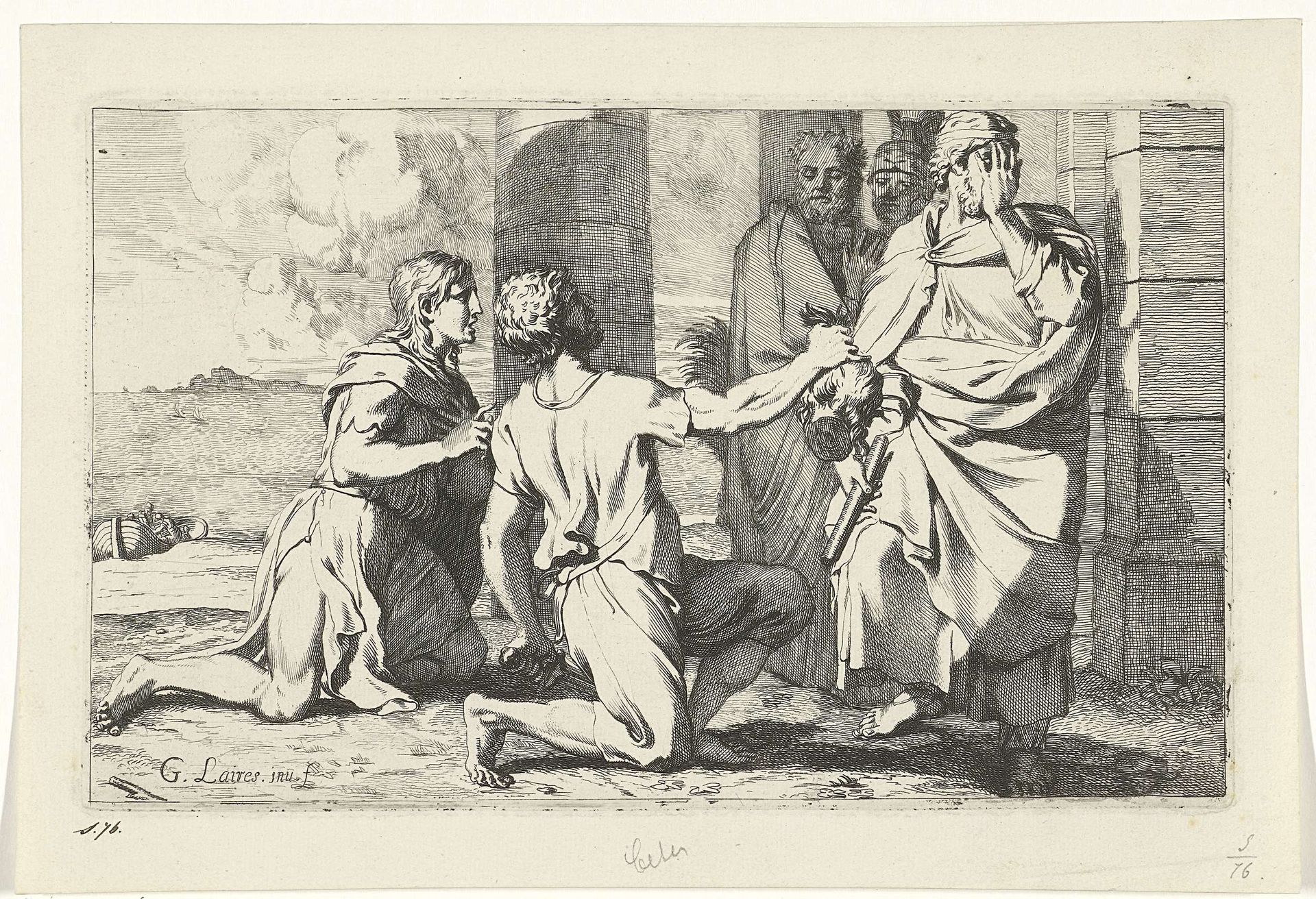
Gerard de Lairesse etched “Caesar weigert het hoofd van Pompeius” to capture a pivotal scene from Roman history. Here, the severed head, offered by a kneeling figure, serves as a potent symbol of power and betrayal. The motif of the severed head echoes across time, recalling Holofernes in Judith's grasp and John the Baptist presented to Salome. Yet, Caesar's averted gaze speaks volumes. His gesture of rejection carries complex cultural weight. It perhaps signifies a rejection of barbarism, or a calculated political move to distance himself from the assassination of a rival. Observe how Caesar covers his face in a way that expresses his deep disgust. It is an attempt to suppress a raw emotion. In this moment, we confront not just a historical event, but the eternal psychological drama of power, morality, and the haunting persistence of memory.

Artwork details
- Medium
- print, engraving
- Dimensions
- height 149 mm, width 240 mm
- Location
- Rijksmuseum
- Copyright
- Rijks Museum: Open Domain
Tags
narrative-art
baroque
figuration
history-painting
engraving
Comments
No comments
About this artwork
Gerard de Lairesse etched “Caesar weigert het hoofd van Pompeius” to capture a pivotal scene from Roman history. Here, the severed head, offered by a kneeling figure, serves as a potent symbol of power and betrayal. The motif of the severed head echoes across time, recalling Holofernes in Judith's grasp and John the Baptist presented to Salome. Yet, Caesar's averted gaze speaks volumes. His gesture of rejection carries complex cultural weight. It perhaps signifies a rejection of barbarism, or a calculated political move to distance himself from the assassination of a rival. Observe how Caesar covers his face in a way that expresses his deep disgust. It is an attempt to suppress a raw emotion. In this moment, we confront not just a historical event, but the eternal psychological drama of power, morality, and the haunting persistence of memory.
Comments
No comments