1726 - 1770
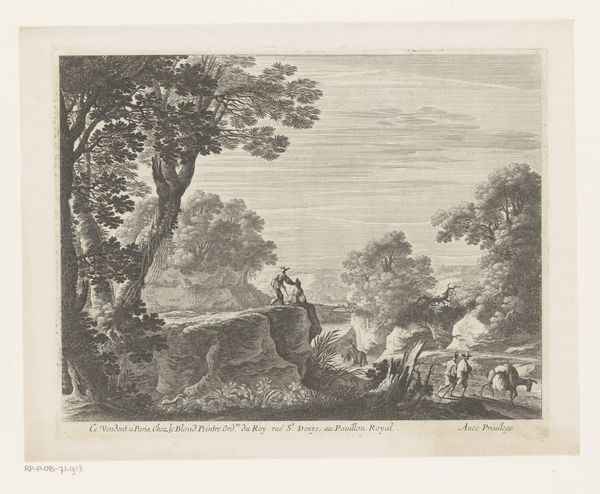
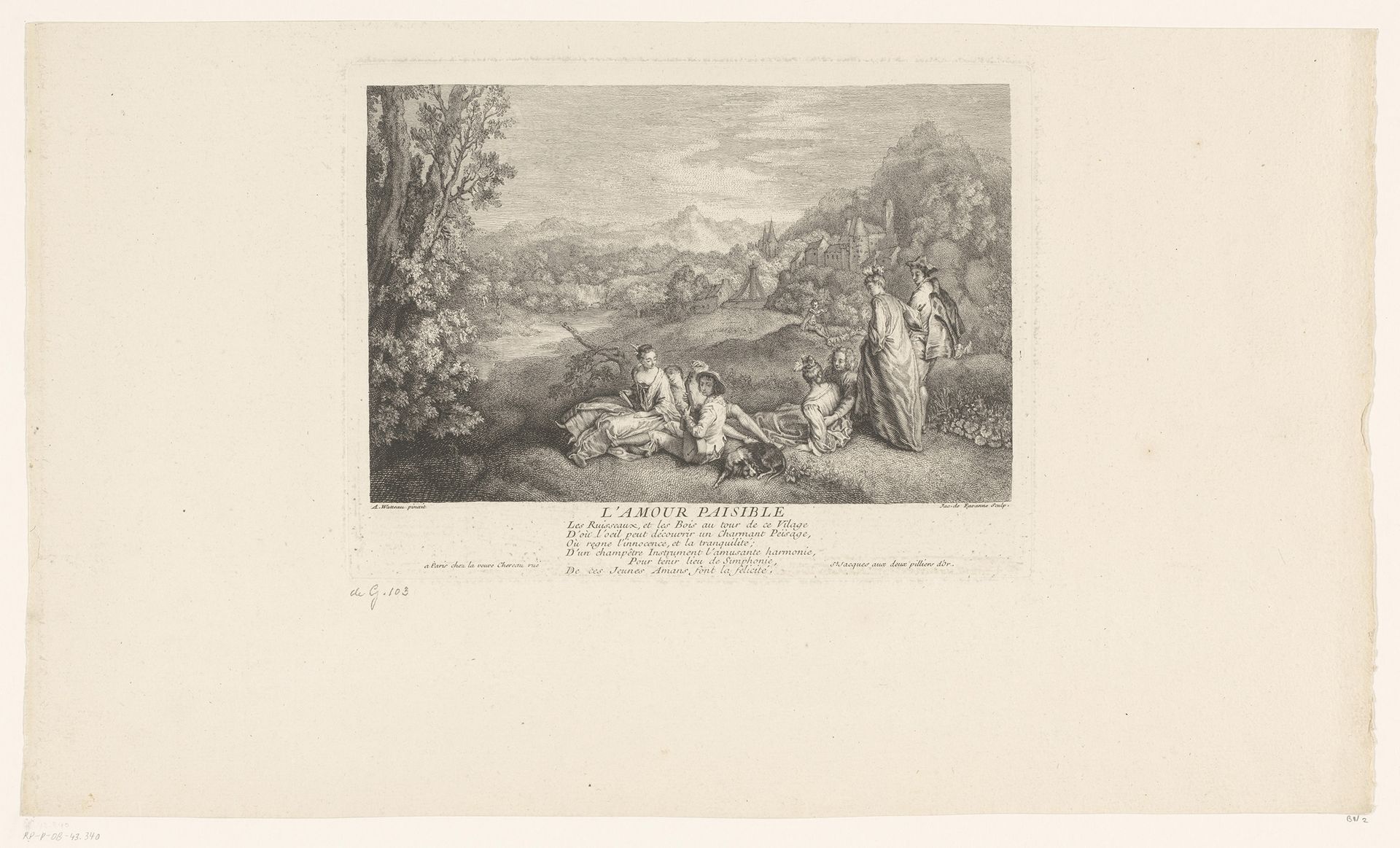
Landschap met galant gezelschap

Listen to curator's interpretation
Curatorial notes
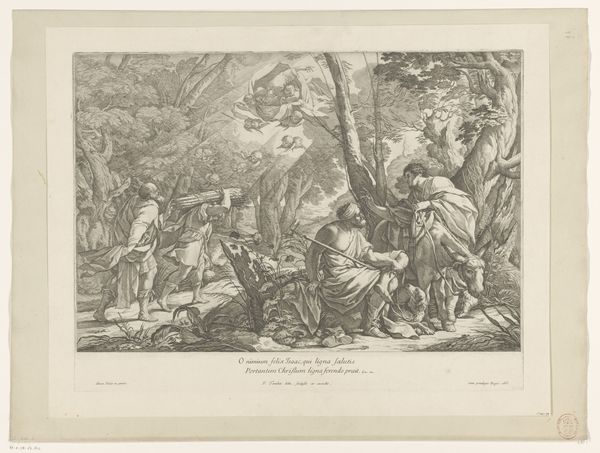
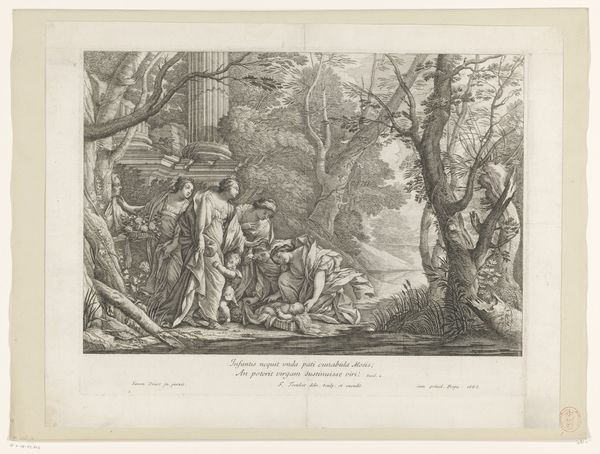
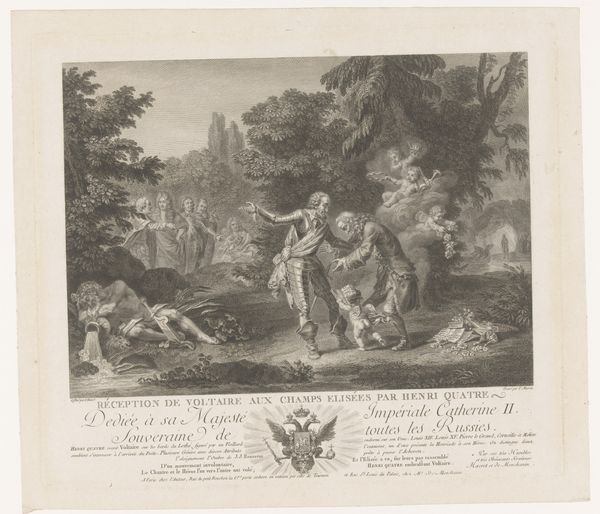
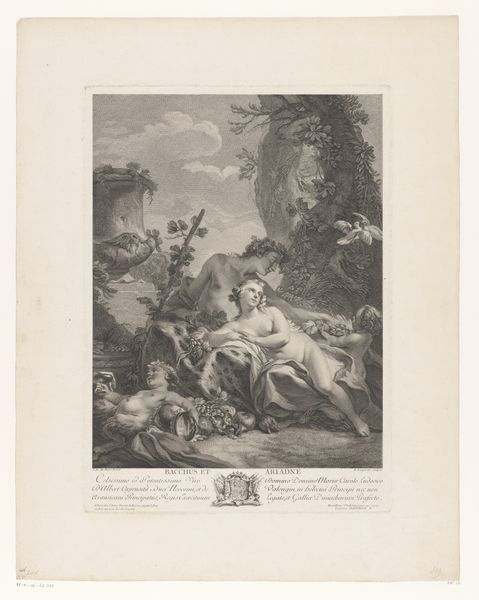
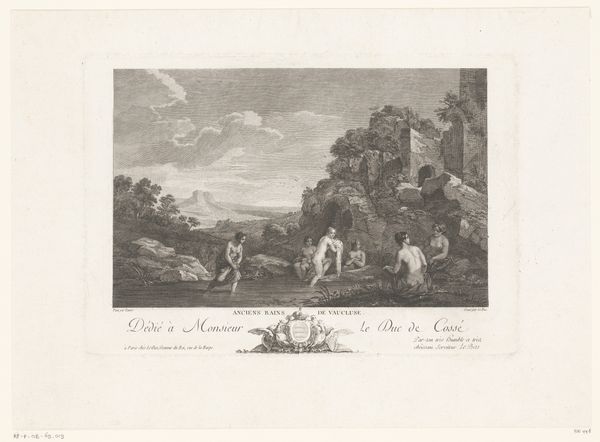
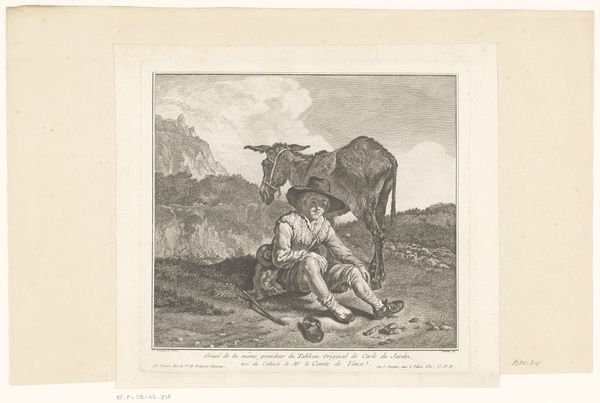
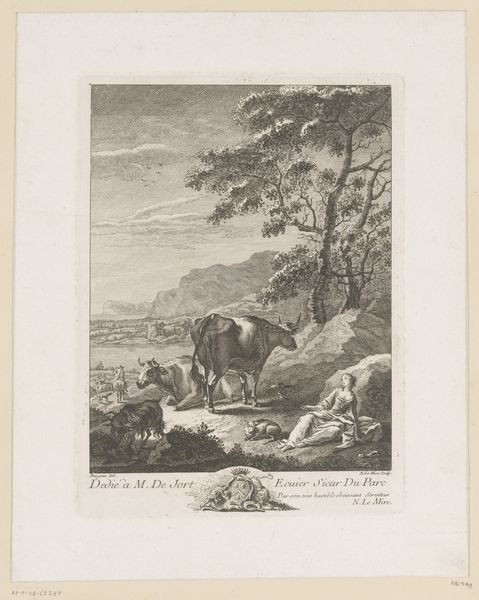
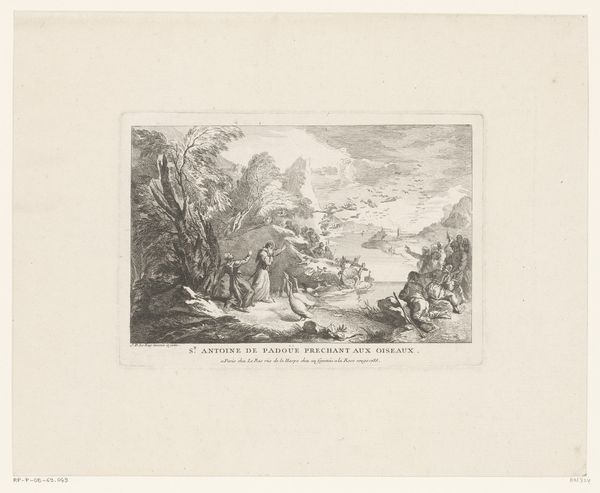
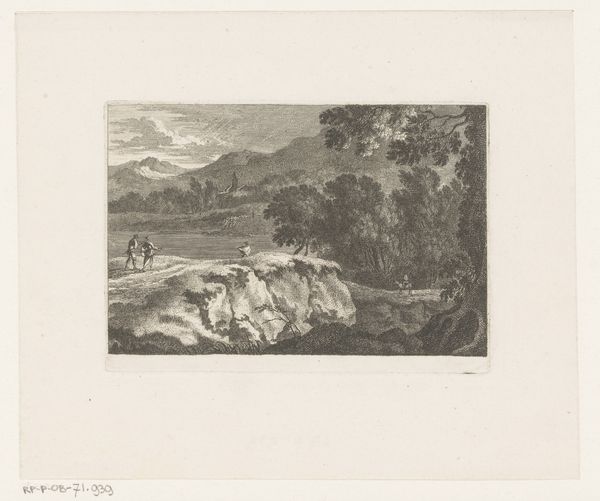
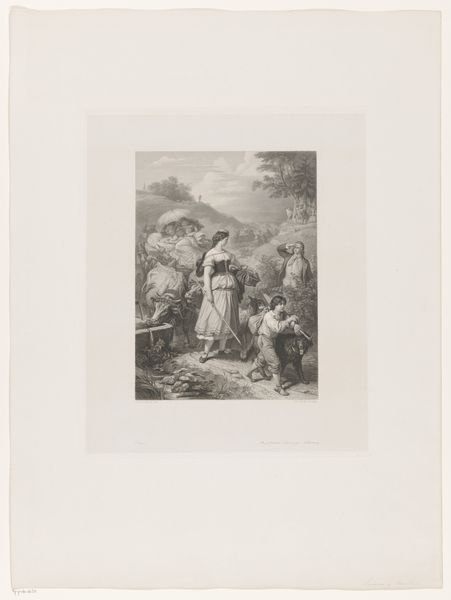
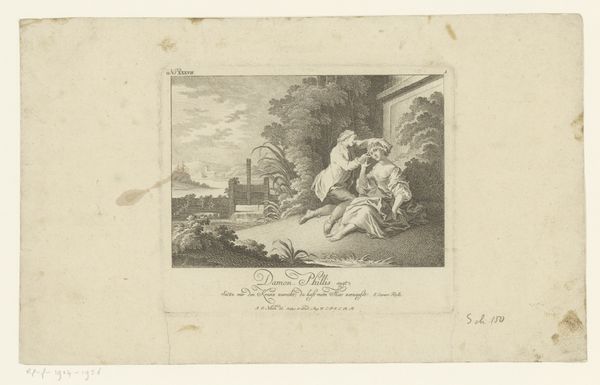
Jacques de Favanne created this landscape with a 'galant' or amorous company sometime between 1716 and 1770, using etching. Think about the labor involved here. The artist would have begun by coating a metal plate, likely copper, with a waxy, acid-resistant ground. Then using a sharp needle, Favanne scratched away the ground to expose the metal underneath. This required careful and precise handwork. The plate was then immersed in acid, which bit into the exposed lines, creating the image. Next, Favanne would have applied ink to the plate, wiping away the excess so that only the etched lines retained it. Finally, the plate was pressed onto a sheet of paper, transferring the image. Each printmaking step demands skill and care, reflecting the artisan's mastery and the value placed on fine craftsmanship during the 18th century. This contrasts the leisure activity of the figures portrayed, reminding us that idyllic scenes are always the product of someone's labor.