About this artwork
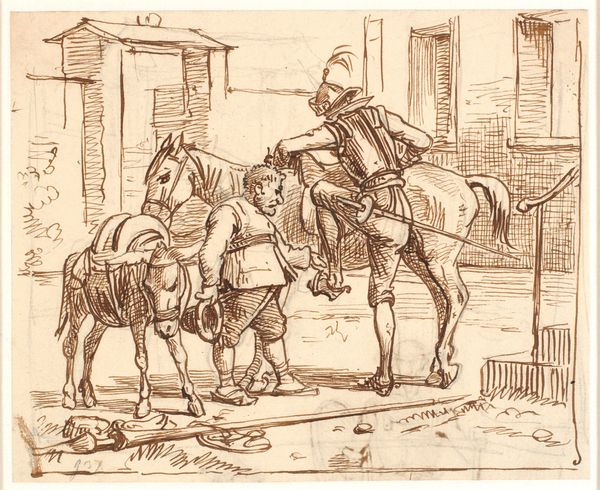
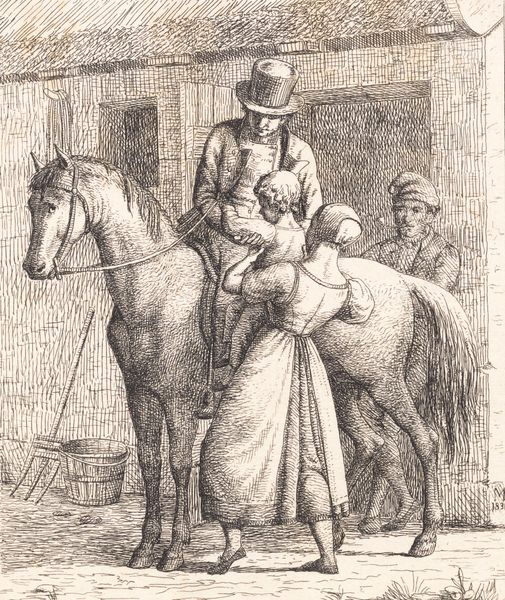
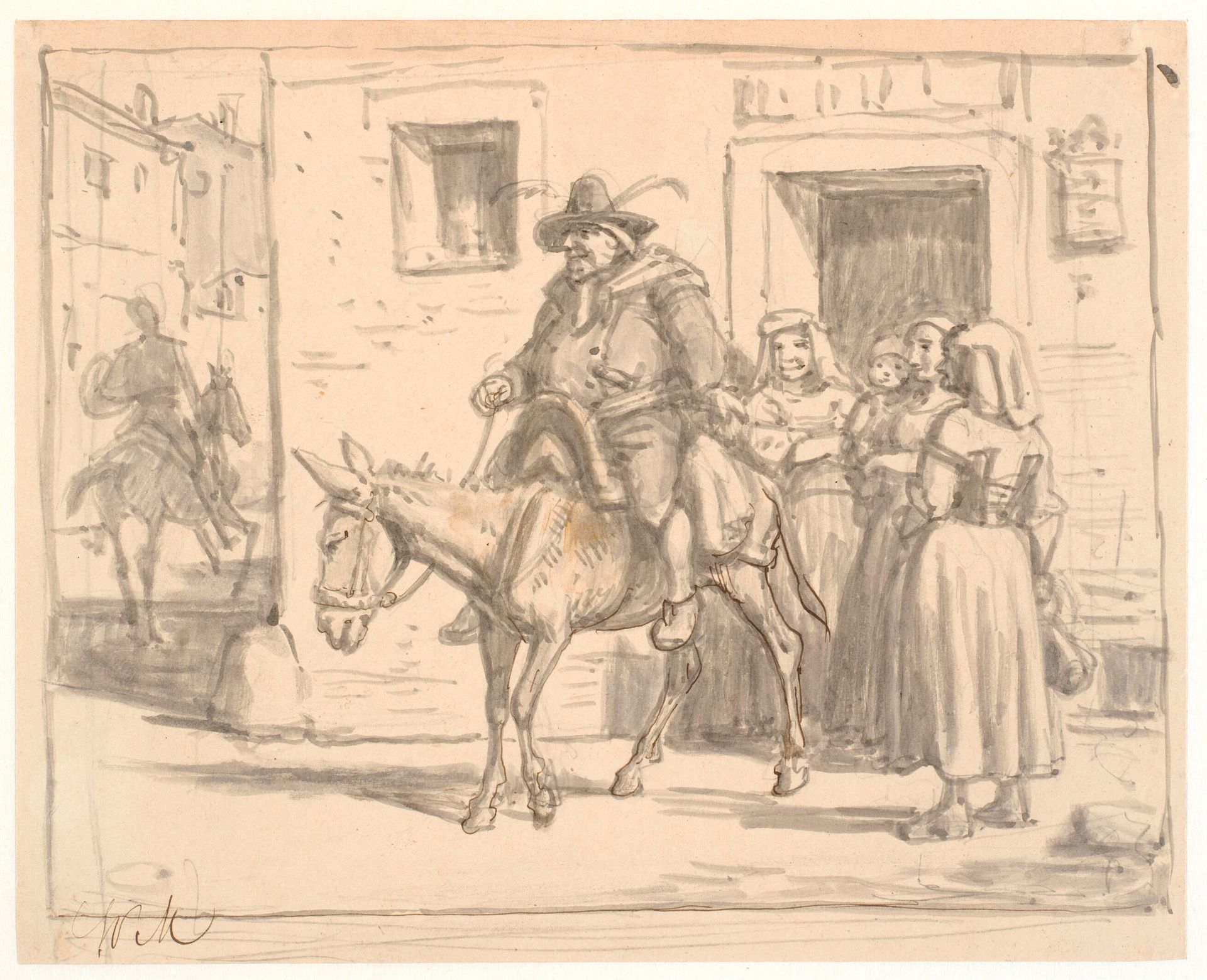
Wilhelm Marstrand created this delicate drawing, "Don Quixote og Sancho Pansa forlader værtshuset", with graphite on paper. The composition arranges the figures of Don Quixote, Sancho Panza, and onlookers in a frieze-like manner against the backdrop of an inn. The artist masterfully employs line and shading to define form and space. Note how the contrast in the shading creates a sense of depth and volume. This technique emphasizes the texture of clothing and the rough surface of the inn's walls. Marstrand uses the texture to provide the image with a certain vitality. Consider how the artist destabilizes traditional heroic depictions through his choice of subject matter and style. Don Quixote, a figure of folly and idealism, is presented with a degree of humanity rather than grandeur. The drawing itself, with its sketchy quality and lack of finish, disrupts conventional notions of artistic refinement.
Don Quixote og Sancho Pansa forlader værtshuset 1810 - 1873


Artwork details
- Medium
- drawing, pencil
- Dimensions
- 173 mm (height) x 215 mm (width) (bladmaal)
- Location
- SMK - Statens Museum for Kunst
Tags
drawing
narrative-art
figuration
romanticism
pencil
genre-painting
realism
Comments
No comments
About this artwork
Wilhelm Marstrand created this delicate drawing, "Don Quixote og Sancho Pansa forlader værtshuset", with graphite on paper. The composition arranges the figures of Don Quixote, Sancho Panza, and onlookers in a frieze-like manner against the backdrop of an inn. The artist masterfully employs line and shading to define form and space. Note how the contrast in the shading creates a sense of depth and volume. This technique emphasizes the texture of clothing and the rough surface of the inn's walls. Marstrand uses the texture to provide the image with a certain vitality. Consider how the artist destabilizes traditional heroic depictions through his choice of subject matter and style. Don Quixote, a figure of folly and idealism, is presented with a degree of humanity rather than grandeur. The drawing itself, with its sketchy quality and lack of finish, disrupts conventional notions of artistic refinement.
Comments
No comments