About this artwork
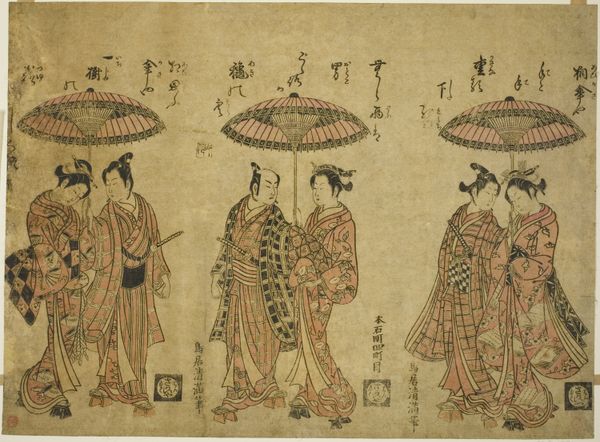
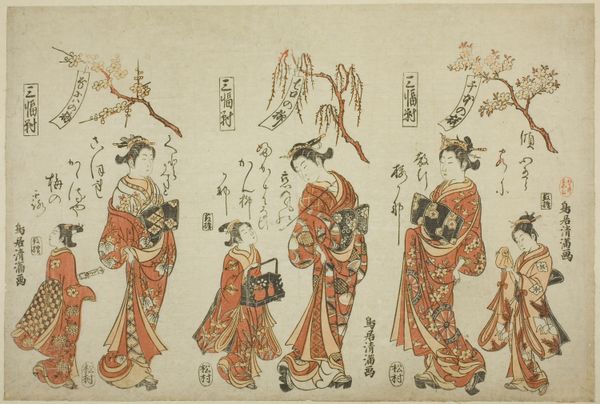
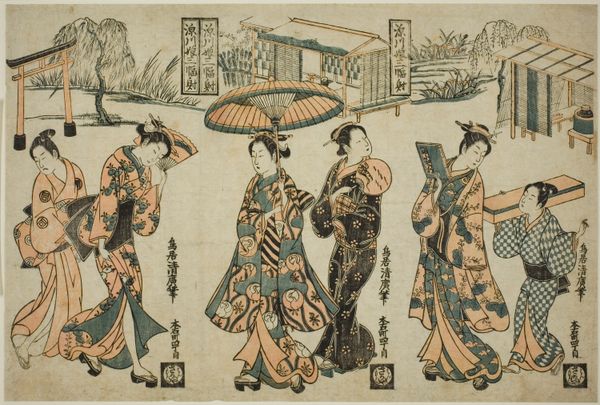
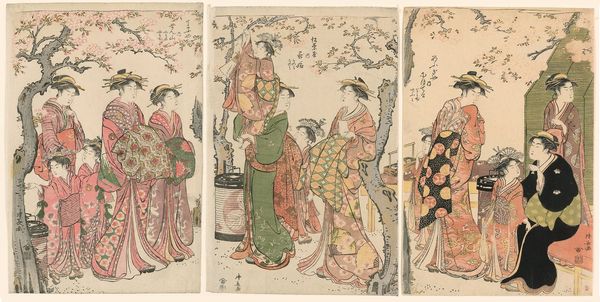
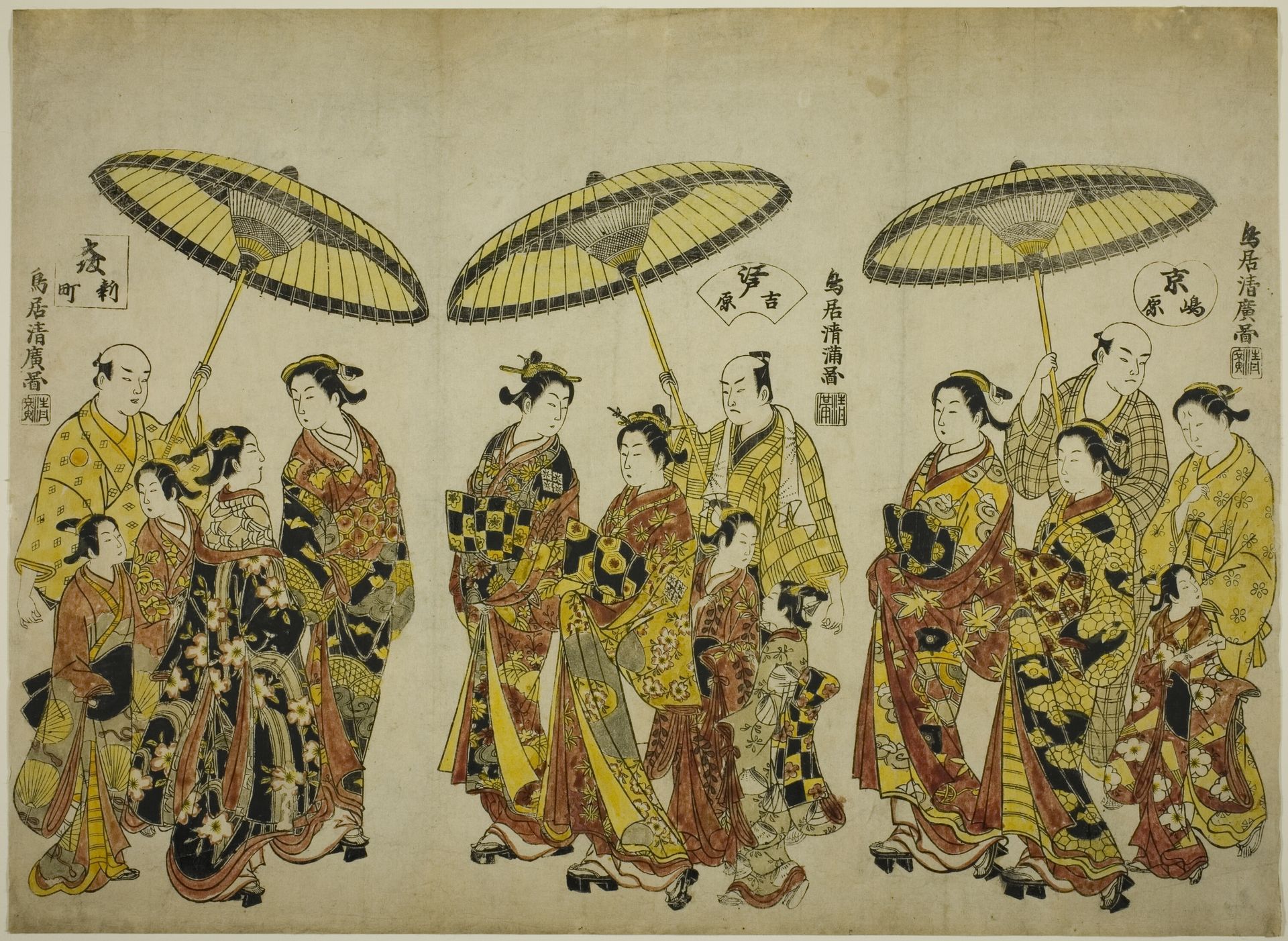
Torii Kiyohiro created this Ukiyo-e woodblock print titled "Beauties of the Three Capitals" in the mid-18th century. It offers a glimpse into the licensed pleasure districts of Japan's major cities during the Edo period. Here, Kiyohiro represents women of the Kyoto, Edo and Osaka districts. He depicts not only the beauty of the women, but also the structured hierarchy and social expectations of these spaces. The escorts, the young attendants, and the umbrellas shielding the women from the sun, speak to the complex interplay of commerce, desire, and status. While celebrating the women's beauty and fashion, the artwork subtly reveals the confines of their existence. Kiyohiro captures the ephemeral nature of beauty and pleasure within a rigid social structure. In doing so he urges us to consider the identities of these women beyond their representation.
Beauties of the Three Capitals: Shimabara in Kyoto (right), Yoshiwara in Edo (center), and Shinmachi in Osaka (left) c. 1755


Artwork details
- Medium
- print, woodblock-print
- Dimensions
- 15 1/4 × 20 7/8 in.
- Location
- The Art Institute of Chicago
- Copyright
- Public Domain
Tags
portrait
ink painting
asian-art
ukiyo-e
figuration
woodblock-print
watercolor
Comments
No comments
About this artwork
Torii Kiyohiro created this Ukiyo-e woodblock print titled "Beauties of the Three Capitals" in the mid-18th century. It offers a glimpse into the licensed pleasure districts of Japan's major cities during the Edo period. Here, Kiyohiro represents women of the Kyoto, Edo and Osaka districts. He depicts not only the beauty of the women, but also the structured hierarchy and social expectations of these spaces. The escorts, the young attendants, and the umbrellas shielding the women from the sun, speak to the complex interplay of commerce, desire, and status. While celebrating the women's beauty and fashion, the artwork subtly reveals the confines of their existence. Kiyohiro captures the ephemeral nature of beauty and pleasure within a rigid social structure. In doing so he urges us to consider the identities of these women beyond their representation.
Comments
No comments