![[Ochterlony Monument, Calcutta] by Captain R. B. Hill](https://d2w8kbdekdi1gv.cloudfront.net/eyJidWNrZXQiOiAiYXJ0ZXJhLWltYWdlcy1idWNrZXQiLCAia2V5IjogImFydHdvcmtzLzA0YmEyYTA2LWQ5YTktNDBiOS1iZDAwLWEyNTRlMzgyMDE0Yi8wNGJhMmEwNi1kOWE5LTQwYjktYmQwMC1hMjU0ZTM4MjAxNGJfZnVsbC5qcGciLCAiZWRpdHMiOiB7InJlc2l6ZSI6IHsid2lkdGgiOiAxOTIwLCAiaGVpZ2h0IjogMTkyMCwgImZpdCI6ICJpbnNpZGUifX19)
1850s
[Ochterlony Monument, Calcutta]

Captain R. B. Hill
@captainrbhill
The Metropolitan Museum of Art
Metropolitan Museum of Art, New York, NYListen to curator's interpretation
Curatorial notes
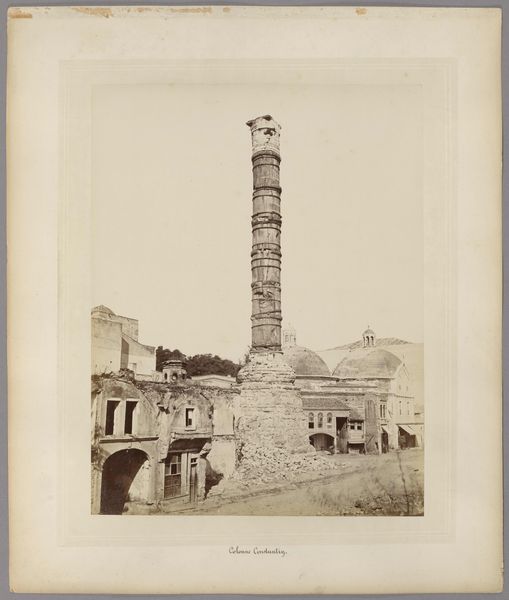
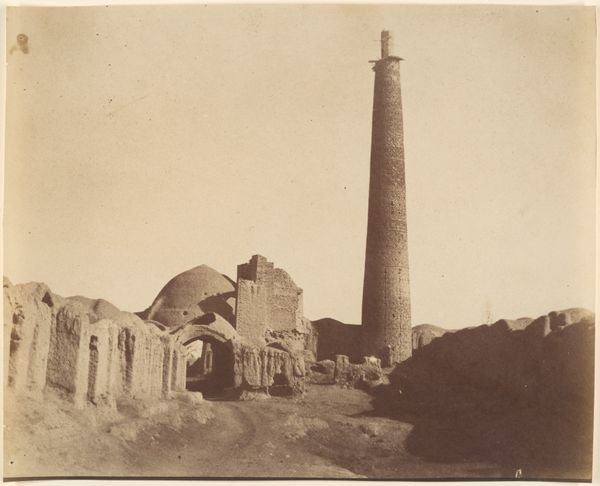
Curator: The Ochterlony Monument, Calcutta captured in the 1850s by Captain R. B. Hill, and now residing here at the Met. What a stark composition, isn't it? Editor: It has this uncanny stillness... like a held breath before a storm. Curator: Tell me more. Editor: Well, the monument dominates the landscape, yet feels strangely isolated. A relic towering above a vast expanse... reminds me a little too much of colonial dominance frozen in time. Curator: Precisely. This print—created through photography—presents an architectural scene and really offers us a view into British colonial India, particularly through monuments designed to reinforce power structures. It almost begs us to dissect its symbolism. Editor: Right, a photograph preserving this physical symbol, Ochterlony's monument, commemorates a British General, a celebration of victory, all etched into this space and frozen within the sepia tones of the photograph. It’s not just a pretty cityscape. It carries so much weight. Curator: And that’s the paradox, isn't it? What seems simple – a column rising above a plain – unravels when we unpack its layers. Editor: Absolutely. And beyond the overt symbolism, what do you think the image *wants* us to feel? Do we sense a longing? Is this emptiness an appeal, an admonishment? I wonder. Curator: Hmmm... perhaps that sense of stillness, of solitude, echoes a certain ambivalence about legacies—triumphs, certainly, but at what cost, and to whom? Maybe its legacy also encourages that introspection. Editor: A powerful piece indeed. It leaves one wrestling with the echoes of history and its visible imprints, right here. Curator: Indeed. The shadows of time play out on every monument— and photograph. A picture truly speaks a thousand loaded words, as they say.