About this artwork
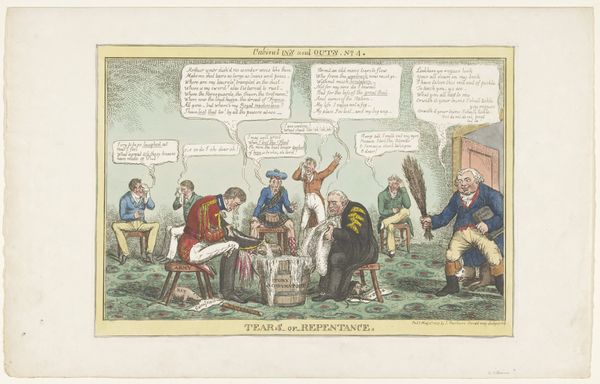
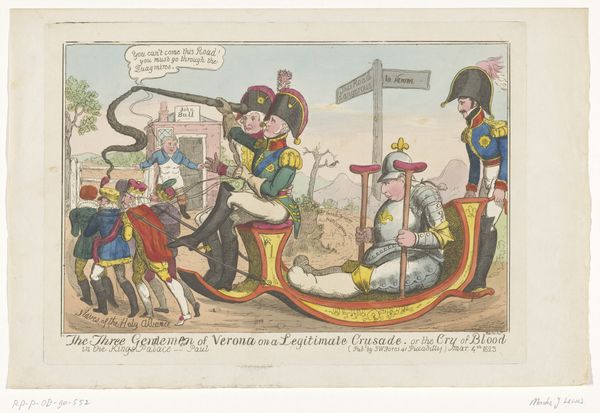
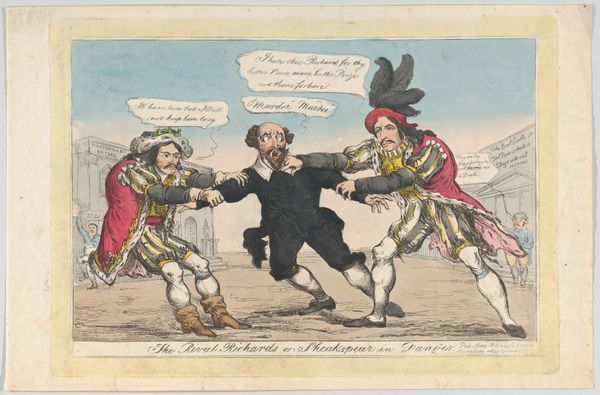
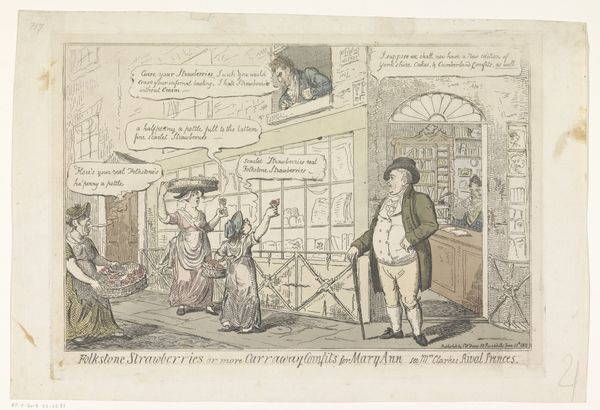
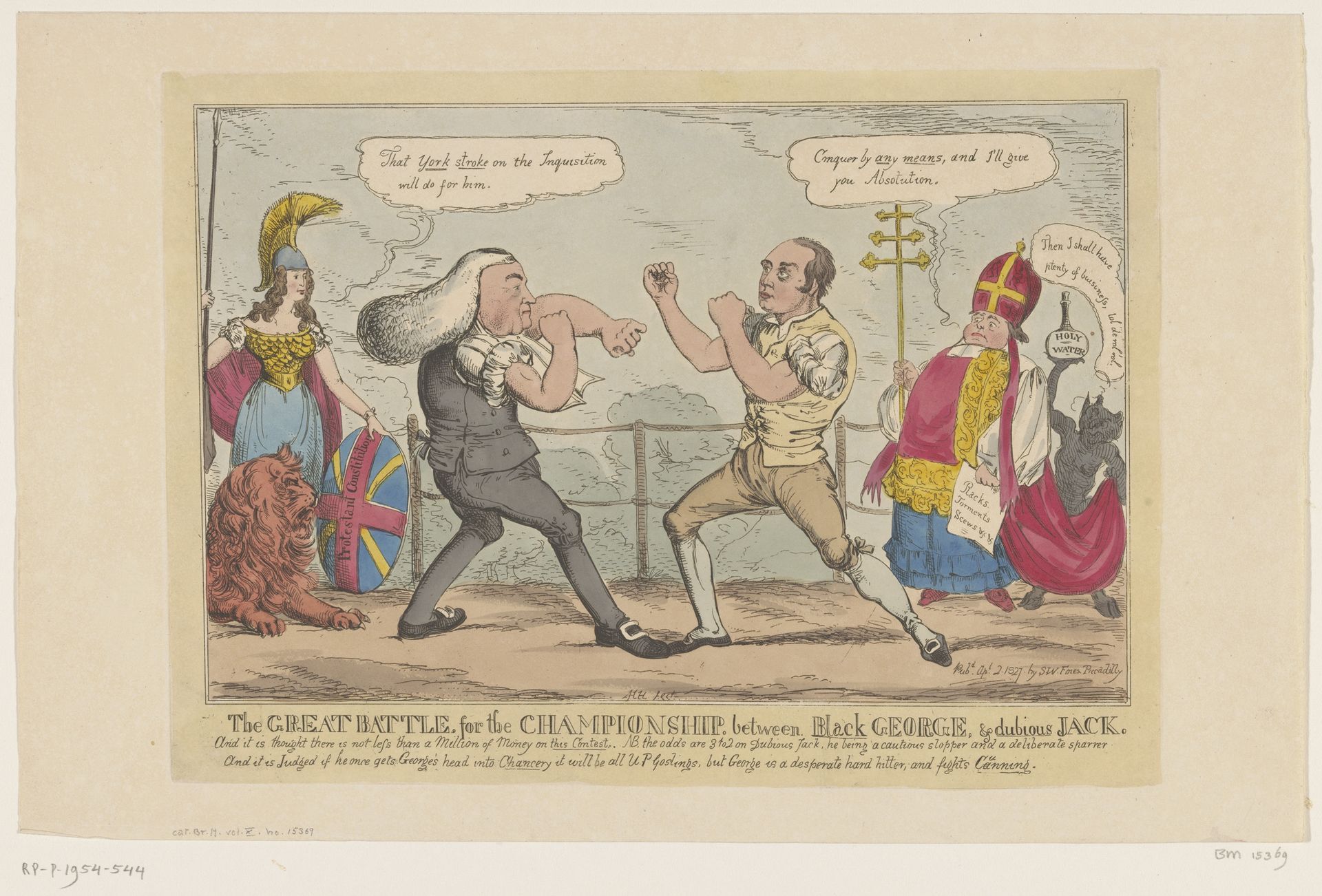
Henry Heath created this hand-coloured etching in 1827. It depicts a boxing match between two prominent figures in British society, lampooning their political stances through caricature. The image uses visual codes to create meaning. On one side we have the Duke of Clarence, or "Black George" accompanied by Britannia and the British lion, symbolizing conservative values. On the other is George Canning, or "dubious Jack", backed by a Catholic bishop, who seems to offer absolution for a price, representing a progressive, pro-Catholic stance. The artwork was made in a time when Catholic Emancipation was a contentious issue in Britain. The artist is commenting on the social and political divisions of his time, using satire to critique both sides. Understanding the institutional and political history of 19th-century Britain is crucial for interpreting this work. We can find out more about the political figures represented in sources such as parliamentary records, newspapers and periodicals. Art, in this case, reflects and shapes the social context in which it was created.
Bokspartij tussen Eldon en Channing, 1827 Possibly 1827

Henry Heath
1822 - 1842Location
RijksmuseumArtwork details
- Medium
- print, etching
- Dimensions
- height 250 mm, width 345 mm
- Location
- Rijksmuseum
- Copyright
- Rijks Museum: Open Domain
Tags
portrait
narrative-art
etching
caricature
romanticism
watercolour illustration
genre-painting
cartoon carciture
Comments
No comments
About this artwork
Henry Heath created this hand-coloured etching in 1827. It depicts a boxing match between two prominent figures in British society, lampooning their political stances through caricature. The image uses visual codes to create meaning. On one side we have the Duke of Clarence, or "Black George" accompanied by Britannia and the British lion, symbolizing conservative values. On the other is George Canning, or "dubious Jack", backed by a Catholic bishop, who seems to offer absolution for a price, representing a progressive, pro-Catholic stance. The artwork was made in a time when Catholic Emancipation was a contentious issue in Britain. The artist is commenting on the social and political divisions of his time, using satire to critique both sides. Understanding the institutional and political history of 19th-century Britain is crucial for interpreting this work. We can find out more about the political figures represented in sources such as parliamentary records, newspapers and periodicals. Art, in this case, reflects and shapes the social context in which it was created.
Comments
No comments