About this artwork
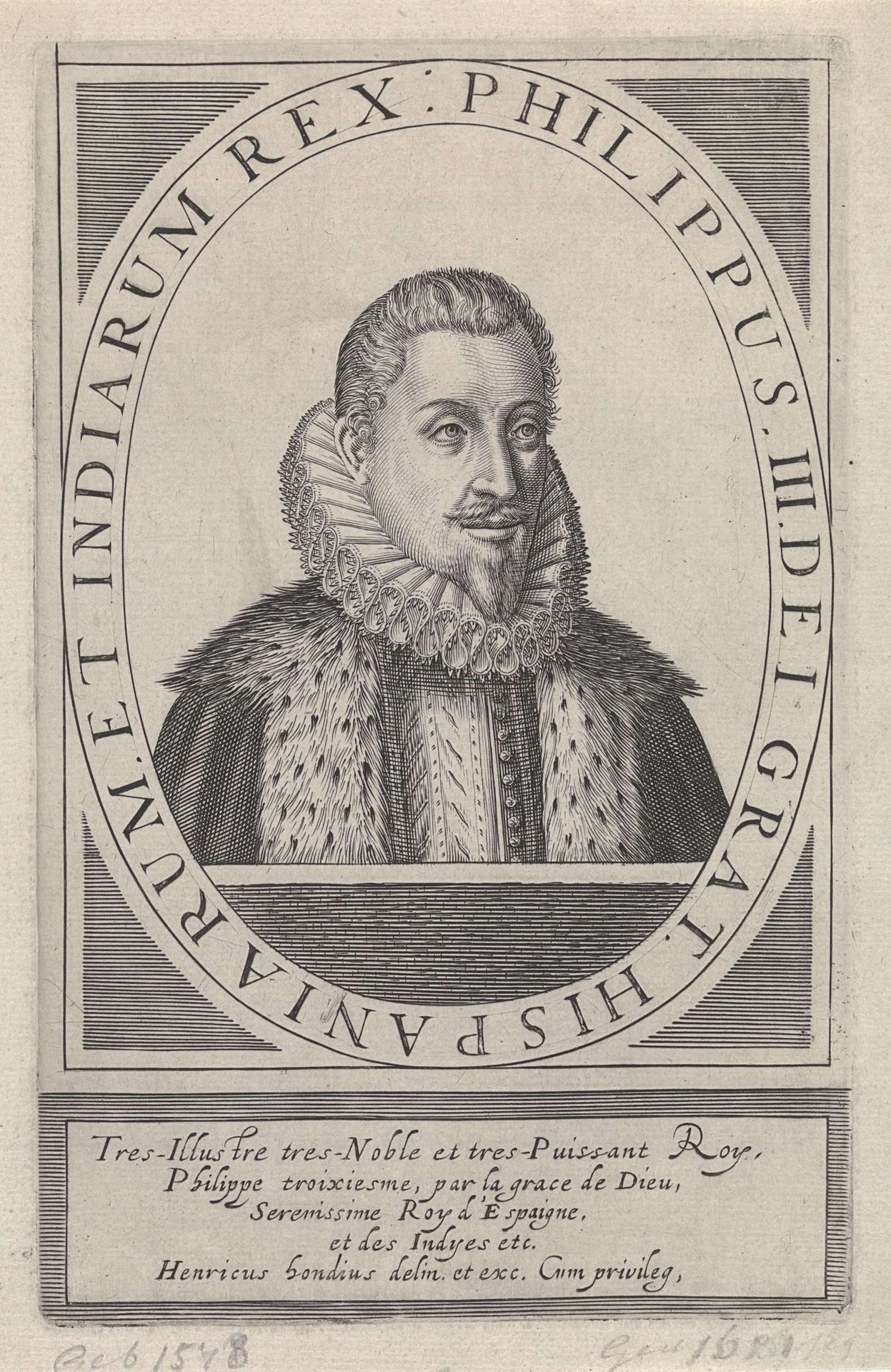
This is Hendrick Hondius's engraving of Philip III, King of Spain. Hondius created this portrait in the context of the Dutch Golden Age, a period marked by the Dutch Republic's rise as a major commercial power and its struggle for independence from Spanish rule. As a result, images of powerful figures like Philip III circulated widely, embodying the complex political dynamics between the Netherlands and Spain. In this print, Philip is encircled by the inscription "Philippus III Dei Gratia Hispania et Indiarum Rex," which translates to "Philip III, by the Grace of God, King of Spain and the Indies.” Hondius captures Philip in a manner that balances authority with a certain level of approachability. Note the fur stole which speaks to the King’s affluence and status, while his gaze is direct and attempts to engage the viewer. This portrait serves as a visual document that both reflects and reinforces the power structures of its time. It highlights the intertwined relationship between art, politics, and personal identity.
Portret van Filips III, koning van Spanje 1608

Hendrick Hondius I
1573 - 1650Location
RijksmuseumArtwork details
- Medium
- print, engraving
- Dimensions
- height 190 mm, width 121 mm
- Location
- Rijksmuseum
- Copyright
- Rijks Museum: Open Domain
Tags
portrait
baroque
old engraving style
history-painting
engraving
realism
columned text
Comments
No comments
About this artwork
This is Hendrick Hondius's engraving of Philip III, King of Spain. Hondius created this portrait in the context of the Dutch Golden Age, a period marked by the Dutch Republic's rise as a major commercial power and its struggle for independence from Spanish rule. As a result, images of powerful figures like Philip III circulated widely, embodying the complex political dynamics between the Netherlands and Spain. In this print, Philip is encircled by the inscription "Philippus III Dei Gratia Hispania et Indiarum Rex," which translates to "Philip III, by the Grace of God, King of Spain and the Indies.” Hondius captures Philip in a manner that balances authority with a certain level of approachability. Note the fur stole which speaks to the King’s affluence and status, while his gaze is direct and attempts to engage the viewer. This portrait serves as a visual document that both reflects and reinforces the power structures of its time. It highlights the intertwined relationship between art, politics, and personal identity.
Comments
No comments