1850 - 1881
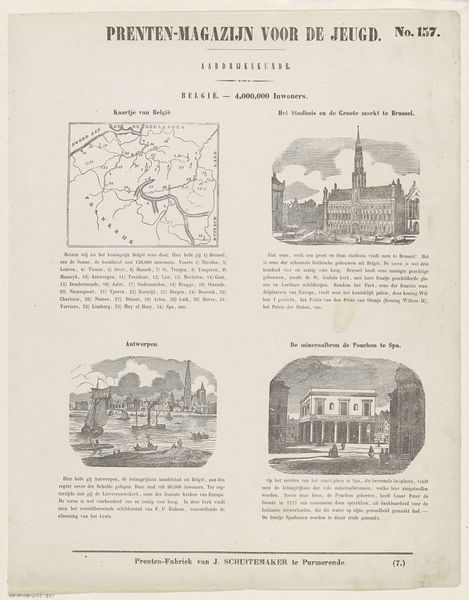
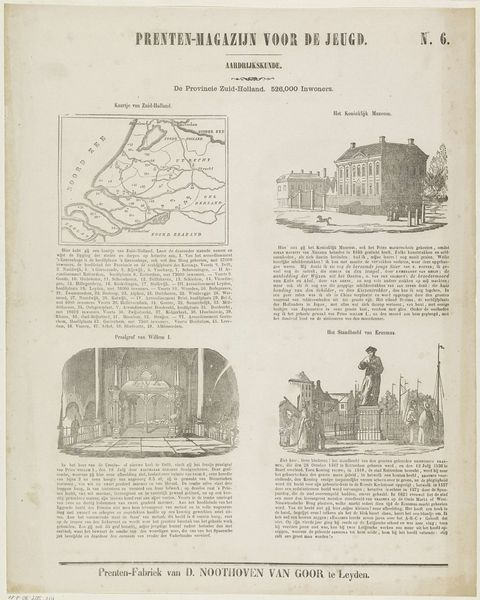
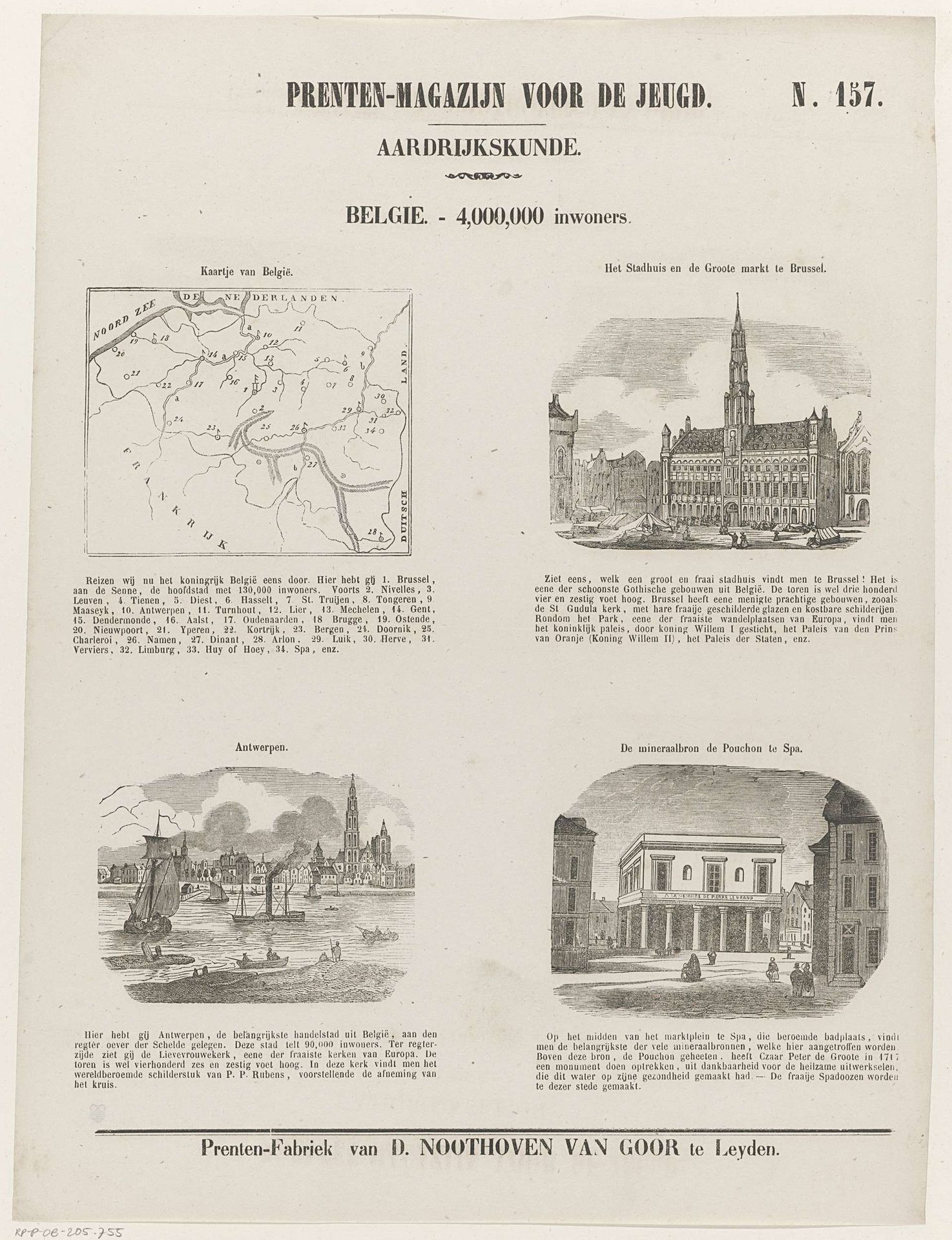
Belgie. - 4,000,000 inwoners

Listen to curator's interpretation
Curatorial notes
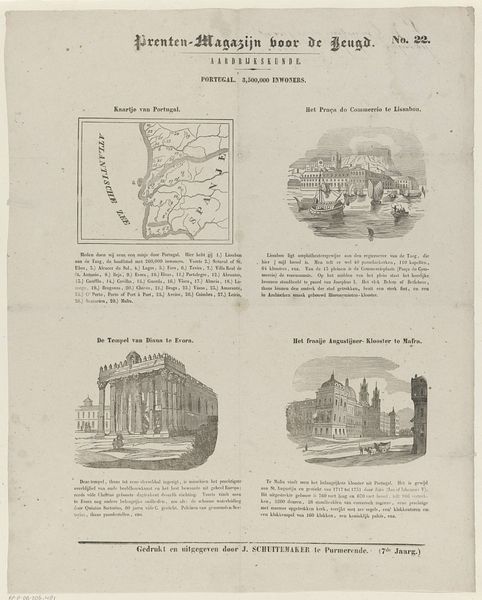
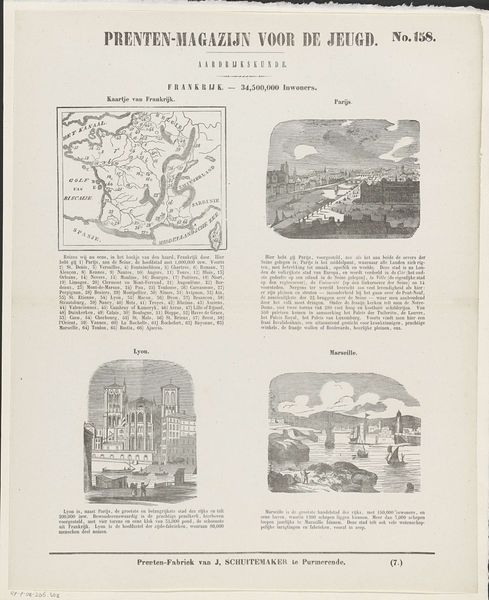
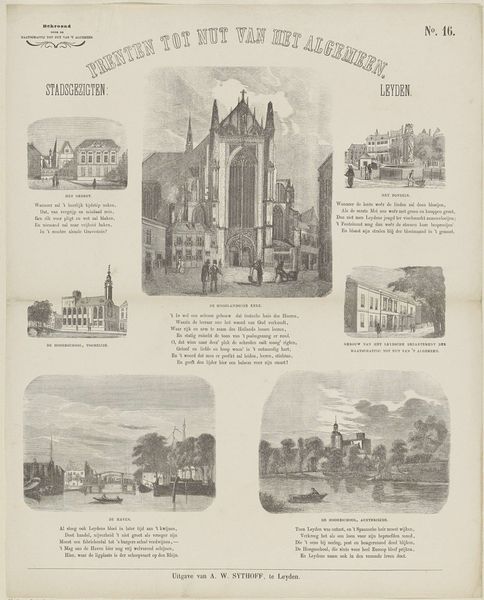
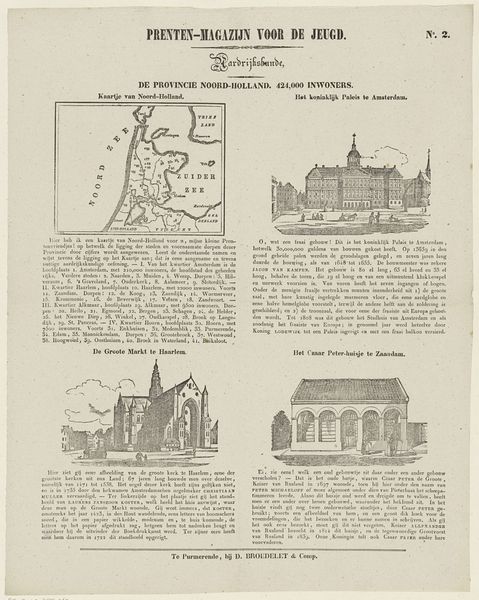
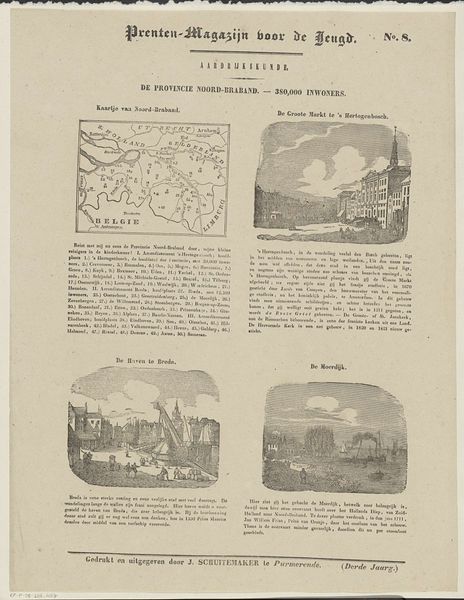
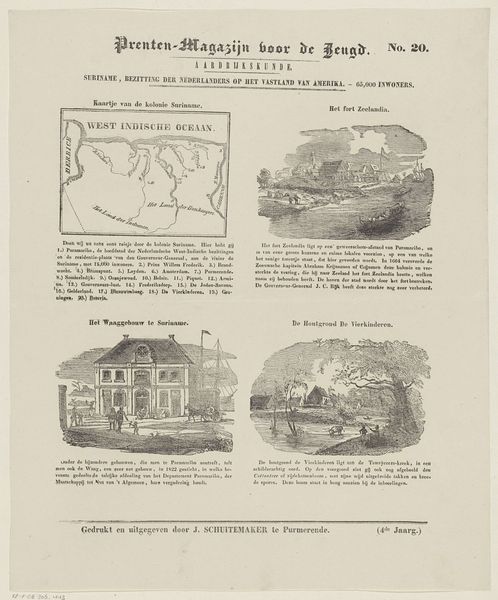
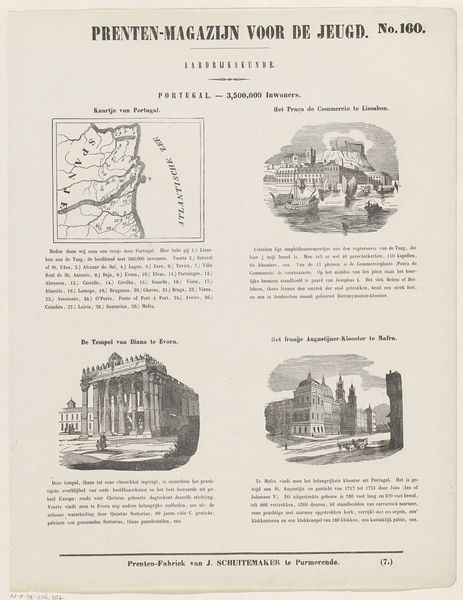
Editor: This print, titled "Belgie. - 4,000,000 inwoners" is by Dirk Noothoven van Goor and probably dates to the late 19th century. It shows various scenes in Belgium. It has an old-world feel. How do you interpret this work, especially considering its symbols and imagery? Curator: The engraving captures more than just geography. It freezes a specific moment in Belgium's national identity. Consider the title referencing the population. How might demographics impact the way the nation saw itself? Each image seems deliberately chosen: a map implying territory and control; architecture suggesting stability and cultural achievement; Antwerp, its port speaks to commercial power; Spa's Pouhon hints at a destination, the cultural memory is rich. Editor: So, the images work together to create an idea of Belgium? Curator: Precisely. Think of how these places and the artistic choices might speak to collective ambitions and aspirations. How the engraver arranged the scenes on the page tells a story, one carefully curated for a youthful audience. Consider also why the journal publishes it: how do illustrations relate to literacy and visual learning at the time? Editor: That makes a lot of sense. I was so focused on the individual images; I didn't think about how they communicate a broader national identity. It’s interesting how deliberate it all is. Curator: Indeed. Prints like these can reveal what a society valued. Editor: This has given me a new way to consider not only this engraving but prints, more broadly, as vessels of meaning and cultural identity. Thanks!