
Curatorial notes
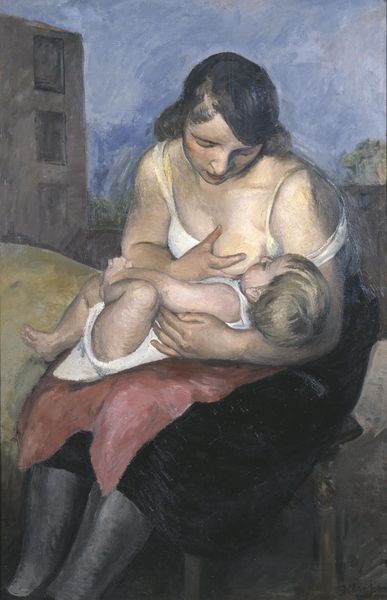
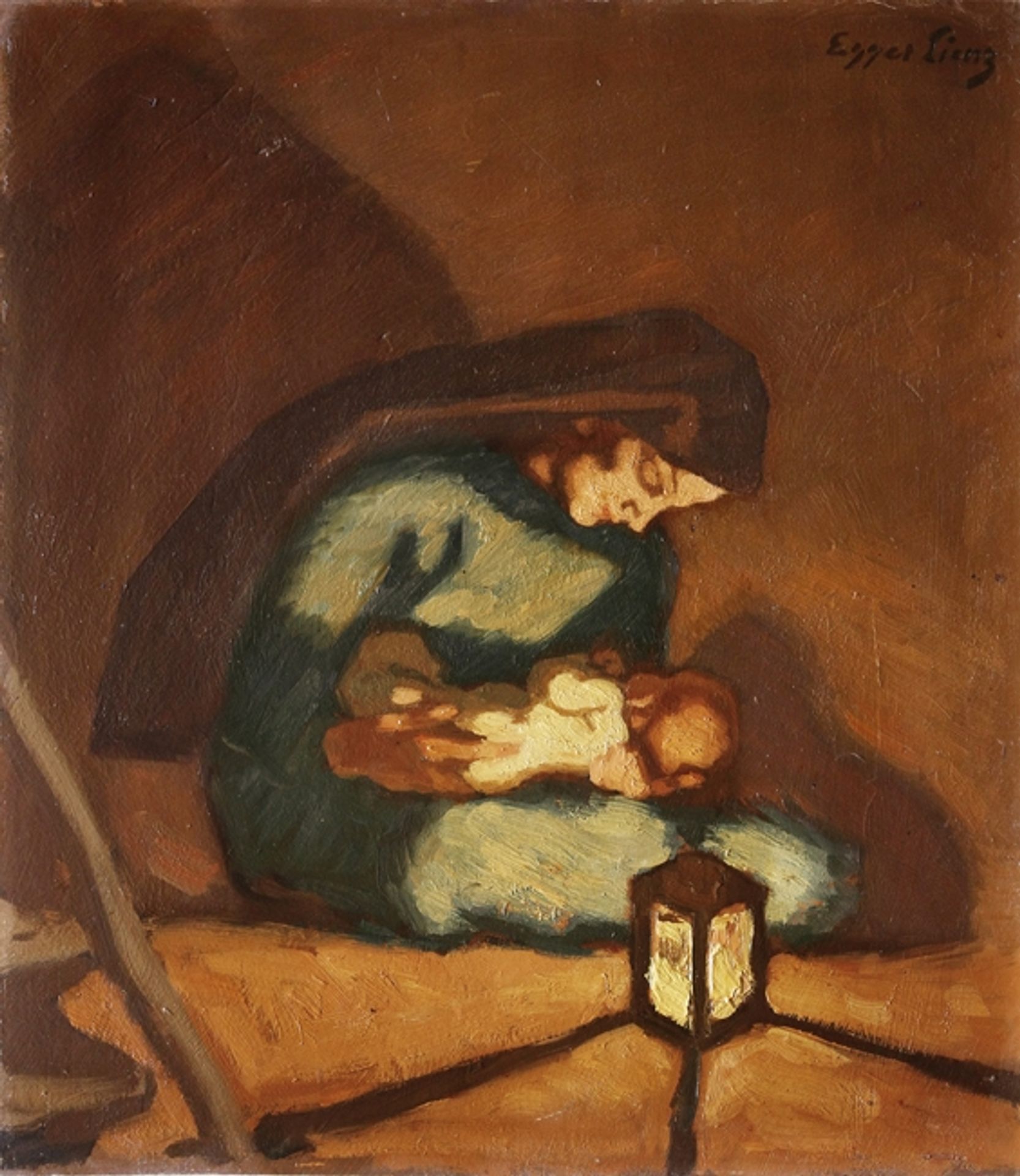
Editor: This is "Madonna" painted in 1922 by Albin Egger-Lienz, created with oil paints. It feels quite intimate, with the focus on the figures bathed in warm light from a lamp below. What do you see in this piece, especially in terms of its symbolism? Curator: The painting clearly depicts the Madonna and Child, but notice how Egger-Lienz moves beyond a simple religious scene. The heavy shadows and simplified forms are evocative. This evokes a deep, primeval maternal connection that transcends religious doctrine. What symbols resonate with you the most strongly? Editor: Definitely the lamp – its light seems both comforting and precarious in all that shadow. Does it represent hope, maybe? Curator: Precisely! Light often symbolizes knowledge, divine presence, or hope, while the surrounding darkness might signify the world's struggles or even ignorance. But it's crucial to recognize the power of this pairing; within it lies profound peace, too. It could also be a beacon in times of hardship and can relate back to her perseverance to take care of her baby, a familiar emotion to most people that observe this painting. What are your thoughts? Editor: I see what you mean. There is definitely hope, but a little bit of uncertainty at the same time. Seeing how symbols connect back to common emotional themes, something universal, that's powerful. Curator: Indeed. The beauty lies in the convergence of these emotional and iconographic layers. They all invite reflection on human resilience and timeless connections, giving the figures a life far beyond their context. Editor: That really shifts my understanding of it, looking at the universal emotions and how these connect with the use of cultural memory within the work itself. Thank you!