About this artwork
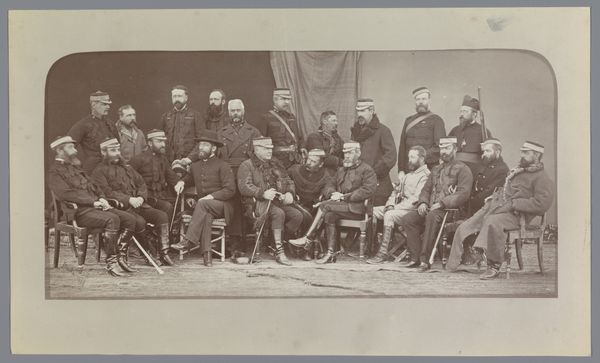
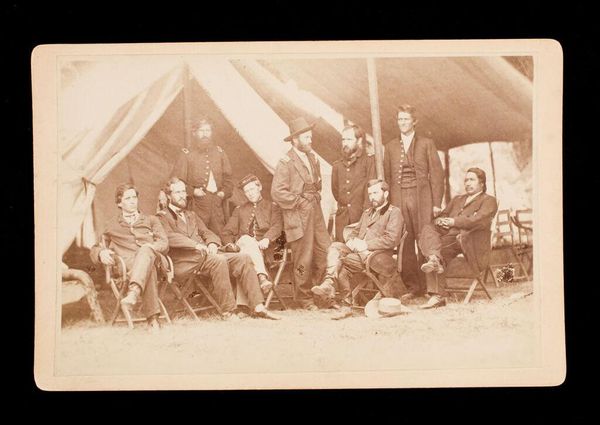
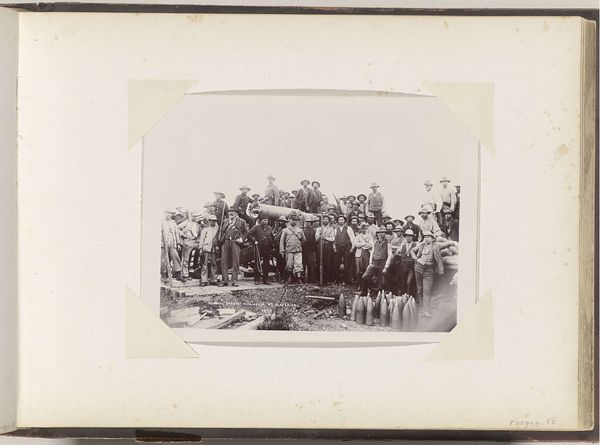
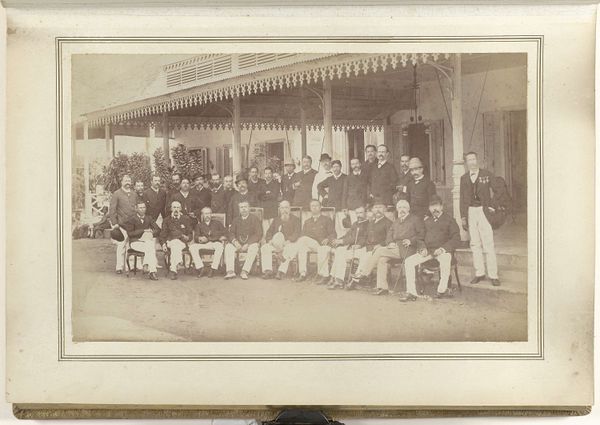
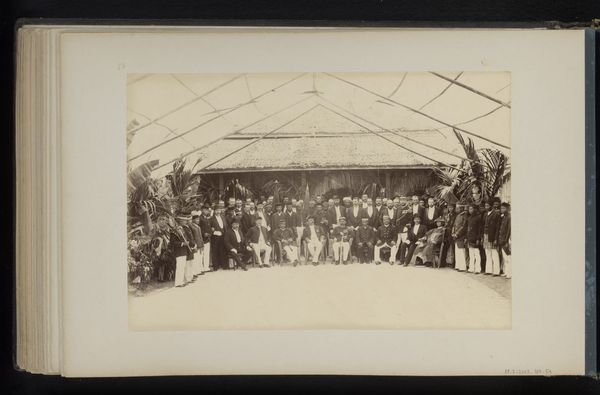
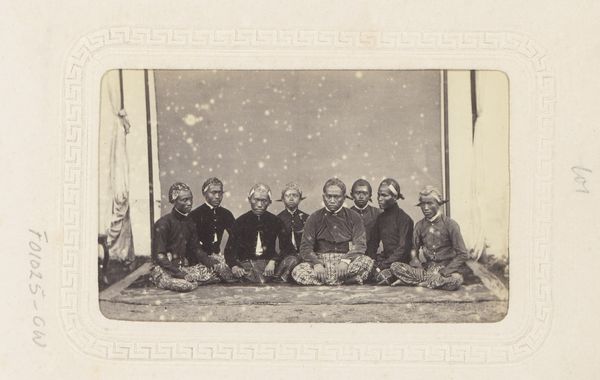
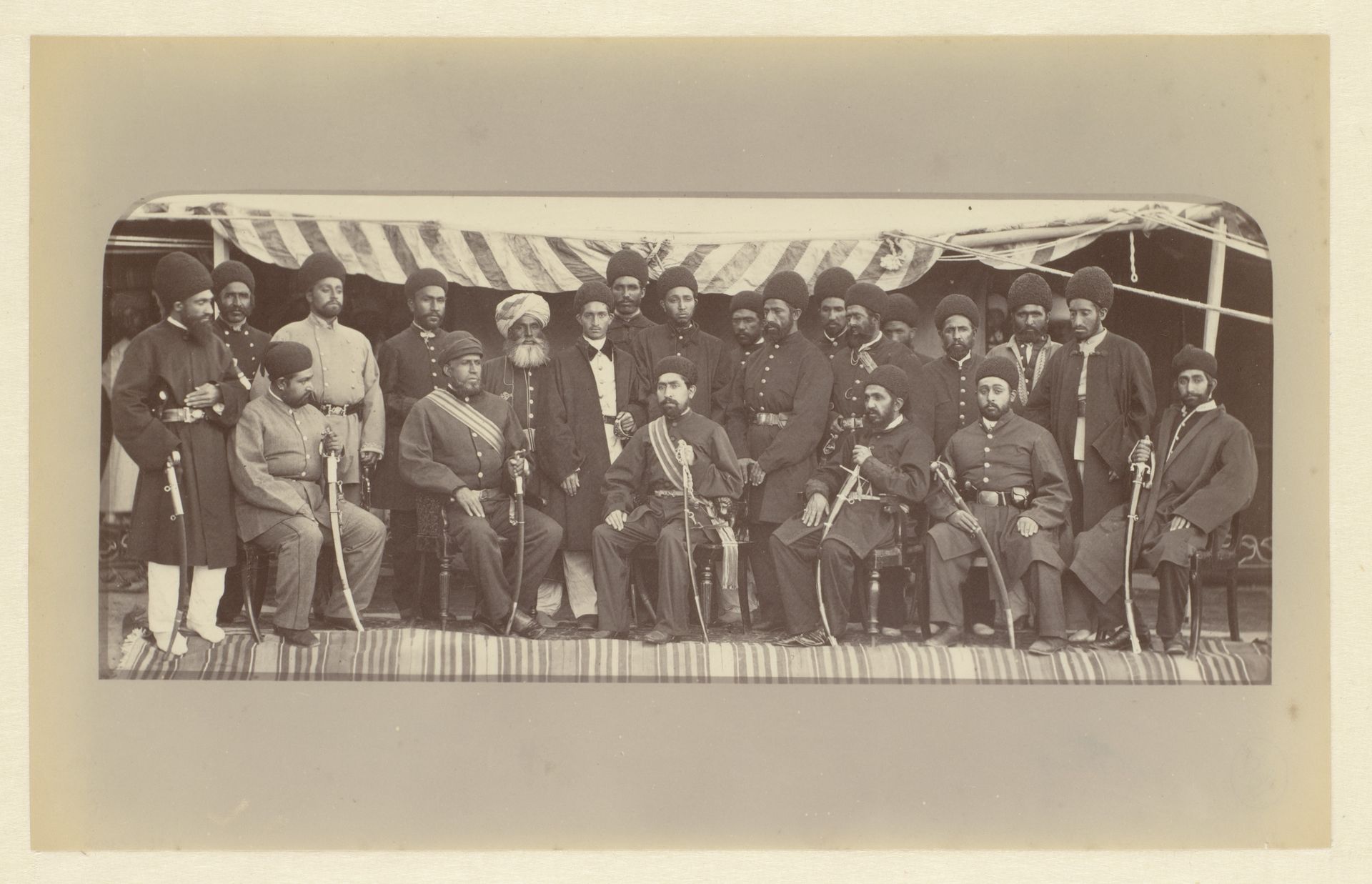
This group portrait by John Burke captures Mohammed Jakoeb Khan with his officers. Note the swords held by the officers. These weapons are not merely tools of war; they are potent symbols of power, justice, and honour deeply embedded in the cultural psyche. The sword motif echoes across millennia, from ancient Egyptian khopeshes to medieval European broadswords. Recall the statue of Harmodius and Aristogeiton, bearing swords and ready to strike, in the ancient city of Athens. The sword reappears in the statue of Marcus Aurelius, signifying leadership and military prowess. Consider, too, the psychological weight of the sword: the glint of steel, the promise of swift action, and the weight of responsibility it carries. The way these officers brandish their swords is a visual echo of ancestral strength, resurfacing here, transformed yet familiar, in a new cultural and historical light.
Groepsportret van Mohammed Jakoeb Khan omringd door zijn officieren waaronder Daoud Shah en Habibullah Mustafi
1879

Artwork details
- Medium
- photography
- Dimensions
- height 196 mm, width 312 mm
- Copyright
- Rijks Museum: Open Domain
Tags
Comments
Share your thoughts
About this artwork
This group portrait by John Burke captures Mohammed Jakoeb Khan with his officers. Note the swords held by the officers. These weapons are not merely tools of war; they are potent symbols of power, justice, and honour deeply embedded in the cultural psyche. The sword motif echoes across millennia, from ancient Egyptian khopeshes to medieval European broadswords. Recall the statue of Harmodius and Aristogeiton, bearing swords and ready to strike, in the ancient city of Athens. The sword reappears in the statue of Marcus Aurelius, signifying leadership and military prowess. Consider, too, the psychological weight of the sword: the glint of steel, the promise of swift action, and the weight of responsibility it carries. The way these officers brandish their swords is a visual echo of ancestral strength, resurfacing here, transformed yet familiar, in a new cultural and historical light.
Comments
Share your thoughts