About this artwork
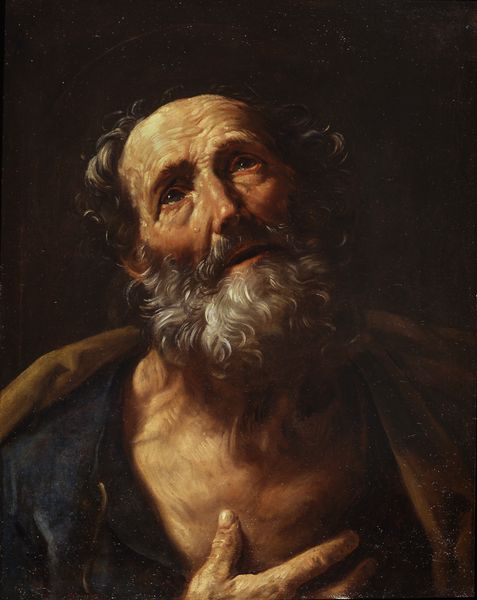
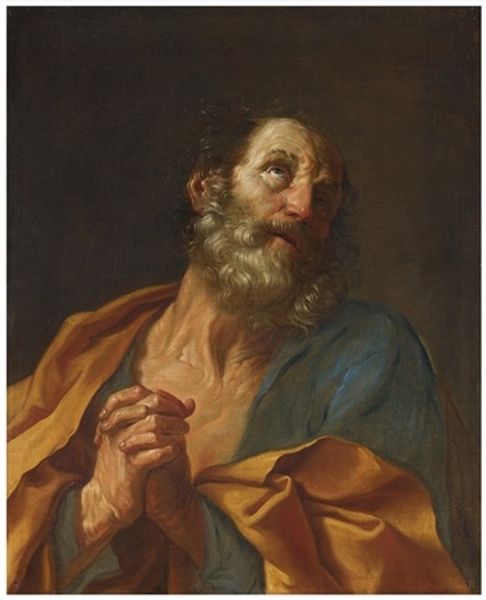
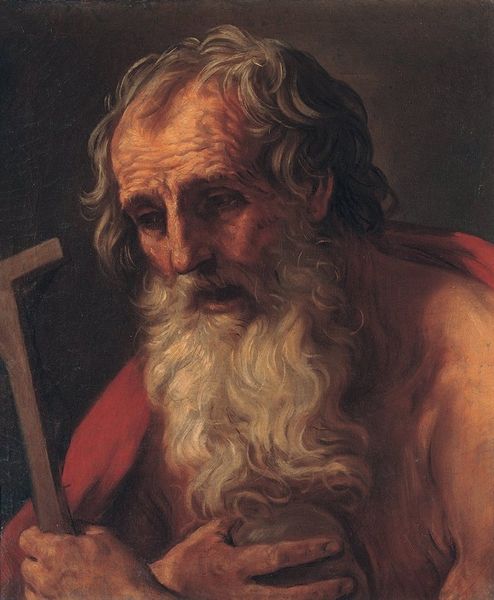
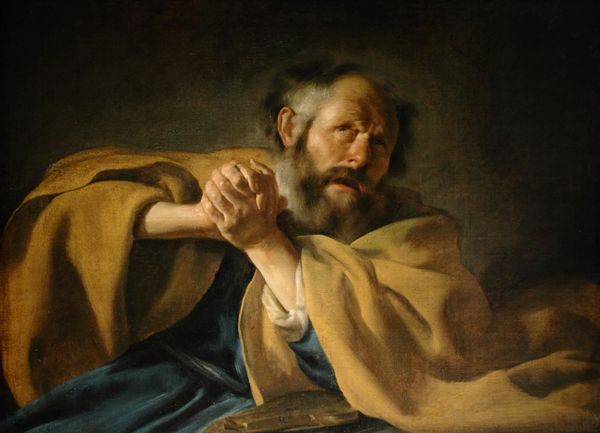
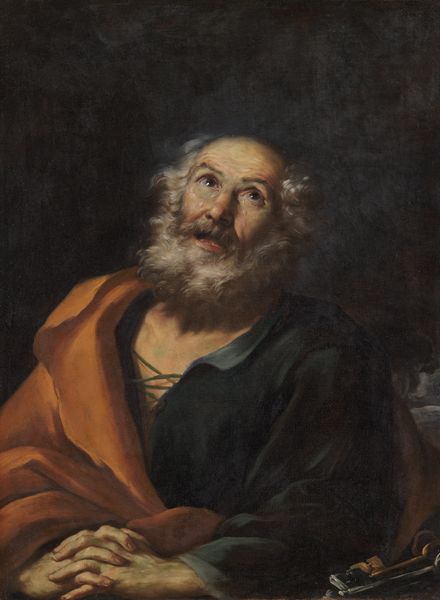
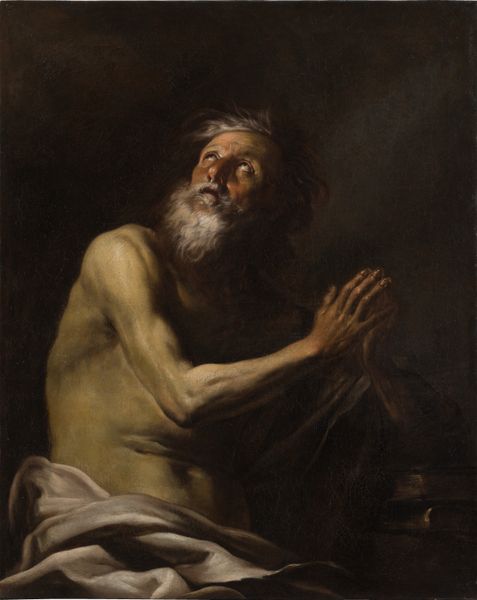
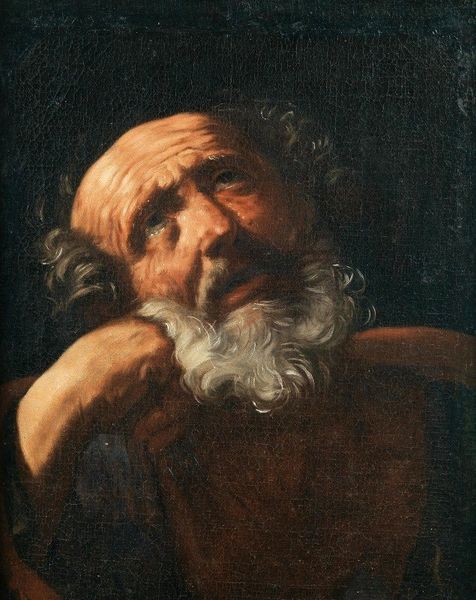
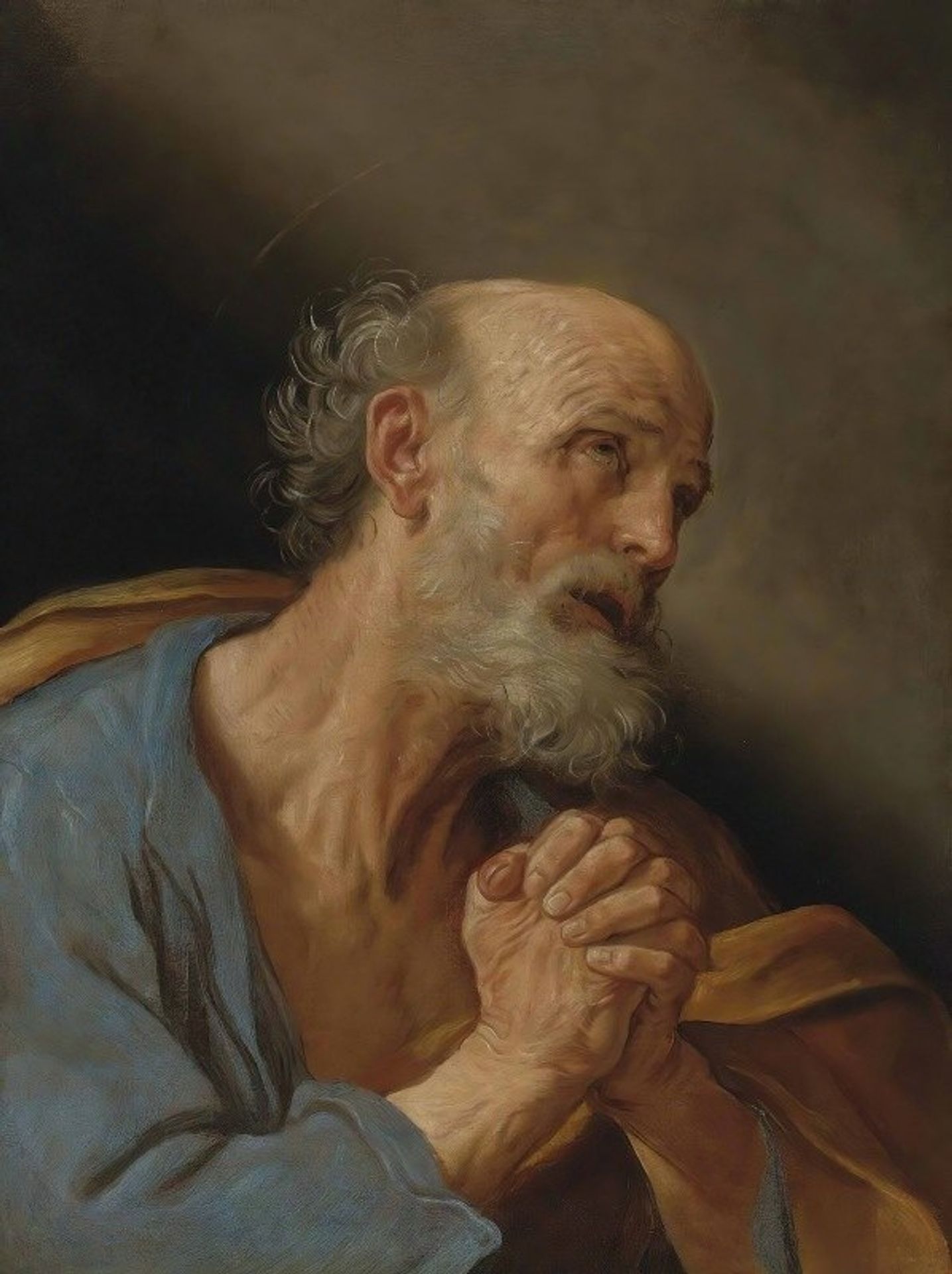
Editor: This is Guido Reni’s “The Penitent Saint Peter,” an oil painting. I find it quite moving. The man's gaze and clasped hands evoke a sense of profound remorse. What do you see in this piece? Curator: It’s the visual language of contrition rendered masterfully. Think of Peter, not just as an individual, but as a vessel carrying centuries of Christian iconography. The upward gaze— a persistent symbol of hope and divine connection— isn’t merely a physical direction; it’s an established cultural motif signifying spiritual yearning. What does it suggest to you? Editor: Hope for redemption, maybe? Or seeking forgiveness? Curator: Precisely! Now, observe the chiaroscuro. The stark contrast is not just Baroque drama; it embodies the internal struggle between light and darkness, sin and redemption. The dark background emphasizes the radiant face, drawing the viewer’s eye and amplifying Peter’s emotional visibility. Editor: I hadn't thought about the light and dark representing an internal struggle, but that makes perfect sense. Is that something typical of this subject in Baroque art? Curator: Frequently. The Baroque artists used these visual symbols to invite viewers to participate in a story of complex, often contradictory emotions. This intense play of light and shadow became a visual shortcut to express the turbulence of the human spirit seeking solace. The figure embodies centuries of both devotion and self-reproach. Editor: Thank you, seeing it through that symbolic lens really deepens my understanding. Curator: And for me, revisiting the echoes of history that still resonate through such works is endlessly enriching.

Artwork details
- Medium
- painting, oil-paint
- Copyright
- Public Domain: Artvee
Tags
portrait
baroque
portrait
painting
oil-paint
chiaroscuro
history-painting
Comments
No comments
About this artwork
Editor: This is Guido Reni’s “The Penitent Saint Peter,” an oil painting. I find it quite moving. The man's gaze and clasped hands evoke a sense of profound remorse. What do you see in this piece? Curator: It’s the visual language of contrition rendered masterfully. Think of Peter, not just as an individual, but as a vessel carrying centuries of Christian iconography. The upward gaze— a persistent symbol of hope and divine connection— isn’t merely a physical direction; it’s an established cultural motif signifying spiritual yearning. What does it suggest to you? Editor: Hope for redemption, maybe? Or seeking forgiveness? Curator: Precisely! Now, observe the chiaroscuro. The stark contrast is not just Baroque drama; it embodies the internal struggle between light and darkness, sin and redemption. The dark background emphasizes the radiant face, drawing the viewer’s eye and amplifying Peter’s emotional visibility. Editor: I hadn't thought about the light and dark representing an internal struggle, but that makes perfect sense. Is that something typical of this subject in Baroque art? Curator: Frequently. The Baroque artists used these visual symbols to invite viewers to participate in a story of complex, often contradictory emotions. This intense play of light and shadow became a visual shortcut to express the turbulence of the human spirit seeking solace. The figure embodies centuries of both devotion and self-reproach. Editor: Thank you, seeing it through that symbolic lens really deepens my understanding. Curator: And for me, revisiting the echoes of history that still resonate through such works is endlessly enriching.
Comments
No comments